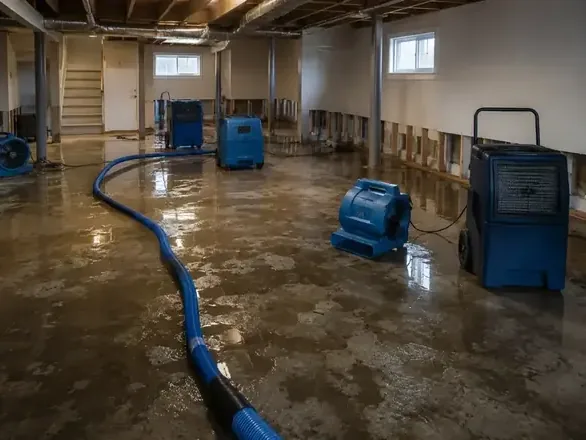
Basement Water Cleanup in Paramus, NJ
The basement cleanup team assesses safe access, water source and exterior conditions before pumping. The crew then checks wall bases, storage and floor assemblies, with cleaning and drying matched to the water that entered.
(888) 471-9821Assess lower-level waterHow basement water cleanup is handled in Paramus
Basement water cleanup in Paramus starts with the entry mechanism and safe utility access. The crew distinguishes supply leakage, drain backup and outside water, then plans removal without treating every lower-level pool as the same loss.
First steps for basement water cleanup
- 1
Keep utility access safe
People remain outside standing water near electrical or fuel equipment. The crew coordinates qualified clearance and a dry access route before pumping or inspecting the utility area.
- 2
Record the apparent entry
Safe observations of drains, wall joints and plumbing help the technician investigate the source. The household avoids assuming that every lower-level pool comes from outside.
- 3
Separate wet storage records
Photographs and inventories capture affected boxes and belongings before disposal. The crew keeps contaminated or wet contents away from unaffected storage during the cleanup.
- 4
Wait for an assessed pump-out
Deep water and high exterior water require a deliberate removal sequence. The pumping plan follows structural and site conditions rather than simply the largest available pump.
What does basement water cleanup cost in Paramus, NJ?
Basement water mitigation typically ranges from $1,500 to $10,000 or more. Depth, contamination, finished walls, stored contents and pumping access drive the scope. Drainage corrections, utility repairs and reconstruction are separate work.
Shallow accessible water
- Controlled extraction
- Wall-base survey
- Initial dehumidification
Finished lower-level damage
- Wet finish access
- Contents documentation
- Several material checks
Deep or contaminated loss
- Assessed pumping sequence
- Controlled material removal
- Extended structural drying
Compare the scope with the water damage cost calculator. The restoration company prices the inspected damage, material access and equipment needs separately from source repairs, replacement finishes and contents work.
The basement water cleanup process
- 1
Assess source and safe entry
The technician identifies likely water routes, current depth and exterior conditions. Utility hazards and structural concerns set access limits. The first plan distinguishes source correction from removal of water already inside the basement.
- 2
Pump and extract under controlled conditions
The crew selects equipment and a disposal route suited to water condition and depth. Pumping follows the site assessment. As the floor becomes accessible, the team records hidden pockets and affected storage before further handling.
- 3
Clean and expose retained materials
Contaminated porous finishes require controlled removal, while remaining surfaces receive appropriate cleaning. Selective access reveals wet wall bases and floor layers. The crew documents these decisions before setting broad drying airflow.
- 4
Monitor the lower-level assembly
Dehumidifiers and air movers address the measured moisture load. Daily checks track wood, concrete and wall surfaces independently. Final records identify the dry-out result, source repair status and remaining work needed before finishes return.
A basement pool can hide the point where water first entered. The technician checks wall joints, drains, plumbing and low openings before deciding the cleanup category. Near Easton Tower, beside the Saddle River or along Red Mill Road, the property’s actual conditions determine the response; the site assessment determines the pumping method.
Identify the entry before emptying the room
A supply leak needs shutoff and repair, a drain backup needs drainage correction, and exterior entry needs an assessment of ongoing water pressure. The crew records the level inside and the conditions outside. Deep water near energized utilities can prevent immediate access.
Pumping a below-grade space requires attention to the building and exterior water load. A specialist determines the sequence when outside pressure remains high. The goal is safe removal, followed by access to materials that absorbed water.
- Identify active plumbing or drain sources.
- Check the outside water condition.
- Keep clear of submerged electrical equipment.
- Document the indoor water height.
Storage and wall bases absorb water quietly
Boxes, wallboard, insulation and floor coverings can remain wet after pumping. The crew inventories contents and checks behind finished walls where access permits. A narrow puddle can hide a wider soaked underlayment or wall plate.
The Ready.gov flood safety page covers hazardous water and safe response. The EPA flooded-home information addresses wet materials and cleanup. Outdoor water and sewage require contamination controls before structural drying begins.
Lower-level drying needs humidity control
Basement air movement must work with dehumidification to remove vapor from the space. The team measures retained wood, concrete and wall assemblies separately. Cool or dense surfaces can remain wet after thin finishes improve, so repeat measurements guide equipment changes.
Public Works maintains borough stormwater systems, but the interior scope follows the actual wet rooms. A property near Van Saun County Park may need storage handling, finished-wall access or utility coordination according to its layout. The final record separates water entry repairs, mitigation and replacement finishes.
- Track concrete and wood independently.
- Inspect finished-wall contact points.
- Keep dry storage away from wet contents.
- Verify the assembly before closing walls.
A flooded basement is not a safe utility route
Occupants avoid entering standing water to reach a breaker, furnace or other equipment. Qualified specialists assess electrical and fuel hazards before the restoration crew works nearby. Deep water also needs a review of exterior pressure and structural conditions before rapid pumping. The team establishes a dry access route, documents the water source and selects controlled removal methods. Contaminated porous materials require separate handling, and household fans should wait until the cleaning scope is established. Pumping reveals the floor but does not finish the loss; wall bases, storage and concealed assemblies still need inspection, cleaning where appropriate and measured drying before the space returns to repairs.
Basement water cleanup coverage
The restoration team covers homes and businesses across the borough, including the Route 4 and Route 17 corridors, with service in ZIP codes 07652 and 07653.
Basement Water Cleanup questions
Does basement water always come from groundwater?
No. Supply leaks, appliance releases and drain backups can also flood a lower level. The technician investigates the entry route and water contacts before choosing pumping, cleaning and drying methods for the actual loss.
Can the household enter to switch off power?
Occupants should not cross standing water to reach electrical equipment. Qualified specialists assess safe isolation and access. The restoration crew begins nearby work only after the relevant hazards and entry route have been addressed.
Why might pumping need to be controlled?
High exterior water can load below-grade walls while interior water provides opposing pressure. A specialist assesses the building and site before rapid removal. The pumping sequence follows those conditions rather than a fixed speed.
Is an unfinished basement easier to dry?
Accessible materials can simplify inspection, but concrete, stored contents and utility areas still need assessment. The crew measures the actual wet assembly and water category. Unfinished appearance alone does not remove contamination or electrical concerns.
What happens to wet storage boxes?
The team records contents before handling and separates salvageable items from unsuitable material. Contamination and material condition guide cleaning or disposal. Dry belongings stay outside the wet work route throughout the cleanup.
Can basement cleanup be requested at any hour?
The response team accepts requests 24/7. Safe access, ongoing entry and utility conditions shape the first work. Occupants stay outside hazardous water while the team evaluates pumping, contamination and the affected lower-level materials.
Water below the stairs needs assessment
The 24/7 response evaluates safe removal, contamination and measured drying in the lower level.