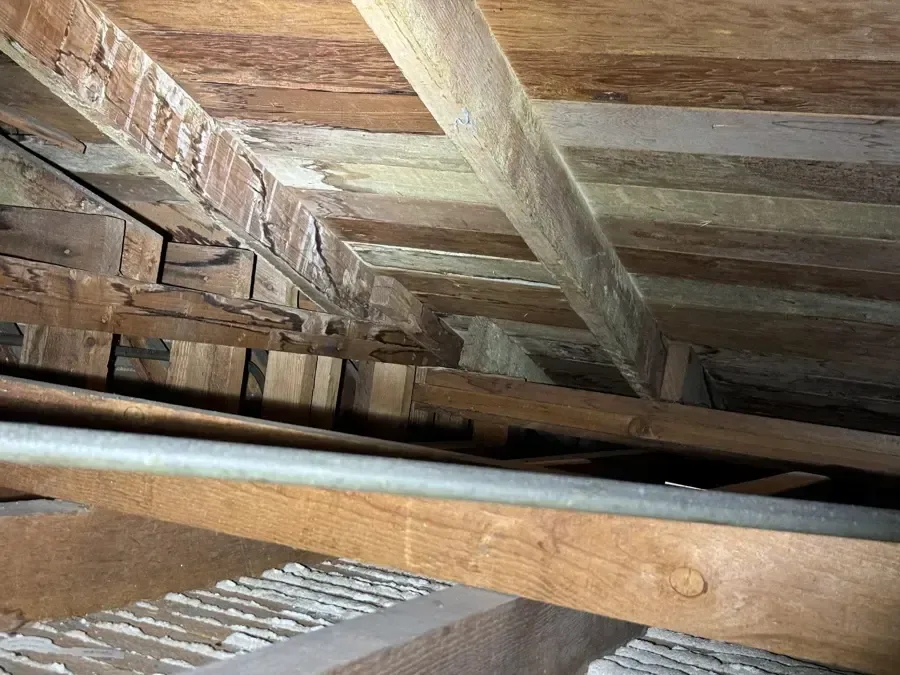
Roof Leak Water Damage in Paramus, NJ
The mitigation crew dries the attic and interior materials reached by rain after a roofing specialist controls entry. Ceiling cavities, insulation and wall connections receive moisture checks before the room returns to repairs.
(888) 471-9821Dry rain-soaked interiorsHow roof leak water damage is handled in Paramus
Roof leak restoration in Paramus follows rain from the entry area into the building. The crew coordinates interior moisture work with roof repair, then checks hidden insulation and framing beyond the ceiling stain.
First steps for roof leak water damage
- 1
Stay beneath a safe ceiling
Occupants leave rooms with bulging or loose overhead finishes. The team evaluates the ceiling from a protected route before any access or drying setup.
- 2
Request roof source control
A roofing specialist assesses weather conditions and the repair point. Interior drying starts with a clear understanding of whether new rain can still enter.
- 3
Record affected attic materials
The inspector photographs insulation, wood and ceiling damage from safe access. These observations connect the exterior repair with the moisture path inside the building.
- 4
Keep replacement materials dry
New insulation and ceiling finishes remain outside the wet work zone until the source is controlled and the remaining structure reaches its drying target.
What does roof leak water damage cost in Paramus, NJ?
Interior mitigation after a roof leak typically costs $1,000 to $6,500 or more. Wet attic access, insulation removal, overhead damage and drying duration influence the scope. Roof repairs and replacement finishes are separate work.
Contained ceiling leak
- One wet interior area
- Accessible moisture checks
- Limited drying setup
Attic and ceiling wet
- Insulation and finish access
- Framing monitoring
- Protected work area
Multiple rooms affected
- Several rain paths
- Expanded wet-material removal
- Additional drying zones
Compare the scope with the water damage cost calculator. The restoration company prices the inspected damage, material access and equipment needs separately from source repairs, replacement finishes and contents work.
The roof leak water damage process
- 1
Link roof findings to room damage
The team records rain timing and reviews the source repair findings. Interior measurements follow the water through attic materials and ceiling connections so the plan includes hidden wet areas rather than only the visible drip.
- 2
Open the wet assembly safely
Controlled removal addresses unstable finishes and insulation that holds water against wood. The crew protects occupied space below the work and documents each exposed layer, preserving evidence for the repair and claim records.
- 3
Dry the remaining structure
Air movement and dehumidification work together on exposed framing and adjacent finishes. Repeat readings identify slow areas under roof penetrations or at wall connections. The crew adjusts the setup to match the materials that remain wet.
- 4
Verify before the roof-loss handoff
The final check records the drying condition and the status of exterior source control. The repair scope then addresses insulation, ceiling boards and decoration. The documentation distinguishes interior mitigation from the roofing specialist’s work.
Wind-driven rain can travel along decking and framing before it reaches a ceiling. The water mark downstairs may sit well away from the entry point. A house near Van Saun County Park, a property on Paramus Road and a business beside Route 17 each need a separate roof assessment and interior moisture map.
Trace the path beneath the roof
The roofing specialist investigates flashings, penetrations, roof covering and drainage. The restoration technician follows the interior route through decking, insulation and ceiling surfaces. Comparing the two findings helps define the wet assembly while tracing the stain back to the roof entry point.
A roof repair stops new entry, but soaked insulation can keep adjacent wood wet. The crew documents those contact points and evaluates which materials can remain. Safe attic access matters because wet decking, ceiling joists and wiring create different hazards from an ordinary room.
- Record when rain-related dripping began.
- Check valleys and penetrations through qualified roof inspection.
- Map wet insulation and framing below entry.
- Inspect wall connections beneath the attic.
Rain damage and indoor drying
The team removes damaged layers when they prevent effective drying or cannot be retained. Controlled airflow and dehumidification then reduce moisture in remaining wood and finishes. The technician measures soaked framing to verify progress toward its drying target.
The Ready.gov severe weather information supports safe storm preparation. The EPA indoor moisture information explains why water entry needs correction. Interior drying and roof repairs should appear as distinct tasks in the written scope.
Keep the repair sequence visible
Photos of the ceiling before access, exposed attic materials and moisture readings show how the water traveled. The drying team records changes at the same points during later visits. That evidence helps explain a removal boundary larger than the original painted mark.
Westfield Garden State Plaza has experienced a water-main-related opening delay, a reminder that commercial water disruption has several possible sources. Rain timing must be assessed on its own. The crew identifies the actual entry mechanism instead of attributing every wet commercial ceiling to the roof.
- Check source control after weather exposure.
- Keep insulation condition in the record.
- Compare wood readings with dry references.
- Complete cavity checks before replacing finishes.
Roof access belongs to qualified workers
Occupants avoid climbing onto a wet roof or entering an unstable attic. Rain, steep surfaces and concealed openings create fall hazards, while wet wiring can energize nearby materials. The roofing specialist determines safe exterior access and temporary protection. The restoration team establishes a separate boundary below damaged ceilings and checks the interior before moving equipment. Buckets can collect a drip but cannot support wet plaster or dry insulation. A safe room restriction protects occupants while source repair and controlled removal proceed. Equipment stays focused on measured wet areas, and the final moisture checks precede ceiling closure and decorative work.
Roof leak water damage coverage
The restoration team covers homes and businesses across the borough, including the Route 4 and Route 17 corridors, with service in ZIP codes 07652 and 07653.
Roof Leak Water Damage questions
Can a roof leak stain appear away from the opening?
Yes. Rain can follow decking, framing or penetrations before reaching the ceiling below. The roofing investigation and interior moisture map work together to find both the entry point and the wet materials along the route.
Does attic ventilation dry soaked insulation?
The crew verifies insulation and framing with readings during controlled drying. The crew evaluates material condition, removes unsuitable layers and measures the remaining assembly. The drying plan controls humidity as well as airflow.
Who repairs the roof?
A roofing specialist locates and repairs exterior entry. The restoration crew addresses wet materials inside, including attic framing and ceiling cavities. Keeping those responsibilities clear prevents a roof patch from being mistaken for completed interior restoration.
Should a ceiling wait until the next rain?
A wet ceiling needs prompt safety and moisture assessment. Source repair verification can involve later weather exposure, but unstable finishes and soaked materials should not remain untreated while waiting for another storm.
Can rainwater be treated as clean supply water?
Water that travels across roof materials and through a building can collect contaminants. The crew assesses its route, time wet and material contact before choosing cleaning, removal and drying methods for the affected interior.
Is overnight rain damage handled?
The team accepts active roof-loss restoration requests 24/7. Safe access and weather conditions shape the first work. Occupants avoid wet roof access and stay clear of loaded ceilings while qualified workers evaluate the loss.
Roof repaired, interior still wet?
A 24/7 restoration response addresses the moisture left in framing, insulation and finishes.