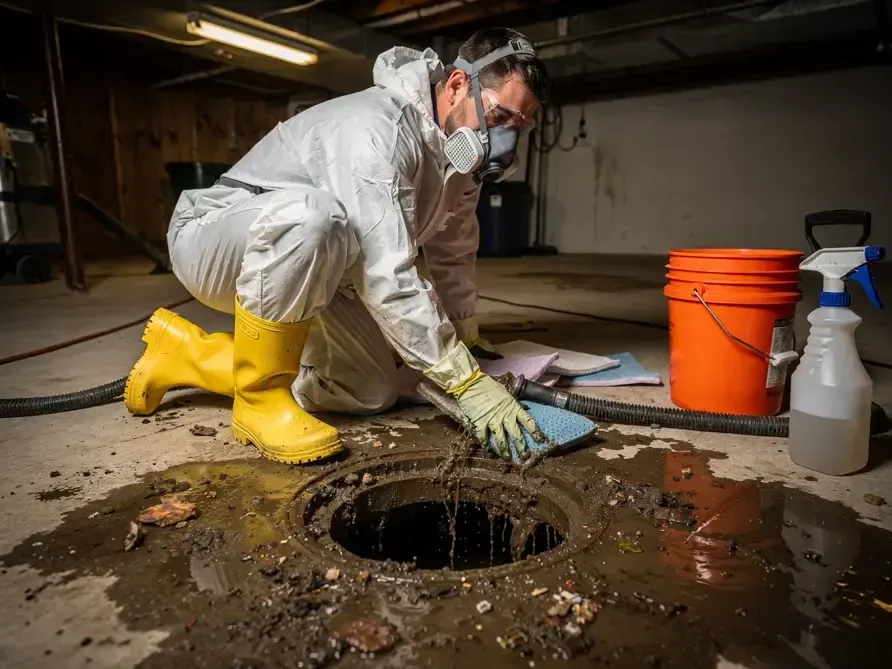
Sewage Backup Cleanup in Paramus, NJ
The sewage cleanup team isolates the affected space, removes contaminated porous material and cleans retained surfaces before drying. Drainage source correction and protected access come before returning a room to normal use.
(888) 471-9821Assess sewage contaminationHow sewage backup cleanup is handled in Paramus
Sewage backup cleanup in Paramus treats the water as Category 3 immediately. The crew establishes clean and affected zones, coordinates drainage correction and documents contamination above and beyond the visible pool.
First steps for sewage backup cleanup
- 1
Stop feeding the drain
Fixtures connected to the suspected backup remain out of use while a drainage specialist investigates. Repeated flushing or draining appliances can add wastewater to the affected room.
- 2
Establish a clean boundary
The household keeps people, pets and dry belongings outside the contamination area. The crew plans protected entry and waste removal without crossing clean storage.
- 3
Document before disposal
Safe photographs and inventories record contaminated finishes and contents. The restoration team captures removal heights and wet edges before the visible scene changes.
- 4
Leave cleaning to a controlled scope
Household mopping and fans can move residue beyond the spill. The crew handles extraction, porous-material removal, surface cleaning and drying in that order.
What does sewage backup cleanup cost in Paramus, NJ?
Sewage backup mitigation commonly ranges from $2,000 to $10,000 or more. Contamination extent, removal of porous finishes, access, waste handling and structural drying determine cost. Drain repairs and replacement finishes are separate.
Limited contaminated area
- Protected extraction route
- Localized material removal
- Surface cleaning
Several contacted rooms
- Broader containment
- Wall and floor removal
- Drying and monitoring
Extensive backup
- Large waste-handling scope
- Multiple structural assemblies
- Detailed cleanup records
Compare the scope with the water damage cost calculator. The restoration company prices the inspected damage, material access and equipment needs separately from source repairs, replacement finishes and contents work.
The sewage backup cleanup process
- 1
Define Category 3 contacts
The technician maps where sewage traveled and which materials it touched. Drainage source findings, electrical conditions and safe access shape the plan. Clean and affected zones are established before workers move waste through the building.
- 2
Extract and remove porous contamination
The crew removes wastewater and unsuitable carpet, pad, insulation or wallboard under controlled conditions. The assessment extends above the water mark where wicking occurred. Disposal records preserve the material scope and original contamination boundary.
- 3
Clean and treat retained surfaces
Physical cleaning removes residue from exposed materials and recesses. Appropriate EPA-registered products follow label application and dwell-time directions. The team verifies access to contact surfaces before moving from cleaning into airflow-based drying.
- 4
Dry the cleaned structure
The drying crew monitors remaining wood, masonry and floor assemblies with repeatable readings. Final records identify the cleaned boundary, removed materials and moisture condition. Drainage correction and rebuilding needs remain clearly separated in the handoff.
A sewage backup can enter through a low drain and spread underneath flooring before its odor or residue reveals the full extent. The crew checks actual contacts at homes near Van Saun County Park, properties along Paramus Road and businesses on Route 17. Source location and indoor cleanup boundaries each require inspection.
Correct the drainage problem and contain the room
The drainage specialist identifies the obstruction or failure while the restoration team limits contamination inside. Borough Public Works maintains sewer infrastructure, but the specific source and responsible connection require assessment at the property. Cleanup should not begin from an assumption about a public main or private drain.
The crew establishes a protected waste route and separates affected surfaces from clean occupied space. Appropriate protective equipment includes gloves, protective clothing and eye protection, with respiratory protection selected for the task and exposure.
- Stop use of fixtures feeding the backup.
- Keep people and pets out of contacted rooms.
- Protect the path used for waste removal.
- Document the drainage specialist’s findings.
Porous material above the water mark
Carpet, pad, wallboard and insulation contacted by sewage generally require removal. Moisture and contamination can wick above the visible mark, so the crew evaluates material above that point and sets the removal boundary accordingly. Drying a contaminated porous layer does not make it suitable to keep.
The EPA flooded-home cleanup information explains wet-material cleanup considerations. The Ready.gov flood safety page emphasizes avoiding hazardous water. These precautions matter indoors as well as at an outdoor flood boundary.
Cleaning reaches recesses before drying starts
The team physically removes residue from retained surfaces and checks recesses at wall bases, floor joints and drain areas. An EPA-registered antimicrobial is applied where appropriate at the label’s required dwell time. A quick spray without cleaning and contact time is not a complete treatment.
Dehumidification and controlled airflow follow the contamination work. The drying record tracks remaining structural material, and photographs show the cleanup boundary before rebuilding begins. A shop along Route 4 needs the same separation of clean stock and contaminated work routes as a home needs between occupied rooms.
- Record removal heights and material types.
- Clean contact surfaces before product application.
- Follow antimicrobial label and dwell-time requirements.
- Measure retained structure before reconstruction.
Sewage is Category 3 from the outset
Occupants stay outside sewage-contacted space and avoid carrying wet belongings into dry rooms. The cleanup crew uses containment and task-appropriate protective equipment, including gloves, eye protection and protective clothing. Porous materials affected above the visible water mark need assessment and removal where contamination has wicked upward. Household fans should remain off until the dirty material and residue are addressed. The team cleans retained surfaces before applying an EPA-registered antimicrobial at the specified dwell time. Electrical hazards require qualified clearance. Drainage correction, contamination removal and structural drying each have a separate completion check before the affected space moves toward rebuilding.
Sewage backup cleanup coverage
The restoration team covers homes and businesses across the borough, including the Route 4 and Route 17 corridors, with service in ZIP codes 07652 and 07653.
Sewage Backup Cleanup questions
Is sewage Category 3 even when diluted?
Sewage requires Category 3 controls from the start. Additional water or a clearer appearance does not remove the contamination concern. The crew assesses every contacted surface and material before selecting removal and cleaning methods.
Can contaminated carpet be saved by drying?
Carpet and padding contacted by sewage generally require removal. Drying alone does not remove contaminants from porous layers. The crew also checks the subfloor and wall edges beneath the carpet before planning the retained structure’s dry-out.
Why remove material above the water mark?
Porous material can wick moisture and contamination upward. The visible mark therefore may not show the full contact height. The technician assesses above it and documents the removal boundary based on the material and contamination conditions.
Is antimicrobial spraying enough?
No. Physical cleaning removes residue first. An appropriate EPA-registered product then follows its label, including required dwell time. The crew also removes unsuitable porous material and dries the cleaned structure; spraying cannot replace those steps.
Who determines whether the sewer main caused the backup?
A drainage specialist and, where relevant, the utility investigate the connection and obstruction. The restoration team documents indoor damage. The inspection identifies the failed component and the relevant maintenance responsibility.
How quickly should cleanup be requested?
Sewage contact requires prompt restriction and cleanup planning. The response team accepts requests 24/7. Occupants stop feeding the affected drain, avoid contaminated rooms and keep dry belongings outside the work boundary.
A cleared drain does not clean the room
The 24/7 response covers Category 3 contamination, controlled removal and structural drying records.