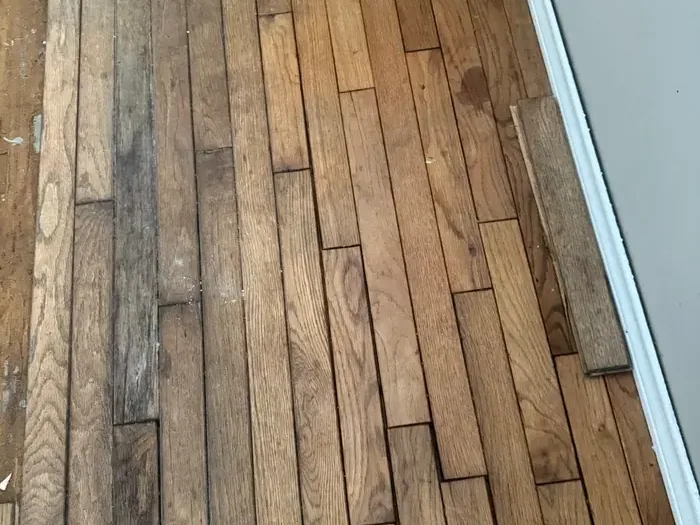
Hardwood Floor Water Damage in Paramus, NJ
The floor-drying team measures the boards and the assembly beneath them, then selects extraction, controlled drying or removal. Material readings and a flooring assessment determine readiness for sanding or replacement.
(888) 471-9821Measure the wet wood floorHow hardwood floor water damage is handled in Paramus
Hardwood floor restoration in Paramus compares the top surface, underside and subfloor moisture. The technician evaluates water category and physical damage before selecting a drying method or referring damaged flooring for repair.
First steps for hardwood floor water damage
- 1
Remove loose coverings safely
Rugs and movable floor coverings are documented and lifted where safe. The crew needs access to board seams and the wet boundary for accurate assessment.
- 2
Avoid raised floor edges
People and pets stay away from buckled sections. The team protects a dry walking route around equipment and unstable boards before work begins.
- 3
Delay sanding and sealing
Refinishing waits while the floor moisture changes. The flooring specialist reviews stabilized readings and physical condition before deciding on sanding, replacement or another repair.
- 4
Check the source and substrate
The technician confirms source-control status and inspects the assembly below. Drying only the upper board face can leave underlayment or subfloor moisture untreated.
What does hardwood floor water damage cost in Paramus, NJ?
Hardwood floor mitigation typically costs $1,000 to $6,500 or more. Floor construction, water category, affected area, access beneath boards and drying duration influence cost. Sanding, refinishing and replacement are separate repair items.
Limited clean-water area
- Board moisture mapping
- Targeted extraction
- Initial drying setup
Multiple wet sections
- Subfloor assessment
- Specialized drying access
- Daily reference comparisons
Damaged layered assembly
- Selective floor removal
- Underlayment and wall checks
- Expanded moisture records
Compare the scope with the water damage cost calculator. The restoration company prices the inspected damage, material access and equipment needs separately from source repairs, replacement finishes and contents work.
The hardwood floor water damage process
- 1
Identify the floor assembly
The technician records wood type, construction, substrate and visible deformation. A dry reference and affected readings establish the baseline. Water category and source status guide whether the assembly can remain during treatment.
- 2
Extract and establish access
The crew removes accessible liquid and checks wet edges beneath trim or adjacent coverings. Specialized access may reach retained flooring, while damaged or contaminated sections require removal. Each choice is documented before the floor changes.
- 3
Track controlled moisture reduction
Dehumidification and suitable airflow reduce the moisture load without relying on surface appearance. The team compares repeated board and subfloor readings, adjusts equipment and checks dry boundaries for concealed spread.
- 4
Hand off a stable moisture record
Final measurements and photos distinguish drying progress from permanent physical damage. The flooring specialist uses that information with installation or refinishing requirements. Replacement and sanding decisions follow the actual assembly condition.
Cupped edges show that wood has changed shape, but the inspection still needs to establish where moisture remains. A home near Easton Tower, a property off Red Mill Road and a room near Van Saun County Park may have different flooring assemblies. The crew identifies solid wood, engineered layers and the substrate before proposing drying access.
Look beneath the board surface
Water can enter seams, soak underlayment and remain against the underside of a board. The technician compares affected readings with dry wood of the same type and checks transitions into adjacent rooms. A surface meter sweep becomes part of a larger assessment rather than the only test.
Engineered flooring, adhesive failure and severe buckling can limit what drying can restore. The crew records physical damage separately from moisture content. A lower reading does not reverse delamination or restore a failed bond.
- Identify the flooring construction.
- Measure affected and reference boards.
- Check underlayment and subfloor access.
- Document cupping, gaps and lifted edges.
Controlled drying protects the assembly
Extraction removes available liquid before dehumidification and targeted airflow begin. Specialized floor-drying equipment may suit a clean-water assembly that can remain intact. Contaminated materials and inaccessible trapped water require a different decision.
The EPA indoor moisture information explains the need to control damp building conditions. The Ready.gov home planning page supports planning around restricted rooms. Safe walking routes matter while boards are raised or equipment covers the floor.
Sanding waits for a stable floor
Sanding wet, cupped boards can remove the raised edges before the wood changes again during drying. A flooring specialist evaluates repair after the moisture condition stabilizes. The restoration team provides the drying record so the next decision has more support than appearance alone.
Properties along Paramus Road can have a wood floor adjoining tile, cabinetry or a different substrate. Each transition needs its own check. The final report identifies retained material, irreparable physical damage and the condition beneath any removed boards.
- Review readings over time rather than once.
- Check the underside where access allows.
- Keep replacement-floor requirements in view.
- Separate drying from refinishing decisions.
Lifted boards create a walking hazard
Occupants keep clear of buckled flooring and hoses, and avoid covering the wet area with rugs or plastic. Coverings can hide sharp edges and restrict evaporation. The drying team establishes safe routes and checks moisture below the boards before placing equipment. Aggressive heat and premature sanding can complicate a floor that is still changing shape. The technician records water category, flooring construction and physical damage, then selects a method that fits the assembly. A flooring specialist makes the later repair or refinishing decision after the drying condition is documented. A dry-looking top face leaves the underside and subfloor to be verified with readings.
Hardwood floor water damage coverage
The restoration team covers homes and businesses across the borough, including the Route 4 and Route 17 corridors, with service in ZIP codes 07652 and 07653.
Hardwood Floor Water Damage questions
Can cupped wood flatten during drying?
Some boards change shape as moisture balances, but recovery depends on construction, damage and the water exposure. The technician measures the assembly over time. A flooring specialist evaluates the remaining deformation before recommending refinishing or replacement.
Should cupped boards be sanded immediately?
Sanding waits until moisture stabilizes. Removing raised edges from a wet floor can create a poor result when the boards change again. The drying record and flooring specialist’s assessment guide the later repair decision.
Is a dry top surface enough?
No. Water can remain beneath the boards or in underlayment and subfloor. The crew checks the affected assembly and compares suitable reference materials, rather than ending drying because the surface feels dry to the touch.
Can engineered flooring always be dried in place?
Its layered construction and adhesive condition affect that decision. Delamination, contamination or trapped water may require removal. The crew documents physical damage separately from moisture readings so a lower reading does not hide an unsuitable floor.
What if the floor crosses into another room?
Continuous boards and underlayment can carry moisture beyond the first room. The technician checks thresholds, walls and adjoining sections, then sets the drying boundary from measurements rather than the visible stain alone.
Is floor damage assessed outside business hours?
The team accepts water-damage requests 24/7. Occupants keep clear of lifted boards and wet electrical equipment, stop a safely accessible source and leave refinishing decisions until the floor assembly has been inspected.
Wet wood needs time and measurements
The 24/7 response combines water removal with controlled drying and a clear flooring repair handoff.