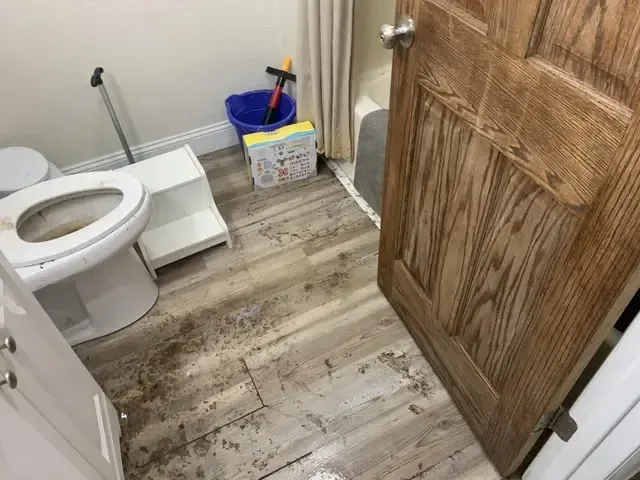
Toilet Overflow Cleanup in Paramus, NJ
The cleanup crew assesses the overflow contents, isolates the affected bathroom and checks the floor assembly below. Plumbing source control, contamination handling and measured drying determine the restoration sequence.
(888) 471-9821Assess the bathroom overflowHow toilet overflow cleanup is handled in Paramus
Toilet overflow cleanup in Paramus starts with what escaped and where it traveled. The team distinguishes a supply problem from wastewater overflow, then checks beneath trim, flooring and any ceiling directly below.
First steps for toilet overflow cleanup
- 1
Stop flushing
The fixture remains out of use until the plumbing problem is assessed. Additional test flushes can enlarge the spill and send water into new floor seams.
- 2
Restrict the bathroom
Occupants keep people and pets away from the affected area. The crew establishes a route that avoids tracking wastewater through dry rooms.
- 3
Record the spread safely
Photographs from outside the wet boundary capture the toilet area, threshold and adjacent finishes. The technician also checks the room below where access permits.
- 4
Leave contaminated soft goods contained
Affected rugs and porous belongings need documented handling. The team evaluates disposal and cleaning so wet items do not contaminate dry storage or laundry areas.
What does toilet overflow cleanup cost in Paramus, NJ?
Toilet overflow mitigation often ranges from $800 to $5,500 or more. Waste content, subfloor access, spread into nearby rooms and the ceiling below change the scope. Plumbing repairs and replacement finishes are separate.
Contained bathroom spill
- Source and category review
- Localized cleanup
- Floor moisture checks
Floor-edge spread
- Threshold and vanity access
- Porous-material removal
- Clean structural drying
Wastewater across rooms
- Expanded containment
- Lower-level inspection
- Several affected assemblies
Compare the scope with the water damage cost calculator. The restoration company prices the inspected damage, material access and equipment needs separately from source repairs, replacement finishes and contents work.
The toilet overflow cleanup process
- 1
Establish the contamination boundary
The technician records the overflow contents and maps every contacted surface. Fixture condition and plumbing status guide source control. Protected access keeps the affected bathroom separate from occupied dry rooms.
- 2
Remove liquid and unsuitable porous material
The cleanup crew extracts wastewater and documents material that cannot remain. Controlled handling limits tracking through the property. Flooring edges, wall bases and vanity spaces receive attention beyond the visible spill.
- 3
Clean retained surfaces thoroughly
The team removes residue and applies suitable products according to their labels. Hidden contact points are inspected before airflow begins. Cleaning decisions follow the actual materials and contamination rather than the room’s appearance alone.
- 4
Dry and verify the bathroom assembly
Readings track the retained floor and walls after cleaning. The crew checks connected spaces, including ceilings below, and records the final condition. Plumbing clearance and the completed restoration scope guide the return to fixture use.
Water leaving a toilet can reach the hallway through a doorway seam or enter a ceiling below before the bathroom looks heavily flooded. The crew maps these routes at homes near Van Saun County Park, properties off Paramus Road and businesses along Route 4. Fixture repair and contaminated-material handling remain separate tasks.
Classify the actual overflow
A toilet supply connection and a bowl overflow are different sources. Wastewater containing fecal material requires Category 3 controls from the outset. The technician records the condition and contacts rather than treating every toilet-related puddle as clean water.
A plumber resolves the blockage or mechanical failure. Repeated flushing to test an unresolved obstruction can add more water to the building. The cleanup crew limits spread and protects a route for removing affected material.
- Stop use of the affected fixture.
- Record whether waste was present.
- Check the threshold and adjacent flooring.
- Inspect the room or ceiling below.
The bathroom surface is only the top layer
Tile may remain while water collects beneath its edges or soaks the wood below. Subfloor measurements reveal moisture beneath the grout and tile surface. The team checks base trim, vanity panels and the toilet area after safe fixture access.
Contaminated carpet outside the bathroom, porous underlayment and wet wallboard can require removal. The EPA flooded-home information discusses cleanup and wet materials. The Ready.gov flood precautions reinforce avoiding contact with contaminated water and electrical hazards.
Cleaning and drying serve different purposes
Physical cleaning removes residue from surfaces that remain. An EPA-registered antimicrobial, where appropriate, follows label directions including dwell time. Drying then addresses moisture in the cleaned structure; a disinfectant does not remove water trapped beneath flooring.
The final record identifies the source repair, water category, discarded materials, cleaned surfaces and daily readings. A commercial restroom near Route 17 also needs a controlled access route so occupants do not track contamination into dry space. Reopening follows the actual work and safety conditions.
- Keep clean and affected traffic separate.
- Document porous-material removal.
- Measure the floor beneath retained finishes.
- Verify source correction before fixture use resumes.
Wastewater needs controlled handling
Occupants keep children and pets outside the affected bathroom and avoid walking the water into other rooms. A toilet overflow containing waste is a contamination problem even when the volume is small. Ordinary towels, mops and fans can spread residue if used without a controlled cleanup plan. The crew establishes boundaries, uses appropriate protective equipment and removes unsuitable porous materials. Wet electrical devices remain isolated for qualified assessment. A plumber corrects the source while the restoration team checks the floor and adjoining assembly. Cleanup includes the hidden contacts and the route out of the bathroom, followed by measured drying of materials that remain.
Toilet overflow cleanup coverage
The restoration team covers homes and businesses across the borough, including the Route 4 and Route 17 corridors, with service in ZIP codes 07652 and 07653.
Toilet Overflow Cleanup questions
Is every toilet leak Category 3 water?
The actual source matters. A fresh supply connection differs from wastewater containing fecal material. The technician evaluates contents and contacts, while a waste-containing overflow receives Category 3 controls from the start.
Can tile stay after an overflow?
Tile condition is only part of the assessment. Water can reach underlayment, subfloor and wall edges beneath a hard surface. The crew checks those layers and contamination contacts before deciding what can remain.
Should a household fan dry the bathroom?
Airflow should wait until the contamination and cleaning plan is established. Moving air across dirty wet material can spread contaminants. The crew first contains the area, removes unsuitable material and cleans surfaces that will remain.
Why inspect the ceiling below?
Water can enter plumbing openings and floor seams beneath the fixture. The lower ceiling may be wet before a large stain appears. Readings and controlled access help define the connected damage and drying requirements.
Can a plumber finish the whole cleanup?
The plumber corrects the fixture or drainage source. Restoration addresses contaminated materials, cleaning and moisture in the building. Separate scopes help the household track source repair and the remaining bathroom or lower-room damage.
What makes an overflow an urgent cleanup?
Waste content, ongoing release and hidden floor spread can enlarge the restoration scope. The team accepts overflow requests 24/7. Occupants keep the fixture out of use and stay clear of contaminated or electrically hazardous water.
Overflow stopped, cleanup still matters
The 24/7 response addresses affected surfaces, porous materials and the wet structure below.