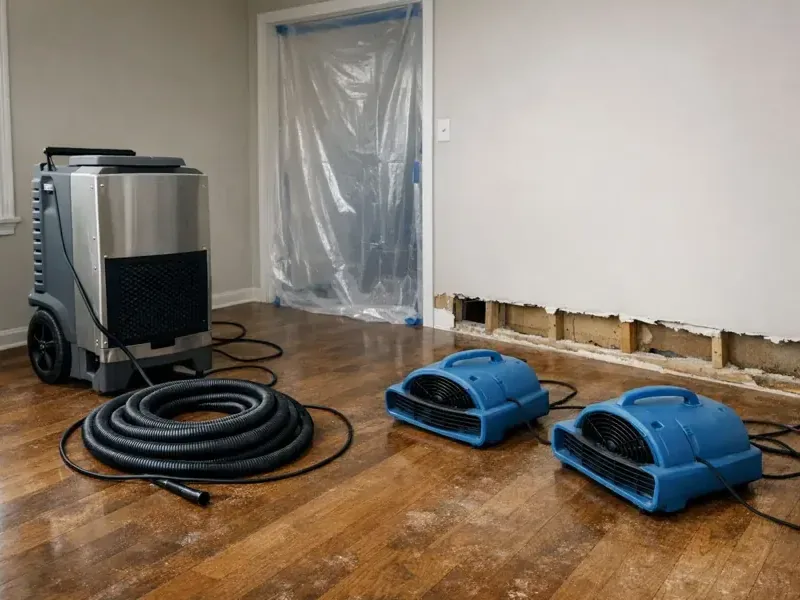
Structural Drying in Paramus, NJ
The drying team sets material-specific goals, manages evaporation and humidity, and checks progress at repeatable locations. Equipment stays focused on the wet structure until measurements support the next repair stage.
(888) 471-9821Check the structural moistureHow structural drying is handled in Paramus
Structural drying in Paramus addresses water absorbed into framing, floors and concealed assemblies after extraction. The team balances air movement and dehumidification, then adjusts the plan when a material responds more slowly than expected.
First steps for structural drying
- 1
Confirm the source has stopped
The team checks the status of plumbing, appliance or exterior repairs. An active source can keep feeding moisture faster than the drying equipment can remove it.
- 2
Preserve the drying setup
Occupants keep the equipment route clear and avoid changing controls. The technician explains room restrictions and safe access around hoses, cords and opened finishes.
- 3
Report equipment interruptions
Power loss, a full collection container or a stopped unit needs attention from the drying team. The monitoring record notes interruptions that could affect material progress.
- 4
Wait for material verification
Finishes remain open until the relevant readings support repair. A quiet room, dry surface or elapsed number of days cannot substitute for checking the assembly.
What does structural drying cost in Paramus, NJ?
Structural drying commonly costs $1,000 to $7,000 or more after initial water removal. Material density, affected volume, cavity access, equipment needs and monitoring duration determine the scope. Reconstruction and source repair are separate.
Accessible small zone
- Exposed wet surfaces
- Limited equipment group
- Daily moisture checks
Several connected rooms
- Multiple material types
- Cavity and floor access
- Equipment adjustments
Dense or concealed moisture
- Specialized drying methods
- Extended material monitoring
- Detailed repair handoff
Compare the scope with the water damage cost calculator. The restoration company prices the inspected damage, material access and equipment needs separately from source repairs, replacement finishes and contents work.
The structural drying process
- 1
Establish the moisture baseline
The technician maps wet materials, identifies dry references and records the category and class of loss. Access limits and source status shape the initial drying design. Repeatable monitoring points make later comparisons meaningful.
- 2
Set the drying environment
The crew places air movers and dehumidifiers around the exposed moisture load. Safe power and drainage support continuous operation. The setup manages evaporation from surfaces and removal of vapor from the room together.
- 3
Measure and adjust daily
Material readings, humidity and temperature show how the assembly responds. The team investigates slow locations and changes equipment or access when necessary. Progress follows the structure rather than a preset equipment-removal date.
- 4
Verify the repair handoff
Final measurements document the retained materials and any remaining limitations. The drying log, photos and scope explain the work performed. Replacement finishes then follow their own installation requirements and the source repair status.
An empty room can still contain a substantial moisture load in wall plates, wood flooring and concrete. The drying plan follows those materials rather than the amount of visible water. Buildings near Van Saun County Park, along Route 4 and off Paramus Road receive an assembly-specific assessment before equipment counts or drying duration are set.
Moisture mapping sets the target
The technician identifies the affected materials and compares them with suitable dry references. Water category determines cleaning and removal needs, while the class of loss helps describe the evaporation load. Those observations guide equipment placement and access.
Thermal imaging can help find suspicious patterns, but meter readings and inspection verify wet material. The team records monitoring points so later visits compare the same locations instead of collecting unrelated numbers around the room.
- Identify retained wood, concrete and wallboard.
- Record suitable dry reference materials.
- Mark repeatable monitoring locations.
- Check hidden spaces that limit evaporation.
Air movers and dehumidifiers work together
Air movement encourages moisture to leave exposed surfaces. Dehumidifiers remove that vapor from the room air. Running fans without controlling humidity can shift moisture without providing an effective drying environment. Equipment selection depends on the materials, temperature and access.
The EPA indoor air quality information explains moisture control in buildings. The Ready.gov power outage page supports planning around safe power interruptions. Equipment operation needs suitable electrical supply and a protected work area.
A stalled reading changes the plan
A monitoring point that stops improving can reveal trapped water, a missed source, inadequate access or an equipment issue. The crew reviews that location rather than extending a calendar blindly. Dense wood and concrete may need different techniques from thin exposed wallboard.
Commercial properties along Route 17 can also need zoning to keep dry occupied areas separate from the work. The final record includes the initial map, equipment changes and final material readings. Reconstruction follows the measured condition and the requirements of the replacement finishes.
- Record indoor humidity and temperature.
- Check equipment operation during monitoring.
- Investigate slow cavities and floor layers.
- Document the final material condition.
Quiet equipment can interrupt the dry-out
Occupants leave equipment settings and access openings as directed by the drying team. Turning units off overnight or closing a needed cavity can change the moisture balance and delay progress. The crew plans safe power, hose routes and room restrictions so the setup can operate consistently. Wet electrical equipment requires qualified clearance before use. Contaminated losses need cleanup before broad airflow begins. A daily visit checks materials as well as the equipment display, since room humidity alone cannot describe moisture inside a wall. The project moves toward repair after the affected assembly reaches its target and any source-control concerns are resolved.
Structural drying coverage
The restoration team covers homes and businesses across the borough, including the Route 4 and Route 17 corridors, with service in ZIP codes 07652 and 07653.
Structural Drying questions
How long does structural drying take?
A contained loss may dry over several days, while dense or concealed materials take longer. The technician sets goals from the actual assembly and monitors progress. Equipment removal follows readings rather than a promised completion date.
What does IICRC S500 mean for drying?
IICRC S500 is the industry water-damage restoration standard. The work uses source assessment, category and class evaluation, moisture mapping, appropriate equipment and documented verification. Mentioning the standard describes the process, not a credential claim.
Why are dehumidifiers needed with fans?
Fans encourage evaporation, while dehumidifiers remove the resulting vapor. Without humidity control, moisture can remain in the room air and slow progress. The drying team balances both functions for the affected material load.
Can the equipment be turned off at night?
Interruptions change the drying environment and can slow progress. The team establishes safe operation and room access, and occupants report any problem rather than changing settings independently. The record notes interruptions that affect the dry-out.
Why does one wall stay wet longer?
Layered materials, blocked cavities, ongoing entry or limited airflow can slow a location. The technician checks the source and assembly, then adjusts access or equipment. A stalled reading prompts investigation rather than automatic closure.
What proves the structure is ready for repairs?
The final record compares affected materials with suitable dry references and relevant finish requirements. It includes moisture readings and source-control status. The technician checks hidden layers as well as the room surface and air humidity before repairs.
A dry surface can conceal a wet assembly
The 24/7 response builds a drying plan around measured materials, safe access and source control.