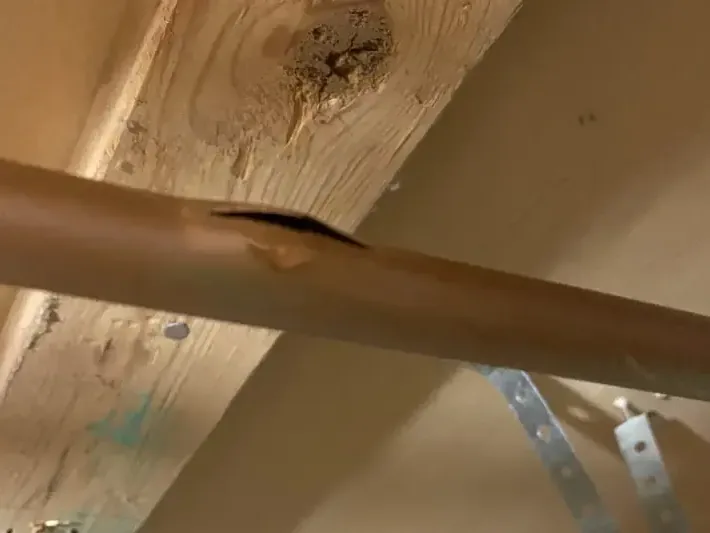
Burst Pipe Water Damage in Paramus, NJ
The response team follows a supply rupture through walls, flooring and adjoining rooms. A plumber stops the failed pipe; the mitigation crew removes escaped water and dries the affected building materials.
(888) 471-9821Contain a pipe ruptureHow burst pipe water damage is handled in Paramus
A burst supply pipe keeps feeding the loss until the water stops. The restoration team in Paramus charts the spray path and downhill spread, then treats concealed saturation as part of the same event.
First steps for burst pipe water damage
- 1
Limit the supply
A reachable dry shutoff can stop continuing discharge. When access is unsafe, the household stays clear while qualified help isolates the supply and electrical hazards.
- 2
Avoid loaded ceilings
A bulging ceiling may hold water from a pipe above. Occupants leave that area; the crew assesses overhead stability before attempting controlled drainage or access.
- 3
Protect the evidence
Safe photographs capture the failed location and the affected rooms. The plumber and restoration team keep repair observations separate from the moisture and removal records.
- 4
Clear a dry staging area
The crew needs an equipment route that avoids spreading water into unaffected rooms. Movable contents can wait in a dry space after their condition is recorded.
What does burst pipe water damage cost in Paramus, NJ?
Burst pipe cleanup commonly ranges from $1,200 to $7,500 or more. The escaped volume, hidden wall access, affected floor levels and material removal drive mitigation cost; plumbing repair and reconstruction have separate scopes.
Localized pipe loss
- One accessible wet room
- Extraction and cavity checks
- Limited drying equipment
Concealed spread
- Walls and floor affected
- Selective wet-material removal
- Daily moisture monitoring
Several levels
- Overhead and floor damage
- Multiple drying zones
- Expanded documentation
Compare the scope with the water damage cost calculator. The restoration company prices the inspected damage, material access and equipment needs separately from source repairs, replacement finishes and contents work.
The burst pipe water damage process
- 1
Identify the discharge path
The technician records the rupture position, source status and rooms below or beside it. Measurements include the spray area and lower pooling so the initial plan includes both direct wetting and gravity-driven spread.
- 2
Extract and open access
The extraction crew removes accessible liquid and lifts wet layers where necessary. Controlled openings expose saturated insulation or framing. Every removal decision follows the condition of the material and the ability to reach it safely.
- 3
Balance the drying zone
Air movers direct evaporation across exposed wet surfaces while dehumidifiers lower the vapor load. The crew checks cavity response, equipment operation and surrounding dry areas, adjusting placement when a monitoring point stops improving.
- 4
Close the moisture record
The final inspection compares the affected assembly with a suitable dry reference. The team records remaining repair needs and confirms the source repair status before rebuilding proceeds. Equipment removal follows measured progress.
A pipe rupture can spray upward into insulation before water becomes visible at the floor. The crew maps both paths instead of drawing the drying boundary around the puddle. A home off East Ridgewood Avenue, a business on Route 17 and a property near Van Saun County Park each need access planned around the actual wet rooms.
The split pipe and the wet structure
Repairing the pipe closes the source, but wall cavities may still hold soaked insulation and wet framing. The technician compares readings above and below the failure and checks the opposite face of the wall. Material that blocks evaporation requires selective access.
A plumber checks the repaired connection under operating conditions before finishes close. The drying team records the moisture condition separately, so a successful pressure test does not substitute for a dry wall.
- Trace the spray pattern above the rupture.
- Inspect flooring beneath the lowest wet point.
- Check the adjoining side of a shared wall.
- Keep removed pipe pieces when the claim process needs them.
Why the wet boundary can grow
Water follows penetrations around plumbing and wiring, enters floor seams and reaches rooms that never showed a running stream. The first map becomes a baseline for later checks. A newly found wet section changes the drying scope rather than disappearing under replacement trim.
The EPA WaterSense program explains household leak detection. The Ready.gov power outage information covers electrical precautions when a loss interrupts safe power. Neither a breaker reset nor a quiet pipe establishes that the building is dry.
Drying after the source repair
The crew extracts accessible water before setting airflow. LGR dehumidifiers collect moisture released from the wet assembly, and daily readings show whether the drying arrangement reaches its target. Saturated insulation often needs removal because it restricts cavity drying.
The record distinguishes the pipe repair, emergency mitigation and later rebuilding. Photos before opening the wall preserve the visible damage; photographs after access show the hidden extent. This sequence gives an adjuster a clear explanation of why a small pipe opening can require a broader drying area.
- Record the shutoff and repair status.
- Measure the floor under the pipe path.
- Label each daily monitoring point.
- Keep repair and mitigation scopes separate.
A shutoff must be safely accessible
Occupants stay clear of water around electrical panels, appliances and outlets. A shutoff inside a wet room does not justify crossing energized water. The response team coordinates safe entry and source control before moving equipment. A ceiling that has filled from a burst pipe needs a separate stability assessment; standing beneath a sagging section risks falling material. The crew uses controlled access to inspect the cavity after electrical clearance. An apparently small split can discharge into several hidden layers, so a dry carpet surface does not end the assessment. The next step follows moisture readings and the repaired supply status.
Burst pipe water damage coverage
The restoration team covers homes and businesses across the borough, including the Route 4 and Route 17 corridors, with service in ZIP codes 07652 and 07653.
Burst Pipe Water Damage questions
Does the pipe repair include the drying?
Pipe repair restores the water system. Mitigation addresses escaped water in the building, and finish repairs follow afterward. Keeping those scopes separate helps the household understand why water extraction and daily monitoring continue after the plumber leaves.
Can a wall stay closed after a burst pipe?
Some assemblies can dry through controlled access, while others trap water behind insulation or coverings. The technician bases the opening decision on contamination, material condition and moisture measurements, not simply on the size of the visible stain.
Should wet insulation remain in place?
Insulation that holds water or blocks access to framing can prevent an effective dry-out. The crew evaluates its condition and removes affected material where necessary, documenting the cavity before replacement becomes part of the repair scope.
Why are rooms below the pipe checked?
Water follows gravity through penetrations and floor assemblies. A ceiling or wall below the rupture may absorb water before staining develops. The inspection includes those paths and later checks confirm that the initial wet boundary was complete.
Is emergency pipe cleanup available overnight?
The response team handles active water losses 24/7. The source status, electrical conditions and safe route into the building help determine the first actions. No arrival time replaces the need to keep clear of hazardous water.
What does the claim file show?
The file can include source observations, pre-removal photos, the moisture map, equipment details and daily readings. The insurer applies the policy terms to coverage; the mitigation documentation explains the damage and the work needed to dry it.
A supply failure needs a building assessment
The 24/7 response covers escaped water, concealed saturation and drying records after source control.