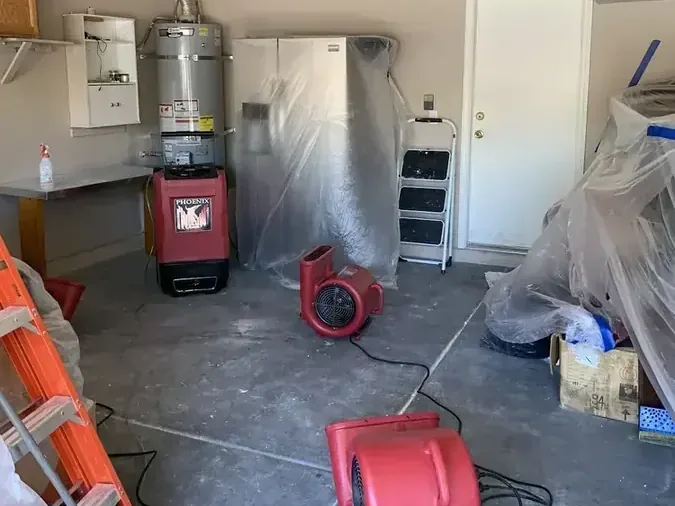
Water Heater Leak Cleanup in Paramus, NJ
The mitigation team removes water around a leaking heater and checks the floor, wall bases and adjacent rooms. Appliance repair and energy isolation come first; the dry-out addresses everything the escaped water reached.
(888) 471-9821Assess tank-area waterHow water heater leak cleanup is handled in Paramus
Water heater cleanup in Paramus follows the escaped tank water beyond the utility area. The technician checks nearby storage, flooring and concealed edges while the appliance specialist determines the source and repair needs.
First steps for water heater leak cleanup
- 1
Avoid the discharge
People and pets remain away from hot water, wet cords and the heater controls. The team assesses the source and energy hazards before close inspection.
- 2
Arrange appliance source control
A plumbing or appliance specialist checks the tank and connections. The restoration crew needs to know whether discharge has stopped before extracting and drying the area.
- 3
Record wet storage
Boxes and belongings near the heater are photographed before relocation or disposal. Separating contents from building damage helps keep the claim and cleanup records clear.
- 4
Check the next room
The technician follows water beneath thresholds and wall bases. An adjoining finished room can need drying even when the largest visible pool remains beside the heater.
What does water heater leak cleanup cost in Paramus, NJ?
Water heater leak mitigation typically costs $800 to $5,500 or more. Access around the tank, water spread beneath flooring, wet storage and wall damage affect cleanup cost. Appliance replacement and plumbing work are separate.
Accessible utility area
- Localized extraction
- Wall-base inspection
- Initial drying setup
Adjoining room spread
- Floor transition checks
- Selective material access
- Contents documentation
Concealed broad damage
- Several wet assemblies
- Appliance access coordination
- Extended moisture monitoring
Compare the scope with the water damage cost calculator. The restoration company prices the inspected damage, material access and equipment needs separately from source repairs, replacement finishes and contents work.
The water heater leak cleanup process
- 1
Confirm appliance and safety status
The technician records the source specialist’s findings and checks the safe equipment route. Water temperature, electrical conditions and access around the heater determine how the restoration crew can inspect the surrounding materials.
- 2
Extract the escaped tank water
The crew removes pooled water and moves documented contents out of the affected area. Extraction extends to low pockets and adjoining floor edges. Suitable access reveals moisture behind the tank position and nearby partitions.
- 3
Dry the utility area and connections
Airflow and dehumidification address exposed wet finishes, wall bases and adjoining rooms. The drying team checks repeat locations and coordinates with the replacement appliance schedule so equipment placement does not block necessary access.
- 4
Verify the area for repair
Final readings document the condition around the heater and across the wet boundary. The written scope distinguishes the appliance work, damaged finishes and mitigation. Any remaining repair needs stay visible for the next contractor.
A tank leak can soak stored boxes and wall bases before water reaches an open walkway. The inspection extends beneath the appliance area and into adjoining finishes. Homes near Van Saun County Park, properties along Paramus Road and businesses beside Route 4 need the actual heater location and discharge path checked independently.
The tank is only one possible source
A wet heater area can result from a tank failure, supply connection, drain valve or another nearby leak. A qualified appliance or plumbing specialist identifies the source and handles repairs. The restoration crew documents the escaped water and checks which building materials absorbed it.
Hot water adds a burn hazard, and wet electrical or fuel equipment requires specialist attention. The household should not move the heater to see behind it. Controlled appliance access lets the crew inspect the floor and wall without damaging connections.
- Identify active discharge before cleanup.
- Check stored contents touching the wet floor.
- Inspect wall bases behind the tank area.
- Keep energy isolation with qualified workers.
Water beneath the utility-room edges
Water can travel under flooring into an adjacent finished room. Cabinet bases, partitions and storage platforms can hide the wet boundary. The technician uses readings at transitions and checks the lowest areas where water collects.
The EPA WaterSense household information supports leak awareness. The Ready.gov home planning information helps households prepare for interruptions and restricted access. Neither replacing the appliance nor wiping up the visible pool establishes that surrounding materials are dry.
Keep replacement equipment out of a wet assembly
The crew extracts water, exposes wet layers where necessary and sets dehumidification for the remaining material load. A replacement appliance needs a suitable installation area, and the repair specialist coordinates its placement with ongoing drying access.
The final record separates the heater repair or replacement from extraction, wet-material removal and structural drying. Readings at wall plates and adjoining floors help prevent a damp corner from being enclosed behind the new appliance. The team also records any water-damaged contents for a separate inventory.
- Document the appliance source finding.
- Map adjoining floor transitions.
- Keep wet storage away from dry contents.
- Verify the surrounding structure before closure.
Hot water and wet equipment require distance
Occupants keep clear of escaping hot water and avoid operating wet electrical controls. Fuel connections, electrical isolation and heater removal belong to qualified specialists. A safe dry shutoff may limit the incoming supply, but the household should not step through pooled water to reach it. The restoration crew establishes access around the appliance, protects nearby contents and checks hidden wet surfaces after source control. A small amount of water visible outside a closet can represent a larger trapped pool behind the tank. The drying scope follows the measured spread, and the installation plan keeps access open until surrounding materials have been checked.
Water heater leak cleanup coverage
The restoration team covers homes and businesses across the borough, including the Route 4 and Route 17 corridors, with service in ZIP codes 07652 and 07653.
Water Heater Leak Cleanup questions
Does a puddle always mean the tank failed?
No. A connection, valve or nearby source can also wet the heater area. A qualified specialist identifies and repairs the source. The restoration team evaluates the escaped water and moisture in the surrounding building materials.
Can a new heater be installed before drying finishes?
Installation and drying access need coordination. The specialist determines appliance requirements while the restoration crew checks the surrounding floor and walls. A replacement should not conceal wet materials that still need access or monitoring.
Can tank water damage an adjoining room?
Yes. Water can travel beneath continuous flooring, through wall-base gaps and across thresholds. The technician checks these transitions instead of limiting the assessment to the utility area where the appliance stands.
Should wet boxes be discarded immediately?
Their condition should be documented first when safe. The crew separates salvageable contents from unsuitable material and keeps a record of disposal. Contents handling and structural drying appear as distinct parts of the cleanup scope.
Does cleanup include heater replacement?
Water mitigation addresses extraction, wet materials and drying. The appliance specialist handles the heater and related source repairs. Written scopes clarify which work each contractor performs and prevent a tank replacement from hiding unfinished drying.
Is a slow tank leak urgent?
A persistent leak can keep feeding concealed floor and wall moisture even without a large pool. The team accepts water-loss requests 24/7. Occupants avoid wet controls and hot discharge while qualified help evaluates source control.
A replaced tank can leave a wet room
The 24/7 response addresses water removal and measured drying around the appliance repair.