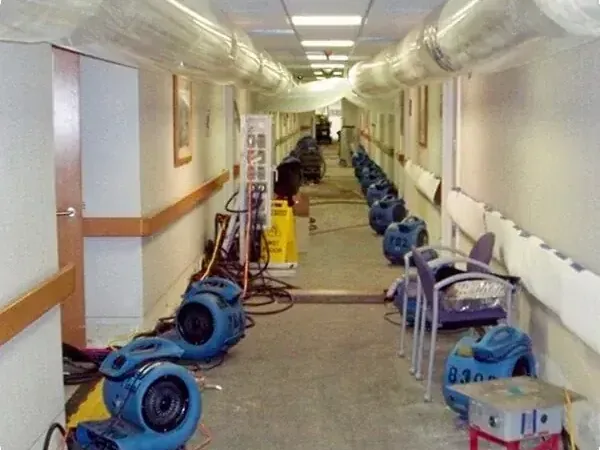
Commercial Water Damage in Paramus, NJ
The commercial mitigation team separates wet work from dry operations, records affected stock and building materials, and coordinates extraction and drying with property access. The scope follows safe occupancy and measured conditions.
(888) 471-9821Assess the business water lossHow commercial water damage is handled in Paramus
Commercial water damage restoration in Paramus accounts for shared access, equipment power and the affected business space. The crew maps wet materials while the property manager coordinates source repair and operating restrictions.
First steps for commercial water damage
- 1
Name the property contact
The business identifies who can authorize access and coordinate tenants, utilities and source repairs. Clear responsibility helps the crew inspect connected spaces without delaying safety decisions.
- 2
Restrict the affected zone
Staff keep customers outside wet or unstable areas. The team checks exits and establishes protected equipment routes before extraction and material movement begin.
- 3
Photograph stock and finishes
Safe records distinguish inventory, equipment and building materials. The crew documents original conditions before relocating goods or removing damaged finishes from the space.
- 4
Prepare utility information
The property manager shares shutoff locations and relevant building-system contacts. Qualified specialists handle wet electrical equipment while the restoration team plans safe drying power.
What does commercial water damage cost in Paramus, NJ?
Commercial mitigation can range from $2,500 to $15,000 or more, with large or complex losses exceeding that range. Affected area, contamination, business access, ceiling connections and equipment needs determine the inspected scope.
Contained tenant area
- Localized extraction
- Protected work route
- Initial inventory documentation
Several connected zones
- Multiple material assemblies
- Access coordination
- Daily zone monitoring
Broad business disruption
- Extensive removal or cleaning
- Larger drying equipment plan
- Detailed staged handoff
Compare the scope with the water damage cost calculator. The restoration company prices the inspected damage, material access and equipment needs separately from source repairs, replacement finishes and contents work.
The commercial water damage process
- 1
Survey the building and business needs
The technician maps affected materials and shared connections while the property contact identifies occupancy and access constraints. The plan distinguishes immediate safety issues, source repairs and the areas available for mitigation work.
- 2
Extract and protect unaffected space
The crew removes water and unsuitable material along a controlled route. Dry stock and occupied areas remain separated from the work. Contents documentation records what moved and why before the site condition changes.
- 3
Run drying by measured zone
Equipment serves the wet material load in each zone, with power and drainage arranged safely. Daily readings reveal slow assemblies or newly accessible spaces. The team updates the scope when connected cavities require additional attention.
- 4
Provide a staged repair record
The final documentation identifies dried areas, removed materials and remaining reconstruction needs. Inventory and source repair records stay distinct. The business evaluates reopening with the relevant specialists and the actual condition of the affected space.
A retail water loss can affect stock, floor finishes and customer access at the same time. Route 4, Route 17 and Westfield Garden State Plaza provide distinct commercial settings in the borough. The restoration plan follows the actual tenant space and building systems rather than treating every business as a large residential room.
A work boundary before equipment arrives
The team identifies wet rooms, shared corridors, delivery access and dry areas that can remain protected. The property manager coordinates keys, utility information and tenant contacts. Electrical and structural concerns set occupancy limits before pumps or drying equipment begin.
Stock and business contents need a separate inventory from walls and floors. Photos show original placement and visible water contact. The crew avoids mixing wet goods with unaffected inventory during relocation, which helps preserve a clear loss record.
- Identify the authorized property contact.
- Protect exits and dry circulation routes.
- Separate inventory from building damage.
- Coordinate utility and source repair access.
Drying zones around the operating space
Large open floors and connected ceiling cavities can spread moisture beyond the first tenant complaint. The technician maps those connections and checks adjoining units where access is authorized. Equipment placement accounts for the material load, available power and protected walking routes.
The Ready.gov business planning information supports continuity preparation. The EPA indoor air quality information explains moisture considerations in buildings. A safe operating decision follows actual conditions rather than the absence of visible water.
Document the work in usable stages
Westfield Garden State Plaza delayed an opening after a reported water main break. That local event illustrates the practical importance of access and operating decisions during a water interruption. Each current loss still requires its own source investigation and material assessment.
The crew records extraction, removal, cleaning and drying as distinct activities. Daily updates identify completed areas, remaining wet points and any changed access restrictions. The final handoff separates mitigation from source repair, inventory claims and reconstruction so each responsible party can review the relevant scope.
- Label monitoring points by room or zone.
- Record equipment changes and interruptions.
- Keep tenant and common-area findings clear.
- List remaining repair needs at handoff.
Business access must remain controlled
The property manager and restoration team keep customers and staff outside unstable, contaminated or electrically hazardous space. A dry-looking aisle may sit beside a wet wall cavity or energized equipment. Protected routes need to remain clear of hoses, cords and waste handling. The crew documents access limits and coordinates any changes with the authorized building contact. Food, stock and business equipment require handling appropriate to their condition; water mitigation does not automatically clear them for use. The drying plan addresses the building materials and records progress by zone, while qualified specialists evaluate electrical systems and the business reviews operational requirements.
Commercial water damage coverage
The restoration team covers homes and businesses across the borough, including the Route 4 and Route 17 corridors, with service in ZIP codes 07652 and 07653.
Commercial Water Damage questions
Can part of a business remain open?
That depends on electrical, structural, contamination and access conditions. The team defines a protected work zone with the property contact. Business operations must remain clear of equipment, waste routes and any space that has not been evaluated.
How are stock and building damage recorded?
Separate inventories and photos distinguish goods, equipment and structural finishes. The mitigation scope documents building work, while contents records preserve the condition and handling of affected items for the business and its insurer.
Why inspect an adjoining tenant space?
Water can travel through shared walls, floor assemblies and ceiling cavities. Authorized access allows the technician to check those connections. The drying boundary follows measured spread rather than the lease boundary or first visible puddle.
Does commercial drying require a shutdown?
Some losses require restricted occupancy, while others permit protected use of dry areas. The decision depends on the hazards and work conditions. The restoration team coordinates equipment and access with the authorized property contact.
What belongs in a daily update?
Useful updates identify wet monitoring points, completed removal, equipment changes and remaining restrictions. They also flag source repair status and newly discovered damage. A zone-based record helps the business plan around the work.
Are commercial losses handled after hours?
The response team accepts requests 24/7. After-hours access still requires an authorized contact, safe utility conditions and a controlled work route. The initial discussion should identify the affected space and whether water continues entering.
Water damage needs an operating plan
The 24/7 commercial response maps materials, protects dry space and records the work by zone.