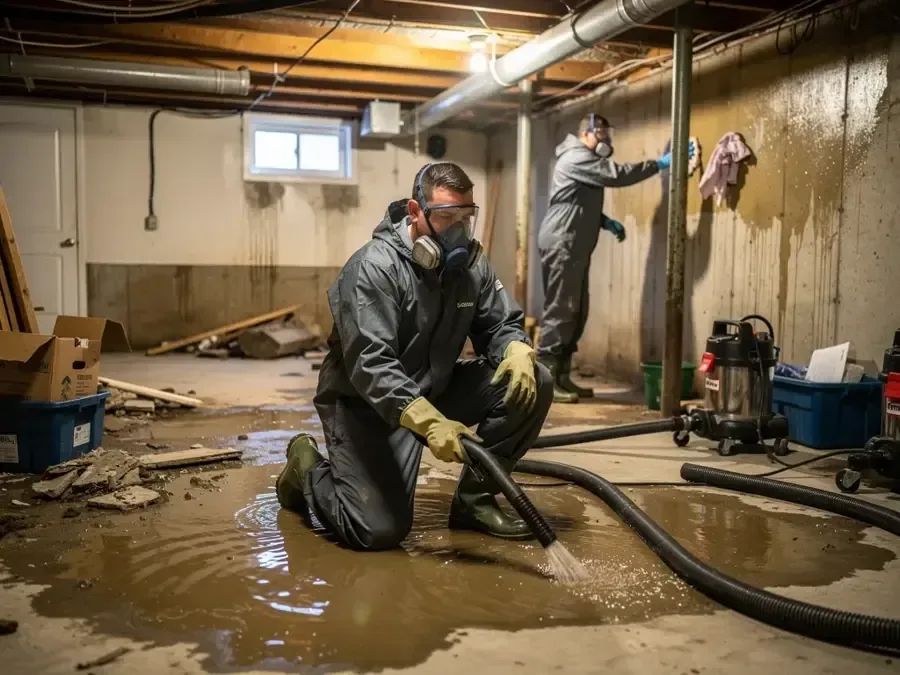
September 24, 2026: Glen Rock reported that recent rain had caused flooding in areas that had never flooded before. The borough notice directed residents to avoid walking, swimming or driving through floodwater. For a household facing water at its entrance, the practical response begins with a safe place to remain and an inspection plan for the building once access is appropriate.
Key takeaways
- Stay out of floodwater even along a familiar approach to the home.
- Use borough updates to follow changing public conditions.
- Document entry points from safe locations before planning contents retrieval.
- Have water contact, residue and affected construction assessed before drying starts.
A familiar approach can become an unsafe route
A driveway or front walk can be difficult to judge when water conceals its surface. Residents should follow the borough warning and avoid crossing floodwater to reach a door or vehicle.
A different entrance is useful only when its approach and the interior beyond it are safe.
The household can identify a dry place to wait and a way to communicate with the people assessing the property. Keys, access arrangements and known hazards can be described remotely.
Retrieving belongings should wait when it would require entering moving water or an electrically unsafe area.
A storm water cleanup assessment starts with the access conditions and the observed entry route. The team needs to know whether water is still arriving, which level is affected and whether utilities or structural damage create additional restrictions before interior work is planned.
- Avoid walking or driving through water covering the approach.
- Describe blocked doors without attempting to force a crossing.
- Keep children and pets with the household outside the affected area.
Use current updates to organize the household response
The borough offers updates through email, Nixle and Rave. Residents can keep relevant notices available while arranging property access.
The date and wording of the notice matter, especially when conditions change between the first report and the time a household is able to return.
A family contact can gather questions about access, utilities and contents retrieval so instructions remain consistent. Different occupants should not make separate attempts to enter the same restricted area.
A shared note can record who has visited, what was observed and what advice is still awaiting a response.
The September notice also described work by borough staff and professionals on flooding solutions. At the home, the immediate inspection should document the door, wall or other opening where water entered.
This gives the cleanup team a concrete starting point for the indoor work while public conditions are being addressed.
- Save current notices with their publication dates.
- Use a single household access plan.
- Record professional instructions before arranging a return visit.
Capture the doorway and the room in the same story
A photograph of mud on a floor is more useful when the doorway and adjoining room are also identifiable. From an approved safe position, the inspection team can document water marks, debris and the route into the building.
These details may change once removal and cleaning begin.
An entry record should include the visible boundary and the material transitions along it. Tile meeting wood, a carpet edge or a wall base can help locate the extent of contact.
Room labels allow later photographs and readings to be connected with the original views.
Exterior observations should stay attached to their location. Water at a gate, steps or wall opening can be marked on a sketch alongside the interior findings.
The resulting record helps explain the cleanup sequence and highlights openings that a separate repair or drainage inspection may need to examine.
- Take an overall room view before close surface photographs.
- Mark visible debris and water contact at transitions.
- Use consistent labels for exterior and interior views.
Handle outdoor water according to what it contacted
Water entering from outside can carry soil, debris and other contamination into the home. The cleanup team evaluates the route and contacted materials before choosing what can be retained.
A floor that appears clear after water removal may still need cleaning and inspection beneath accessible finishes.
Soft goods, cardboard and enclosed storage deserve particular attention because water can reach surfaces that are difficult to inspect. The owner should identify important contents for specialist assessment without moving them through unaffected living areas.
A designated handling route reduces unnecessary contact elsewhere in the building.
The inspection should also account for concealed wet construction at wall bases and floor edges. Where access is needed, the team should explain what it is checking and record the findings.
Removal decisions should connect to the material's condition and cleanability rather than the desire to make the room look finished quickly.
Plan extraction around safe equipment access
The liquid removal route needs a safe working entrance and space for equipment. Wet electrical installations, unstable finishes and changing exterior water conditions must be addressed before equipment is used in the affected area.
Occupants should stay outside the work boundary while those arrangements are made.
During water extraction, technicians identify collection points and accessible spaces beneath or beside finishes. The work record should show where liquid was removed and what remains inaccessible.
Those locations become specific inspection tasks rather than an assumption that the whole floor has been reached.
Outside water may leave substantial residue after extraction. Cleaning and the removal of unsuitable materials prepare the retained construction for drying.
The household should receive an explanation of that sequence so the absence of a puddle is understood as progress rather than the end of all interior work.
- Keep equipment access separate from household movement.
- Record inaccessible collection points for follow up.
- Preserve source and contact observations before residue is removed.
Check retained construction before closing surfaces
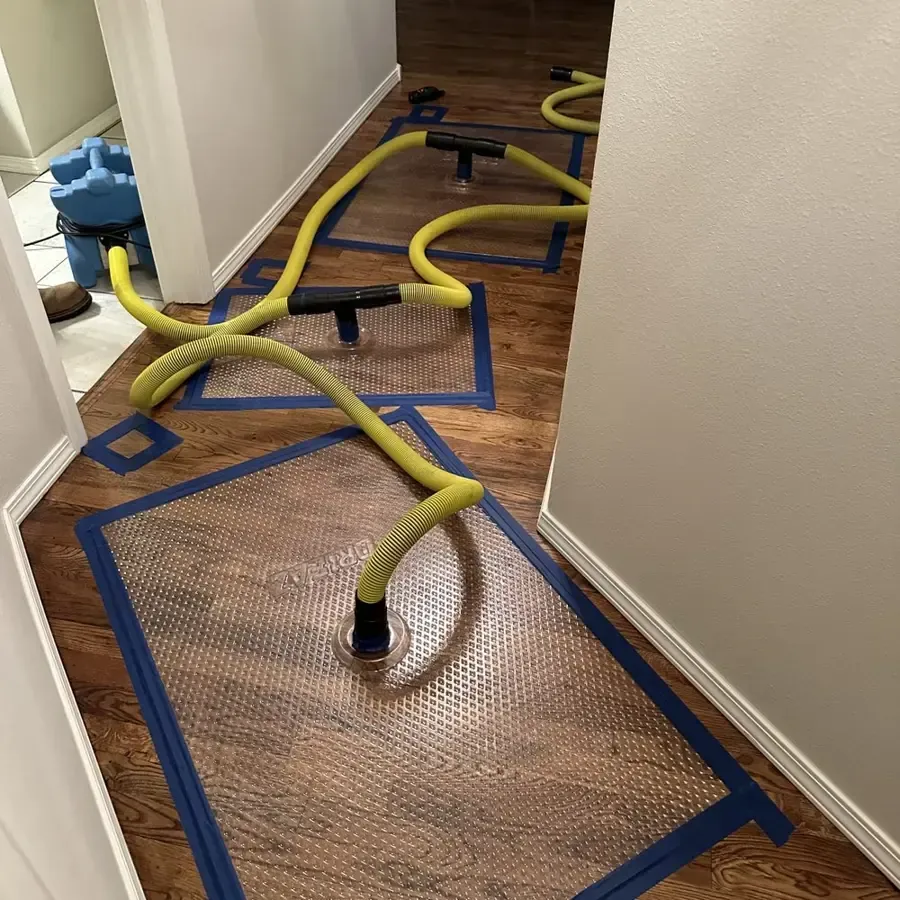
Drying decisions depend on the wall, floor and other materials retained after cleanup. The crew establishes repeatable measurement locations and tracks their response.
If an enclosed section remains wet, the next action should address that section's access or drying conditions rather than conceal it beneath a new finish.
The structural drying record can support discussions with the repair contractor about when work may proceed. It should identify removed materials, retained layers and the condition at the monitored locations.
This gives the finishing trade a practical account of the assembly it will repair.
Household storage should remain outside the drying area until the team releases it. Returning boxes to a damp edge or covering a measurement location can interfere with continued assessment.
The owner can ask for the next inspection point and the specific conditions needed before that room returns to normal use.
Keep the recovery file useful for a future rain
The local brook geography includes Ho-Ho-Kus Brook along the eastern side of the borough and Diamond Brook in the western part. At the property, a retained entry sketch and repair record give future professionals the detail they need to examine the actual doorway, wall opening or drainage concern encountered during the loss.
The owner can keep that file with maintenance records and dated borough notices. Photographs of completed repairs should identify the same locations as the original entry record.
This makes any later observation easier to compare and helps the household report a new problem clearly if water returns.
Questions
Does an entrance become safe as soon as the water recedes?
Recession can reveal damaged surfaces, residue and affected electrical equipment. A safe access decision should consider the approach and the conditions inside. Residents should follow the responsible professionals' instructions before using an entrance that was blocked by water.
Where can residents receive borough updates?
The borough offers information through email, Nixle and Rave. Saving the relevant notice with its date helps the household follow changing instructions. Access plans should be reassessed when a later update or a property inspection changes the situation.
Should muddy contents be moved to an unaffected room?
Items should follow the cleanup team's handling plan. Moving them through clean living areas can carry residue and moisture beyond the original boundary. A suitable staging area and item labels support item assessment while keeping affected and unaffected belongings separated.
What information helps a later drainage inspection?
The entry sketch, photographs of exterior water marks and the matching indoor views provide a useful starting record. Completed repair details should be kept with them. A professional can then inspect the particular openings and drainage features involved at the property.