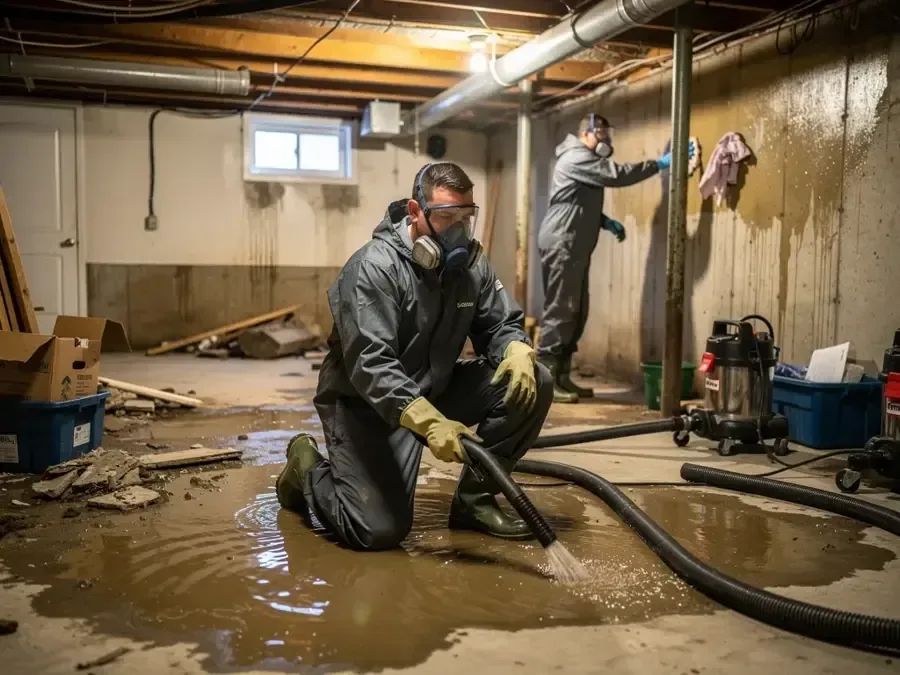
Storm Flood Cleanup in Glen Rock
Outdoor water can bring sediment into rooms that have never flooded. Glen Rock storm cleanup starts with a safe access boundary and follows the entry path through contents, finishes and concealed edges.
(888) 471-9821Discuss the storm entry routeHow storm flood cleanup is handled in Glen Rock
Flood restoration combines bulk water removal with handling of debris and affected materials. The work defines where outside water traveled, separates contaminated items and prepares suitable retained surfaces for cleaning and monitored drying.
First steps for storm flood cleanup
- 1
Avoid crossing floodwater
The borough advises against walking, swimming or driving through floodwater. Occupants should stay out of unsafe areas until conditions permit qualified assessment of access and the affected building.
- 2
Report the entry location
A doorway, low opening or other visible water route gives inspection a starting point. Observations from a safe location help distinguish outdoor entry from an unrelated plumbing release inside the building.
- 3
Keep clean spaces separated
Moving wet possessions through unaffected rooms can transfer dirty water and debris. Contents handling needs a designated route and suitable separation before the work expands beyond the initial flooded area.
- 4
Document before material handling
Where safe, photographs can show water extent, sediment and affected belongings. Records of the initial condition support a clearer explanation of removal decisions and the work needed after the pool recedes.
What does storm flood cleanup cost in Glen Rock, NJ?
Storm flood cleanup in Glen Rock carries planning ranges of $2,500 to $12,000+. Water extent, debris, contaminated materials and access complexity affect the estimate; the written scope should identify both removal and the subsequent drying stages.
Limited entry area
- Localized outdoor water contact
- Accessible debris removal route
- Defined cleaning and drying area
Several affected rooms
- Water crosses interior thresholds
- More contents require handling
- Multiple wet assemblies assessed
Deep or extensive flooding
- Broad saturation and sediment
- Difficult removal access conditions
- Expanded material removal and drying
Compare the scope with the water damage cost calculator. The restoration company prices the inspected damage, material access and equipment needs separately from source repairs, replacement finishes and contents work.
The storm flood cleanup process
- 1
Establish entry conditions and the contact boundary
Inspection identifies where outdoor water arrived, its visible extent and the hazards affecting access. The work area accounts for connected rooms and items that carried water beyond the first collection point before extraction equipment is arranged.
- 2
Remove bulk water with debris in mind
Pumping or extraction needs to suit the water depth and sediment. A controlled removal route keeps hoses, waste and saturated contents from becoming new sources of contact in otherwise dry portions of the property during the initial cleanup.
- 3
Handle damaged materials before drying the structure
Porous finishes and belongings need condition specific decisions after floodwater contact. Unsuitable material removal and cleaning of retained surfaces prepare the building for drying, with the documented boundary explaining why particular sections were included in the work.
- 4
Track retained material moisture after cleaning
Drying focuses on the structure that remains, including edges that received water before the pool disappeared. Measurements and equipment adjustments establish progress, and the final record supports a separate discussion about rebuilding the affected interior finishes.
A room can become a collection point for outdoor water even when the owner has never dealt with flooding before. Glen Rock's September 24, 2026 notice described recent rain reaching previously unaffected areas. Storm cleanup therefore begins with the observed entry and water contact, including the less visible consequences of sediment and saturated contents.
Local watercourses provide context for the loss
Ho-Ho-Kus Brook runs along the eastern side of the borough. Diamond Brook flows through its western part and continues south toward the Passaic River in Fair Lawn. At an affected building, inspection follows the actual opening and water track to establish the indoor work boundary.
The flood plain beside Ho-Ho-Kus Brook includes land east of Prospect Street and south of Grove Street. For cleanup, the useful observations are where water entered the room, which surfaces it reached and whether it is still arriving. Those details inform safe access and removal planning.
- Entry openings and water marks at edges
- Sediment left beneath furnishings or floor coverings
- Contacted belongings carried into adjoining rooms
- Changing water levels during the assessment
Keep flood debris inside a controlled work area
The borough directs residents to avoid walking, swimming or driving through floodwater. Once access is suitable for qualified work, extraction needs equipment matched to depth and debris. The route for hoses and waste should protect dry rooms rather than creating another path for contaminated material.
Contents handling and finish removal require the same care. A soaked porous item may need a different decision from a cleanable hard surface. Documenting the condition and location before removal helps explain the cleanup scope and makes the later reconstruction discussion easier to follow.
Dry what remains after the cleanup decisions
Floodwater can reach beneath wall trim and into layers that stay damp after the visible pool recedes. Removing bulk water exposes those boundaries but does not finish their treatment. The retained structure needs suitable cleaning and a drying arrangement that reaches the remaining moisture.
Monitoring should focus on materials as well as room conditions. Dense or enclosed sections may need additional access while exposed surfaces improve. A clear record connects these decisions to the original water path, so the owner can understand why some areas require longer attention than others.
- Separate salvage decisions from water extraction
- Identify retained surfaces needing appropriate cleaning
- Measure wet structure beyond visible sediment marks
- Document the handoff to finish replacement
The absence of a pool is an early milestone
Storm water removal changes how the room looks quickly, but the work beneath finishes needs its own endpoint. A useful scope accounts for debris, contents, damaged porous materials and retained framing before drying is declared complete. That sequence gives the homeowner a clearer explanation of what the room needs next and prevents the most visible improvement from hiding unfinished cleanup at floor edges or enclosed spaces.
Storm flood cleanup coverage
Glen Rock storm damage assessment includes properties near Prospect Street, Grove Street and Diamond Brook, with the observed entry route and indoor contact area establishing the cleanup scope.
The same service nearby: storm flood cleanup in Paramus, Fair Lawn, Oradell.
Storm Flood Cleanup questions
What does the recent borough flood notice describe?
On September 24, 2026, the borough reported rain flooding areas that had not flooded before. That history gives context to an outdoor water loss. The actual property assessment still determines entry, contact and the required cleanup boundary.
Should belongings be carried out through dry rooms?
Wet items can transfer sediment and dirty water during removal. A controlled handling route helps protect unaffected spaces. The assessment should establish what can be moved safely, what needs separation and how damaged contents will leave the building.
Does outdoor floodwater require different cleaning?
Its contact with soil, debris and other surfaces changes material handling. Extraction alone does not address everything left behind. The plan needs appropriate cleaning and decisions about porous materials before equipment dries the structure that can remain.
Can a homeowner walk through shallow floodwater?
The borough's flood notice directs residents to avoid walking, swimming or driving through floodwater. Even shallow water can hide hazards. Observations should come from a safe location until access and building conditions support the next assessment step.
Do nearby brooks identify the source at a house?
The inspection follows the actual water entry route at the affected property. Brook geography provides area context, while water marks, openings and site conditions establish how the indoor loss occurred and what surfaces require cleanup attention.
When can retained rooms be put back together?
Rebuilding follows source and access considerations, appropriate material handling, cleaning and suitable moisture conditions in the remaining structure. The work record should identify those stages so replacement finishes do not conceal wet edges or incomplete cleanup.
Plan cleanup around the actual entry
Sediment, wet belongings and concealed edges belong in the scope alongside removal of the visible standing water.