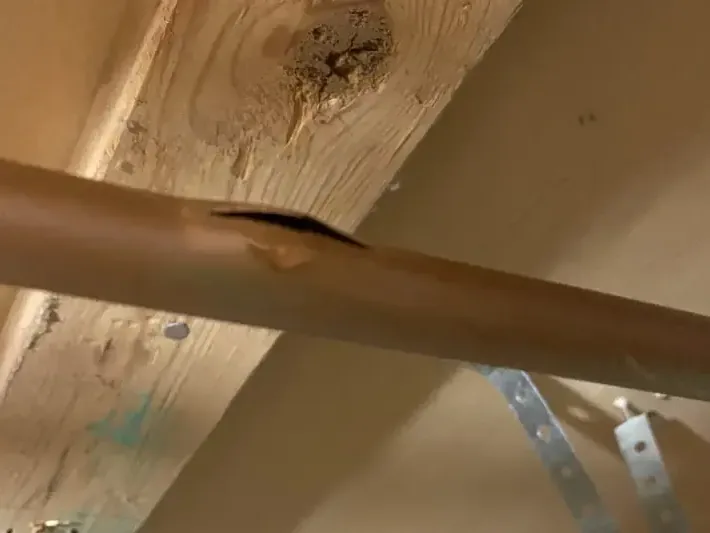
May 27, 2013: A water pipe burst at Kinderkamack Road and Main Street in River Edge, causing street flooding. An owner dealing with a pipe release today needs a record of the current property: the discovery, source repair and wet materials. Keeping that record organized helps the plumbing and restoration work connect without losing the original sequence of events.
Key takeaways
- Start a dated record with the location and visible conditions at discovery.
- Save plumbing repair findings alongside photographs of the wet rooms.
- Track hidden water through connected floors and ceilings using room labels.
- Keep public incident notices separate from observations inside the property.
Describe the discovery before choosing a cause
The first note can be straightforward: where water was noticed, whether it was still moving and what appeared wet. A photograph from a dry position can show the room and its relationship to a doorway or nearby fixture.
These observations remain useful after water removal changes the scene.
A homeowner should avoid entering water around electrical equipment or unstable finishes to collect evidence. Safe access and source isolation take priority.
If someone has already operated a shutoff or moved an item, the record can identify that action and the person who performed it.
The burst pipe cleanup assessment uses those discovery details to organize the inspection. The homeowner can describe a visible pipe split or active spray if safely observed, while the plumbing professional determines which part requires repair and how the supply can be restored.
- Record the discovery location and whether entry continues.
- Photograph the surrounding room from a safe position.
- Write down any shutoff or emergency action already completed.
Keep the plumber's findings attached to the affected room
A repair invoice is most helpful when it identifies the failed component and its location. The owner can ask the plumbing professional to describe what was repaired and any additional work still needed.
Images of an accessible failed fitting or pipe can accompany that description when the professional provides them.
The restoration record should use the same room name as the plumbing record. If a pipe served an upper bathroom and released water into a lower room, both spaces belong in the diagram.
Consistent labels prevent a later reader from treating connected damage as unrelated incidents.
Repair completion and drying completion are separate entries. Once the leaking component has been addressed, water can remain in finishes and cavities.
Recording each task as it occurs gives the owner a usable sequence and helps the next trade see which problem has already been handled.
- Keep source photographs with the repair description.
- Use matching room labels across invoices and inspection notes.
- List any remaining plumbing work separately from material drying.
Follow the water beyond the point of failure
A pipe release can travel through a doorway, along a floor edge or into construction below. The inspection should follow that connected path and compare suitable material locations.
The original wet boundary, any residue and the condition of adjoining trim help determine where closer checks are needed.
Furniture and stored goods can conceal the edge of a release. A planned move allows the team to inspect those areas while preserving item locations.
The owner can identify delicate or connected items before movement so appropriate handling is arranged and the inspection can proceed safely.
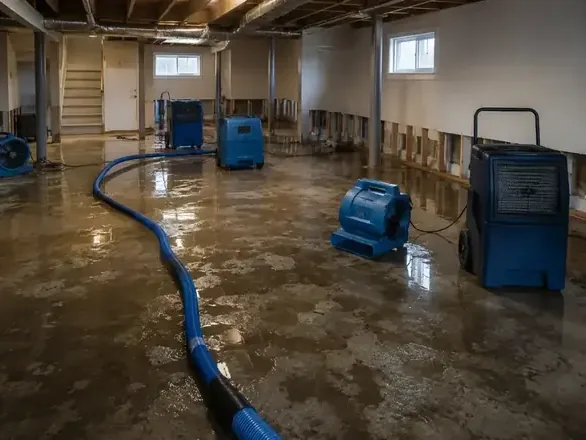
The water extraction crew removes accessible liquid while recording areas that need further access. A visible floor that has been cleared should not erase a cabinet base or enclosed section from the job record.
Each unresolved wet location needs a defined follow up action.
- Include adjoining rooms connected by the observed water route.
- Label hidden areas that remain inaccessible during the first visit.
- Photograph contents before they are relocated for inspection.
Give overhead water a separate safety boundary
When the release begins above a finished room, ceiling damage may appear away from the source. Water can follow the construction before collecting at a joint or fitting.
A growing stain, sagging finish or active drip should be reported without standing beneath unstable material.
A ceiling water assessment establishes safe inspection access and checks the layers involved. The record should show where an opening was made, what material was found wet and what was retained.
These details help explain the ceiling repair rather than leaving only a photograph of the final opening.
Occupants should keep the area below restricted until the appropriate personnel have assessed it. If furniture cannot be retrieved safely, its location can be noted for later handling.
Avoiding unnecessary movement beneath a damaged ceiling protects people and preserves a clearer view of the affected area.
File public water notices without mixing them into room observations
The historic Kinderkamack Road incident is a dated street flooding event. A current utility notice should likewise be stored with its date, issuing organization and stated area.
The owner's indoor notes should retain their own discovery details, photographs and repair findings in the same file but under a separate entry.
That organization is useful when a property has both supply questions and interior damage. A pressure complaint, a public repair notice and a wet cabinet describe different observations.
Keeping their timing clear helps the responsible professionals investigate the relevant equipment and explain the work they perform.
The incident record can be updated when the plumber or utility provides a specific finding. The update should name its source and connect it to the relevant photograph or invoice.
This creates a traceable account without replacing the original description written when the water was discovered.
- Retain the date on each public notice.
- Keep original discovery notes intact when adding later findings.
- Attach a professional's diagnosis to the component it describes.
Track changes during removal and drying
Once cleanup starts, the rooms change quickly. Water is extracted, belongings move and finishes may be opened for access.
Dated photographs after each meaningful change help explain the work sequence and preserve the condition of materials that will no longer be visible after repair.
Material readings should be associated with recognizable locations and the materials measured. A consistent record is easier to interpret than scattered values with no room labels.
The homeowner can ask for a progress explanation that identifies responding areas and any section requiring a change in equipment or access.
Equipment interruptions also belong in the record. If a device stops, a circuit is unavailable or access must change, reporting it allows the team to adjust the plan.
Owners should use the agreed contact instead of changing equipment settings or relocating devices on their own.
Prepare a compact handoff for finish repairs
The repair contractor needs a clear view of the source correction, material removals and retained construction. A short room list with linked photographs can provide that view.
It should identify missing trim, opened ceilings, affected floor edges and any other work left after the cleanup scope ends.
The owner should keep the original discovery record alongside the final handoff. Together they explain what changed and which tasks remain assigned to another trade.
This makes later maintenance questions easier to answer and helps preserve the history of the repaired area.
Questions
What if the owner did not see the pipe fail?
The record can begin with the first visible water and the location where it appeared. The plumbing diagnosis can be added when inspection identifies the failure. An accurate discovery description does not require the occupant to have witnessed the release itself.
Should every wet item be moved before photographs are taken?
When the area is safe to observe, images of the original arrangement help show exposure and item locations. Movement should follow the cleanup plan and any safety restrictions. A photograph is never a reason to enter an unsafe room or handle wet electrical equipment.
Why save photographs of opened walls?
An opened area can reveal wet layers that disappear from view once repair is complete. Images tied to room labels explain access decisions and removed materials. They also give the finishing trade a useful record of the construction encountered during cleanup.
Can the same file include a utility notice and plumbing invoice?
Yes. Separate dated entries can hold both documents while preserving what each one describes. The utility notice covers its stated public event; the invoice records the professional's work at the property. Matching photographs can be attached to the relevant entry.