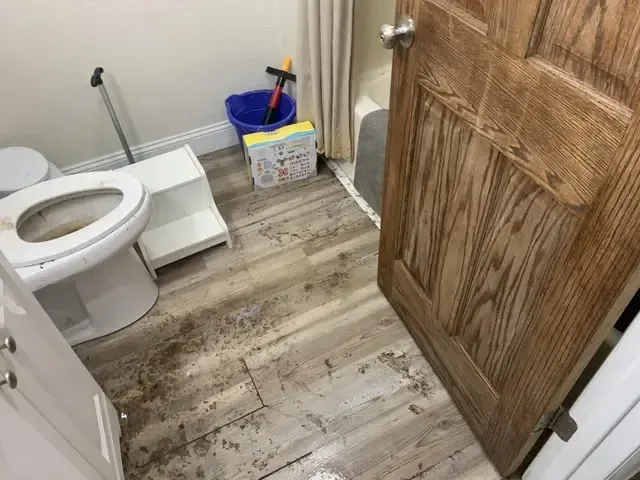
Fair Lawn Toilet Overflow Cleanup
The contents of an overflowing toilet determine how the affected room should be handled. Fair Lawn cleanup assesses contact, floor edges and adjoining materials before equipment is placed or occupants resume bathroom use.
(888) 471-9821Discuss the bathroom contact areaHow toilet overflow cleanup is handled in Fair Lawn
Toilet overflow restoration addresses the surfaces and materials contacted by the release. Drain correction is coordinated with extraction, appropriate cleaning and drying, including inspection beneath bathroom finishes and beyond the doorway when water has traveled.
First steps for toilet overflow cleanup
- 1
Leave the fixture unused
Further flushing should stop while the source is assessed. Occupants should keep away from the released water and avoid testing nearby fixtures when another drain is also backing up.
- 2
Restrict the contact area
The bathroom and any wet threshold should remain apart from routine traffic. Shoes, mats and cleaning tools can carry residue into other rooms if moved without a plan.
- 3
Describe the overflow contents
The report should explain whether waste was present, which fixtures were involved and how far water traveled. Those details help shape the initial handling and source assessment.
- 4
Document adjoining material changes
Photos from a dry position can record wet floor edges, vanity swelling and ceiling staining below. These observations preserve the contact footprint before cleanup alters the visible evidence.
What does toilet overflow cleanup cost in Fair Lawn, NJ?
Toilet overflow cleanup in Fair Lawn is planned from $800 to $5,500+. Contents, porous material contact and travel beyond the bathroom affect the scope, with fixture or drain repairs distinguished from the cleaning and drying work.
Contained bathroom spill
- Limited floor contact
- Accessible surface cleaning
- Nearby edge inspection
Floor-edge spread
- Threshold material assessment
- Vanity base checks
- Additional drying access
Wastewater across rooms
- Broader contact control
- Porous material handling
- Expanded cleaning footprint
Compare the scope with the water damage cost calculator. The restoration company prices the inspected damage, material access and equipment needs separately from source repairs, replacement finishes and contents work.
The toilet overflow cleanup process
- 1
Classify the release and isolate use
The assessment records the contents, involved fixtures and affected surfaces. Bathroom access is controlled while the source problem is evaluated, preventing routine use from adding water or carrying residue into other occupied parts of the property.
- 2
Remove liquid and assess contacted layers
Extraction follows a controlled handling route. Floor edges, mats, cabinetry and adjoining finishes are evaluated for effective cleaning or necessary removal, with the reasons for each material decision recorded before the contact area changes.
- 3
Clean before establishing the drying arrangement
Retained surfaces receive appropriate cleaning after accessible liquid and damaged layers are handled. The remaining moisture footprint is measured so equipment addresses the affected assembly without bypassing a wet threshold or concealed bathroom edge.
- 4
Confirm source and room readiness separately
The fixture service outcome and restoration condition are documented as distinct tasks. Remaining repairs, drying results and access restrictions are identified so a functioning toilet is not mistaken for a fully recovered bathroom and adjoining space.
A bathroom floor may look easy to wipe while water has already reached the doorway or a gap beside the toilet. Fair Lawn overflow cleanup begins with the contents of the release and the surfaces it contacted. That assessment determines handling, cleaning and whether porous layers beneath the visible finish can remain.
Keep the fixture out of use
Radburn contains Radburn station and Daly Field. In an affected home in that community, the first useful report describes whether the toilet overflowed during flushing, whether waste was present and where the water traveled. Repeated flushing can add to the release before the underlying drain problem has been evaluated.
Central Fair Lawn contains the Municipal Complex and the public library. A nearby bathroom loss needs the same room specific attention to thresholds, vanity bases and any ceiling below. The inspection follows actual contact rather than assuming that a hard bathroom surface prevents water from reaching absorbent material elsewhere.
Examine the transition out of the bathroom
Rivercrest includes split level houses and Cape Cod style homes. Within an affected property, the bathroom's position relative to other rooms shapes the inspection. Water at the doorway may have reached wood, carpet or a lower level, requiring separate assessment from the tile or other finish around the fixture.
- Stop flushing the affected toilet until assessed.
- Keep pets and children outside the bathroom.
- Avoid carrying wet mats into clean rooms.
- Record water contact at the doorway edge.
Cleaning decisions consider the actual water contents and material condition. A wet bath mat, swollen cabinet base and hard floor surface do not all receive the same treatment. The scope should explain which materials can be cleaned, which need removal and how handling will avoid transferring residue into unaffected spaces.
Dry after the contact area is addressed
Accessible liquid is removed through a controlled route. Retained surfaces are cleaned appropriately before the drying arrangement is finalized. Moisture checks at floor edges and adjoining wall bases help identify hidden wetting, including sections where surface cleaning has changed the appearance without resolving water held beneath the finish.
The bathroom can return to ordinary use only when the source, cleanup and access conditions have been addressed. The closeout record should distinguish drain service from material recovery and any remaining repairs. This makes it clear whether a working toilet is ready to serve a room that also has completed cleanup.
A second affected fixture changes the source question
Water appearing at another drain or a lower fixture should be reported during the initial assessment. It can require a broader plumbing investigation and an expanded contact inspection. Sewage backup cleanup covers wastewater losses that extend beyond the single bathroom overflow and its immediate floor area.
Toilet overflow cleanup coverage
Bathroom cleanup assessments extend across Radburn, Central Fair Lawn and Rivercrest, tracing the actual overflow route through floor joints, thresholds and any occupied space beneath the fixture.
The same service nearby: toilet overflow cleanup in Paramus, Glen Rock, Maywood.
Toilet Overflow Cleanup questions
Does every overflow require the same cleanup?
The actual contents, contact surfaces and extent of spread determine the response. A material assessment identifies what can be cleaned effectively and what needs removal, then establishes the drying work for the retained assembly.
Can the toilet be flushed to test the drain?
Further flushing can add water before the cause is understood. The fixture should remain out of use until the appropriate plumbing assessment. Reports of another affected drain should be included in that source investigation.
Why inspect outside a tiled bathroom?
Water can pass through a doorway or reach gaps at the floor edge. Adjoining carpet, wood or wall materials may absorb it even when the bathroom surface looks intact, requiring inspection beyond the tile area.
Should a wet bath mat go into another room?
Contacted items should stay separate from clean spaces until their handling is determined. Moving a wet mat can transfer residue and water. Its condition should be documented before cleaning or disposal decisions are made.
Can a dry looking floor still need attention?
Moisture may remain beneath a finish or around the toilet and vanity base after surface water is gone. Inspection and measurements establish whether hidden layers require access, cleaning or additional drying before the room is restored.
What if the ceiling downstairs becomes stained?
That change indicates another area requiring inspection. Access to the room below can reveal wet ceiling materials and contents affected by dripping, extending the cleanup scope beyond the bathroom where the release began.
Recover the bathroom edges
The cleanup plan connects source correction with material handling, cleaning and drying beyond the visible spill.