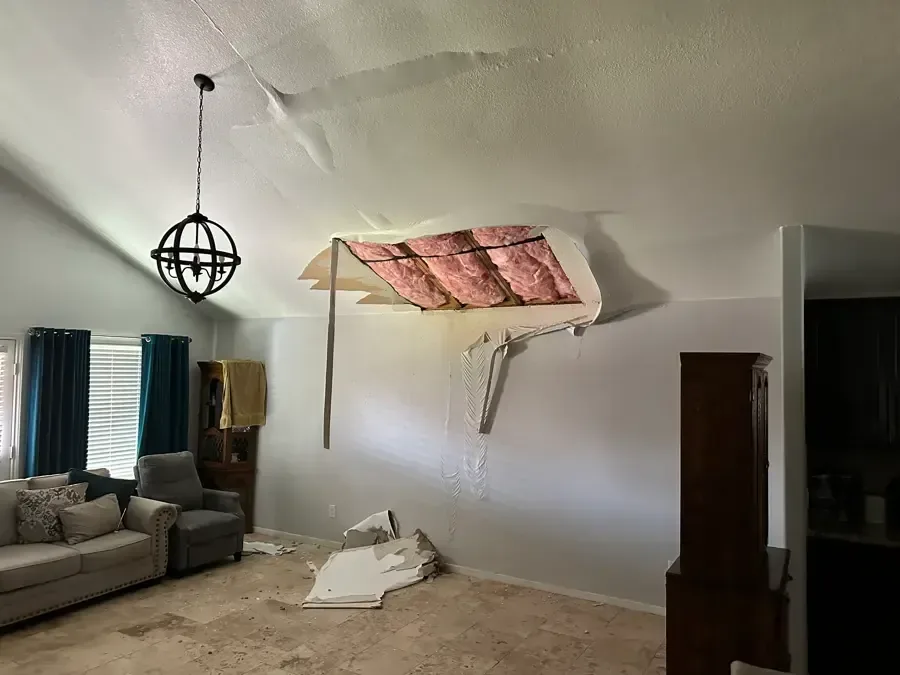
Fair Lawn Ceiling Leak Water Damage
A changing ceiling stain can signal water held above the room. Overhead cleanup begins with the space underneath, then examines the source, unstable finishes and moisture inside the overhead assembly.
(888) 471-9821Discuss ceiling stabilityHow ceiling leak water damage is handled in Fair Lawn
Ceiling leak restoration considers both the damaged surface and the cavity it covers. Safe access reveals wet insulation, framing and adjacent finishes so drying can address the overhead assembly before the ceiling is rebuilt.
First steps for ceiling leak water damage
- 1
Close off the unstable space
People and pets should remain outside the area beneath bulging or dropping material. Moving a chair or container should never require standing under a section that may fail.
- 2
Treat wet electrical fittings cautiously
Lights, switches and ceiling mounted equipment near the leak should remain untouched. Electrical evaluation is needed when water may have reached the circuit or fixture above the room.
- 3
Locate the responsible access contact
An upstairs occupant, owner or building manager may need to provide entry. Coordinated access allows the source investigation and the downstairs damage assessment to proceed together safely.
- 4
Keep a visual sequence
Photographs from a dry position can capture the stain boundary and later changes. The record is useful when an opening removes the original ceiling surface during cleanup.
What does ceiling leak water damage cost in Fair Lawn, NJ?
Ceiling damage cleanup in Fair Lawn is planned at $900 to $5,500+. Overhead stability, insulation condition, cavity access and the spread into adjoining finishes determine the work, with source repair and rebuilding described separately.
Small stable section
- Limited overhead assessment
- Localized material drying
- Nearby finish checks
Open wet cavity
- Insulation condition assessment
- Purposeful access opening
- Framing moisture checks
Broad overhead loss
- Expanded ceiling footprint
- Multiple affected surfaces
- Additional removal work
Compare the scope with the water damage cost calculator. The restoration company prices the inspected damage, material access and equipment needs separately from source repairs, replacement finishes and contents work.
The ceiling leak water damage process
- 1
Assess the room beneath the damage
The ceiling shape, wet fittings and condition of nearby contents are evaluated before work begins overhead. Access restrictions protect occupants while the assessment determines where water is held and how the source can be reached.
- 2
Expose the affected overhead materials
Controlled access allows inspection of the cavity and removal of materials that cannot remain. The extent follows the actual wet assembly, with photographs recording insulation, framing and finish conditions that will be concealed again after repair.
- 3
Manage moisture within the cavity
Equipment is positioned to reach the retained materials and remove released humidity. Readings at relevant ceiling sections track progress, while the room below is also checked for wet flooring or contents affected by falling water.
- 4
Document the condition before closure
The completion assessment records drying results and remaining repair needs. It gives the owner a clear distinction between moisture control, source correction and the finish work required to return the ceiling to a usable condition.
A ceiling can hold water before a drip appears. Sagging, a widening stain or wet material around a light fitting changes how the room can be used. The first Fair Lawn ceiling damage decision concerns the people underneath: the affected area should remain clear until overhead stability and electrical exposure are assessed.
Coordinate access above and below the stain
River Road permits apartments above businesses. A leak affecting that arrangement may need access to both occupancies, even when only the downstairs finish looks damaged. The responsible contacts should coordinate entry so the source can be checked above while the wet ceiling and contents below receive a separate assessment.
Fair Lawn Promenade combines apartments, shops, offices and restaurants along Route 208. Where occupied spaces connect, the inspection needs a clear account of when staining began and which fixtures or weather conditions accompanied it. That sequence helps the appropriate trade locate the source while restoration examines the resulting material damage.
The stain is a starting boundary
Central Fair Lawn contains the Municipal Complex and Fair Lawn Public Library. For a nearby property with a leaking ceiling, the useful room details are the ceiling shape, visible deformation and any access above it. The wet footprint is then established by inspection and measurements, including areas beyond the colored mark.
- Keep people away from sagging ceiling sections.
- Leave wet lights and switches untouched.
- Record the first stain from dry ground.
- Arrange access to the space directly above.
A controlled opening can reveal saturated insulation, wet framing or liquid held above the finish. Materials are assessed for removal or retention based on their condition and the ability to dry them. Simply repainting a stain leaves that concealed assessment unfinished and can hide changes that would otherwise remain visible.
Dry an overhead assembly with a clear endpoint
Air movement must reach the wet materials to be useful. The drying arrangement may work through an opening or another appropriate access point, with dehumidification controlling moisture released into the room. Readings are taken at relevant sections of the assembly so progress can be judged beyond the exposed surface.
Ceiling repair follows source control and the material drying decision. The work record should identify what was removed, what remains and what condition was reached before closure. It should also describe damage to floors or belongings below the leak, since falling water may create a second wet area beneath the original problem.
A bucket cannot make a ceiling stable
Collecting a drip may protect a small patch of floor when access is safe, but a swollen ceiling still needs assessment. Occupants should not stand beneath it to puncture or press the surface. An active supply release may also need pipe damage cleanup alongside the overhead work.
Ceiling leak water damage coverage
Overhead damage assessments include River Road District, the borough center and mixed occupancy buildings, with access coordination for apartments, business premises and connected occupied spaces below leaks.
The same service nearby: ceiling leak water damage in Paramus, Glen Rock, Maywood.
Ceiling Leak Water Damage questions
Can a small stain hide a larger wet area?
Water can spread along the upper side of a ceiling before becoming visible below. Inspection checks the surrounding assembly and accessible cavity so the drying scope follows the wet materials rather than only the colored surface.
Should the ceiling be punctured to release water?
Occupants should avoid disturbing a swollen or unstable ceiling. A sudden release can bring down water and weakened material. Controlled access requires assessment of stability, electrical exposure and a safe working position beneath the assembly.
Who needs access when an apartment is overhead?
The occupant or responsible building contact may need to coordinate entry to both spaces. Source diagnosis above and damage assessment below serve different purposes, and neither should be skipped because the other room appears unaffected.
Will painting over the mark resolve the damage?
Paint changes the visible finish but does not remove moisture held in insulation or framing. The source and material condition should be addressed before cosmetic repair, with the drying result recorded before the ceiling is closed.
Can the room stay occupied during drying?
Use depends on overhead stability, electrical conditions and the equipment arrangement. The assessment identifies restrictions and safe access. An unstable section or work area requiring removal should remain separated from routine household or business activity.
Does the floor below also need checking?
Drips and falling wet material can affect carpet, wood and nearby contents. The assessment follows that secondary contact area so an overhead cleanup does not leave a separate wet floor assembly outside the drying plan.
Make the overhead damage understandable
A room specific scope explains access, retained materials and the conditions needed before ceiling repairs begin.