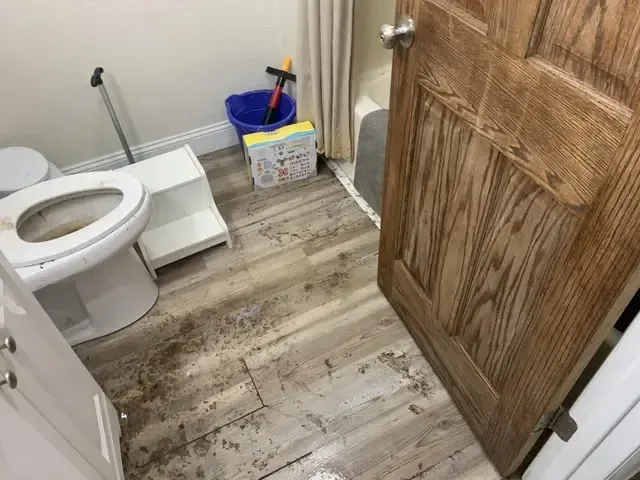
Toilet Overflow Cleanup in Glen Rock
An overflow can leave wastewater at floor edges long after the bowl settles. Glen Rock cleanup isolates the bathroom, assesses contacted surfaces and checks whether the release crossed into adjoining rooms or lower spaces.
(888) 471-9821Discuss the bathroom overflow areaHow toilet overflow cleanup is handled in Glen Rock
Toilet overflow restoration addresses the water outside the fixture. Cleanup defines contact with flooring, trim and contents, coordinates correction of the blockage or fixture issue and prepares appropriate retained materials for cleaning and drying.
First steps for toilet overflow cleanup
- 1
Keep the fixture out of use
Repeated flushing can add wastewater to the room. The fixture needs correction before use resumes, while contacted floors and contents require separate cleanup beyond the bowl.
- 2
Restrict household traffic
Footwear and belongings can carry wastewater into clean rooms. Keeping people and pets away helps maintain a defined contact area while assessment establishes the required material handling.
- 3
Leave fans switched off nearby
Air movement follows contamination assessment and cleaning. A household fan over dirty water can spread unwanted material, so treatment should establish suitable conditions before equipment begins drying retained surfaces.
- 4
Note spread at the doorway
Threshold water or staining below the bathroom can reveal spread. Safe observations help inspection locate additional surfaces needing treatment beyond the fixture.
What does toilet overflow cleanup cost in Glen Rock, NJ?
Toilet overflow cleanup in Glen Rock has planning ranges of $800 to $5,500+. Contacted materials and spread beyond the bathroom influence costs, with fixture repair and replacement finishes clearly distinguished from the initial cleanup scope.
Contained bathroom spill
- Limited floor contact
- Bathroom contents separately assessed
- Focused cleaning before drying
Floor-edge spread
- Water reaches concealed trim
- Vanity edges need inspection
- Selective material removal considered
Wastewater across rooms
- Contact extends through doorway
- Several surfaces require handling
- Larger cleanup boundary documented
Compare the scope with the water damage cost calculator. The restoration company prices the inspected damage, material access and equipment needs separately from source repairs, replacement finishes and contents work.
The toilet overflow cleanup process
- 1
Establish where wastewater contacted the room
Assessment checks the bathroom floor and reachable edges, then follows any evidence toward adjoining rooms or the space below. The fixture issue remains a separate source task while the cleanup boundary accounts for actual water contact.
- 2
Remove water and unsuitable porous material
Controlled extraction and appropriate waste handling reduce the affected load. Material decisions consider contamination, damage and accessibility, with the scope identifying what must leave and which retained surfaces need treatment before drying equipment begins to operate.
- 3
Clean the retained surfaces within the boundary
Bathroom hard surfaces and accessible structural components require suitable cleaning after water removal. The work sequence keeps dirty handling separate from treated areas, helping prevent household traffic or contents movement from undoing the separation established at the start.
- 4
Measure remaining moisture at floor edges
Once cleaning and material handling are complete, drying addresses retained wet components. Readings at the threshold, wall bases or other affected points help establish when the assembly is ready for finish repairs and return to ordinary bathroom use.
The water outside an overflowing toilet can become the larger problem after the fixture stops rising. Bathroom edges, rugs and the vanity base may have received wastewater that a quick wipe does not address. Glen Rock overflow cleanup defines that contact area before normal traffic or airflow spreads it farther through the home.
Start with the bathroom boundary
Repeated flushing can renew the release, so fixture use needs to stop until the cause receives appropriate attention. Meanwhile, cleanup assesses the room itself. Water at the doorway may signal contact beyond the bathroom, and a wet floor edge may conceal a damp layer under the finish.
In a home near Maple Avenue, the actual bathroom layout determines where inspection continues. A nearby closet, open threshold or vanity panel can change access. Around Hillman Avenue, inspection of the installed fixtures and flooring establishes the access points needed to assess the affected bathroom.
- Wet rugs or items touching the floor
- Water beneath vanity edges and wall trim
- Tracks extending through the bathroom doorway
- Ceiling changes in any room below
Handle contact before starting room drying
Wastewater assessment changes the order of work. Extraction and suitable material handling come before drying equipment circulates air. Damaged or unsuitable porous material may need removal, while retained surfaces require appropriate cleaning. That sequence should be clear in the scope and in the arrangement of the work area.
For households in Ferndale, keeping the affected bathroom separate from daily movement helps limit transfer. A controlled route for removed contents protects clean rooms. The owner should understand which areas remain restricted and which surfaces have completed treatment before belongings return to their usual locations.
Look for moisture beneath the cleaned surface
Cleaning the visible floor does not necessarily reach dampness under a covering or behind trim. Inspection at accessible edges helps determine whether the retained assembly needs further opening or drying. The need is based on actual contact and moisture, not simply the size of the bathroom.
If water has reached a lower ceiling, that space requires its own stability and material assessment. The cleanup record should connect it to the original release while explaining the additional work. Fixture correction, surface cleaning and structural drying each resolve a different consequence of the overflow.
- Keep source correction distinct from room treatment
- Separate affected porous contents for handling
- Check floor penetrations and connected wet edges
- Document retained materials before finishes return
A clear contact area makes the work understandable
An effective explanation identifies where wastewater reached, what was removed and which surfaces remain for cleaning and drying. That gives the household practical boundaries while work proceeds. It also prevents the repaired fixture from becoming the only checkpoint after the event. The bathroom is ready for the next repair stage when the source and affected materials have both received the attention their conditions require.
Toilet overflow cleanup coverage
Toilet overflow assessment serves Glen Rock properties near Maple Avenue, Hillman Avenue and Ferndale, checking each affected bathroom and any connected surfaces reached by the released water.
The same service nearby: toilet overflow cleanup in Paramus, Fair Lawn, Oradell.
Toilet Overflow Cleanup questions
Can the bathroom be used once the bowl empties?
The fixture problem and contacted surfaces both need attention. An empty bowl can leave wastewater on surrounding materials, and another flush may renew the release. Use should follow appropriate source correction and assessment of the affected bathroom.
Why keep people out of a small spill?
Wastewater can transfer on footwear or moved objects into otherwise unaffected rooms. Restricting access helps maintain a clear contact boundary. The assessment then determines which surfaces and contents require cleaning, removal or further moisture checks.
Does a toilet overflow mean a borough sewer failure?
A fixture overflow needs its own source investigation. The problem may involve the fixture or connected drainage, and cleanup follows the actual indoor release. The assessment should identify the cause before assigning responsibility for the plumbing repair.
Can bathroom mats remain after contact?
Porous items need assessment based on water condition and their suitability for treatment. Some may require removal. Keeping them separate from dry belongings helps prevent transfer while the cleanup plan determines appropriate handling for the affected contents.
Why inspect the ceiling below the bathroom?
Water can enter floor penetrations or edges and reach a lower space. A stain below may reveal an additional wet assembly. That area needs evaluation for overhead stability, material handling and drying alongside the bathroom cleanup.
When should fans be introduced?
Air movement belongs after the contamination assessment and appropriate cleaning or removal steps. The retained wet materials then receive a drying plan. That order addresses wastewater contact before equipment moves air through the affected area.
Restore a controlled bathroom space
Assessment connects fixture correction with contaminated surface handling and drying of the materials that can remain.