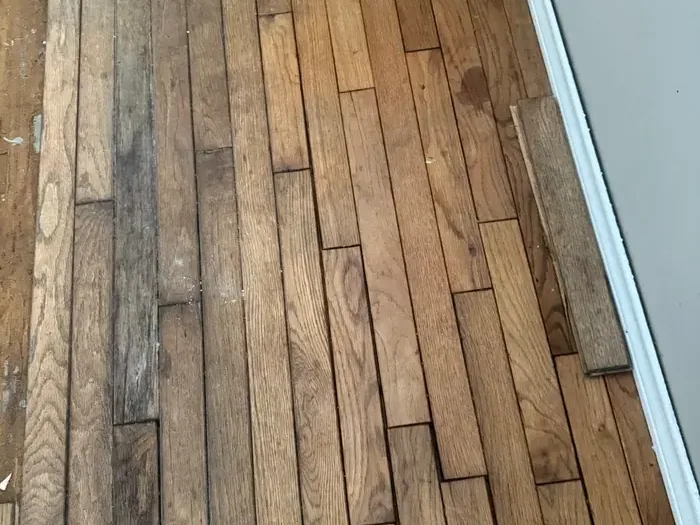
Fair Lawn Hardwood Floor Water Damage
Raised plank edges tell only part of a wood floor's condition. Fair Lawn floor recovery compares the wood, the substrate and nearby dry areas before choosing drying access or planning replacement work.
(888) 471-9821Discuss the changed plank edgesHow hardwood floor water damage is handled in Fair Lawn
Wood floor restoration examines moisture and physical changes together. The species, assembly and accessible underside influence drying decisions, while cupping, separation and finish damage help determine what repair work may remain after moisture is controlled.
First steps for hardwood floor water damage
- 1
Avoid pressing down lifted boards
A raised section can create a trip hazard and may move. The affected area should remain clear until floor stability and the water beneath it are assessed.
- 2
Record changes before moving rugs
Photographs can capture cupping, gaps and the original wet boundary. Rugs or furniture should be relocated only when handling is safe and the exposed floor can be inspected.
- 3
Identify the assembly details
Any available information about the floor installation or an accessible underside can help the assessment. The actual materials are still inspected before drying access and equipment are selected.
- 4
Postpone cosmetic floor work
Sanding, coating and replacement decisions should wait for source control and a moisture assessment. The final repair scope needs to account for both remaining wetness and physical damage.
What does hardwood floor water damage cost in Fair Lawn, NJ?
Hardwood water damage in Fair Lawn has planning ranges of $1,000 to $6,500+. The floor assembly, water conditions and access beneath the finish determine drying work, while lasting plank damage may require separately described repairs.
Limited clean-water area
- Localized plank readings
- Accessible substrate checks
- Targeted floor treatment
Multiple wet sections
- Connected room mapping
- Broader equipment arrangement
- Several reference locations
Damaged layered assembly
- Covered substrate access
- Selective board removal
- Expanded material decisions
Compare the scope with the water damage cost calculator. The restoration company prices the inspected damage, material access and equipment needs separately from source repairs, replacement finishes and contents work.
The hardwood floor water damage process
- 1
Identify the wood and its support
The floor covering, finish and accessible substrate are inspected before a drying approach is selected. Measurements establish the affected pattern and suitable dry references, while photos record distortion that may remain relevant to later repair decisions.
- 2
Decide where moisture can be reached
The assessment considers access from above, below or an exposed edge as appropriate to the assembly. Materials that block effective drying or have sustained unsuitable damage are identified, with the purpose of any removal explained beforehand.
- 3
Track planks and substrate through drying
Equipment addresses the retained floor assembly, and readings are repeated at meaningful locations. Progress in the visible wood is considered alongside the condition beneath it, so a dry face does not conceal unresolved substrate moisture.
- 4
Hand off the remaining floor repairs
After the drying decision, the floor's physical condition is assessed for refinishing or replacement needs. The record distinguishes moisture recovery from cosmetic and structural repairs, allowing the next trade to plan work on a documented basis.
A floor can change shape as different parts of a plank take on water. Raised edges, gaps or a lifting section deserve more than a surface wipe. Hardwood recovery in Fair Lawn starts by identifying the assembly and measuring its condition, then compares the wet area with a suitable unaffected reference nearby.
Measure the floor that is actually present
Lyncrest includes older stone houses south of Morlot Avenue. An affected wood floor in that neighborhood may have its own installation history, finish and underlying layers. Those details belong in the assessment because they determine where moisture can be reached and how the retained assembly can be monitored during drying.
Radrock Estates developed around 1940 and centers on Well Drive and Split Rock Road. For a floor there, the useful questions concern the current planks, the substrate and any previous repairs. Inspection of an accessible underside can add information that a reading taken only from the finished face would miss.
Separate drying potential from physical damage
Radburn was founded in 1929 as a planned community. Inside a home with water damaged flooring, the retention decision depends on the present material and loss conditions. Drying can remove moisture, but a plank that has split, detached or sustained lasting distortion may still require repair or replacement afterward.
- Record the direction and extent of raised edges.
- Check moisture beneath rugs and movable furniture.
- Inspect the threshold to the next floor finish.
- Identify accessible subfloor areas below the wet room.
Targeted floor drying may be useful where the assembly and water conditions permit it. Equipment must reach the affected layers, and readings should show whether both the wood and supporting materials are progressing. A surface that feels less damp is not enough to decide that the entire floor assembly is ready.
Leave sanding until the floor is evaluated
Sanding a floor while its moisture condition is still changing can complicate the eventual repair. The flooring decision should follow source control, a drying assessment and evaluation of the remaining shape. The owner should receive an explanation of which areas are candidates for retention and which have damage that drying cannot reverse.
Adjacent rooms also matter. Water can follow board joints beneath a doorway while the most obvious cupping stays near the original release. Mapping the wet boundary prevents a smaller visible repair patch from concealing a larger moisture problem. Photos taken before equipment is installed help preserve the original pattern of distortion.
Keep the finish decision separate from the drying result
A dry assembly may still need refinishing or selective board replacement. A visually improved floor may still need moisture treatment below it. When the source came from a machine, appliance leak cleanup can address the concealed footprint behind the appliance while the wood assessment follows the spread through the room.
Hardwood floor water damage coverage
Wood floor assessments include Lyncrest, Radrock Estates and Radburn, with drying decisions based on the planks and substrate present in the room rather than the surrounding development's age.
The same service nearby: hardwood floor water damage in Paramus, Glen Rock, Maywood.
Hardwood Floor Water Damage questions
Will cupped boards always flatten during drying?
Changes in moisture can affect plank shape, but lasting distortion or damage may remain. The floor is evaluated during and after drying so retention, refinishing and replacement decisions reflect the actual condition rather than a promised outcome.
Why take readings from an unaffected area?
A suitable dry reference helps interpret the condition of the affected wood and substrate. Comparisons should consider the materials present, giving the drying record more context than an isolated reading from the wettest visible plank.
Can a rug hide ongoing floor moisture?
A covering can obscure wetting and restrict access to the surface. Safe removal permits inspection and measurement beneath it. The rug itself also needs assessment based on its condition and the water that contacted it.
Should sanding begin when the surface feels dry?
Material measurements establish the moisture condition across the assembly. Sanding should follow that assessment and evaluation of the remaining shape, with the flooring professional planning finish work around the documented condition of the wood and substrate.
Does a downstairs view help the inspection?
An accessible underside can reveal wet supporting materials that are hidden from above. Whether that access is useful depends on the actual construction, and the assessment should connect those observations with the readings taken at the floor.
What if only the doorway boards look damaged?
The wet footprint can extend beyond the most distorted section. Inspection follows joints and adjacent finishes to establish where moisture remains, preventing a small visible repair area from becoming the only part of the floor assessed.
Plan repairs around the floor's condition
Measured drying and documented distortion help explain what can remain and which sections need additional floor work.