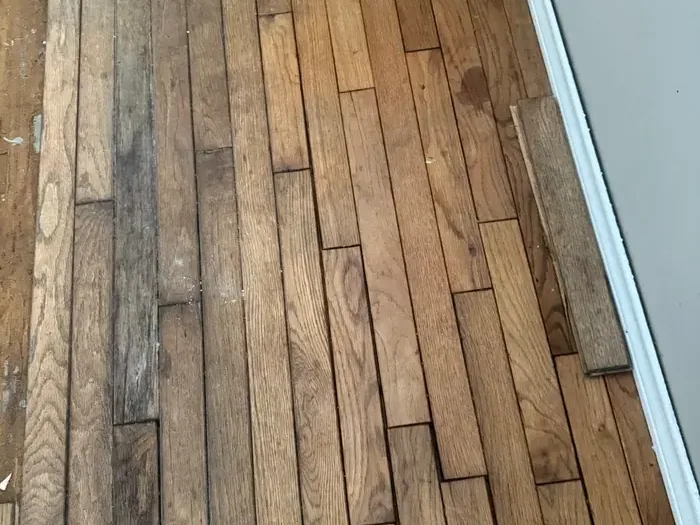
Hardwood Floor Water Damage in Maywood
Raised board edges describe movement in a wet floor, not the moisture hidden underneath. A useful assessment compares the boards, substrate and adjoining areas before recommending drying, removal or finish repairs.
(888) 471-9821Assess these changing floorboardsHow hardwood floor water damage is handled in Maywood
Hardwood restoration evaluates the full floor assembly after a water release. Measurements, board condition and source history determine whether controlled drying is appropriate and which sections require access or replacement before refinishing is considered.
First steps for hardwood floor water damage
- 1
Protect the changed board area
Keep heavy furniture and unnecessary foot traffic away from lifting sections. Photograph the board pattern safely so inspection can compare movement with conditions found during assessment.
- 2
Explain the water history
Describe the source, discovery time and coverings that were present. Include any extraction or wiping already completed, because a cleared surface can conceal moisture remaining in the supporting floor layers.
- 3
Leave refinishing decisions open
Avoid scheduling sanding before the floor moisture and stability are assessed. The drying plan and flooring contractor need a shared understanding of retained materials before cosmetic repair removes more wood.
- 4
Expose safe inspection points
Identify accessible transitions and existing openings below the floor. Planned access protects usable boards while the wet substrate is evaluated.
What does hardwood floor water damage cost in Maywood, NJ?
Hardwood water damage work in Maywood carries planning bands of $1,000 to $6,500+. The wet area, underlying layers and board condition shape the scope. Replacement boards, matching and refinishing should be itemized apart from drying.
Limited clean-water area
- Localized board moisture checks
- Substrate inspection
- Focused floor drying arrangement
Multiple wet sections
- Several affected board groups
- Connected room transition checks
- Broader drying equipment coverage
Damaged layered assembly
- Substrate access removal work
- Unsuitable floor layer handling
- Retained material monitoring
Compare the scope with the water damage cost calculator. The restoration company prices the inspected damage, material access and equipment needs separately from source repairs, replacement finishes and contents work.
The hardwood floor water damage process
- 1
Document board movement and source conditions
The inspection records lifting, gaps and moisture patterns alongside the water history. It considers the finish and supporting layers so the initial recommendation reflects the whole assembly rather than the appearance of a few boards.
- 2
Establish access to the supporting materials
Existing transitions or suitable openings help evaluate what lies beneath the visible wood. Where additional access is necessary, the scope explains its purpose and distinguishes inspection needs from replacement decisions for damaged floor sections.
- 3
Apply drying where the assembly supports it
Retained materials receive an appropriate drying method with readings at consistent locations. Progress and condition determine adjustments, including whether a section needs further opening because the current approach cannot reach moisture in the underlying layer.
- 4
Hand off stabilized findings for floor repair
The restoration record summarizes material readings and any removed sections. The flooring contractor uses that information with the remaining board condition to plan replacement or refinishing, avoiding a cosmetic decision made while concealed moisture remains unresolved.
A board that rises at its edges is showing a change in the wood, but its shape cannot reveal the entire moisture pattern. Water may remain below the finish, between boards or in the supporting layer. The assessment should identify those conditions before anyone promises that sanding will restore the surface.
Begin with the way the floor became wet
A supply leak, an appliance spill and outside water entry create different material decisions. Source history and contamination affect whether the assembly is suitable for drying in place. Describe when the water was found, what was removed and whether furniture or rugs covered the wet section.
The Romine-Van Voorhis House has a primary structure dating to 1780, while the Oldis-Brinckerhoff House stands on Maywood Avenue. At an older property, inspect the actual floor and any previous repairs before choosing access methods. The condition of its boards and substrate should direct the restoration plan.
- Photograph lifted edges before furniture hides the pattern.
- Keep loose rugs away from damp board surfaces.
- Record flooring layers exposed at existing transitions.
- Delay cosmetic work until moisture conditions are assessed.
Check both the walking surface and its support
A dry looking top coat can slow the escape of moisture from below. Readings at representative boards and accessible supporting material help define the affected area. Where the floor crosses a doorway, check whether water traveled into the next room beneath the continuous finish.
Targeted floor drying equipment may help when the material condition and assembly make it suitable. It is not a universal answer for damaged, contaminated or detached layers. The scope should explain why the chosen method can reach the retained wet material and what measurements will demonstrate its response.
Let stability inform the repair decision
Wood can continue changing shape as moisture redistributes. Sanding a distorted floor too early may remove material before the underlying condition settles. Drying findings should therefore be shared with the flooring contractor, who can assess the remaining board condition and requirements for the proposed finish work.
Some sections may need removal to expose a wet substrate or replace permanently damaged boards. That choice should be documented while the assembly is visible. It gives the owner a clear explanation of where drying ends and carpentry, matching or refinishing work begins.
Keep expectations tied to the measured assembly
The goal is an informed decision about the floor that actually exists. Board thickness, fastening, finish and underlying layers can change access and drying options. Ask for the findings that support retaining or removing a section. A photo of the polished surface before the loss helps describe appearance, while current readings and condition checks establish what recovery work is appropriate now.
Hardwood floor water damage coverage
Maywood wood floor assessments address cupping, lifted boards and persistent dampness after leaks, including examination of adjoining thresholds and the materials beneath the visible floor finish.
The same service nearby: hardwood floor water damage in Paramus, River Edge, Fair Lawn.
Hardwood Floor Water Damage questions
Does cupping mean the entire floor is lost?
Not automatically. Board condition, contamination and the moisture in supporting layers determine the options. An assessment should explain which sections can receive drying and which require removal, rather than treating the visible shape as the only deciding factor.
Can a rug remain over a damp wood section?
A covering can obstruct inspection and moisture release. Move it only when safe and assess its own condition separately. Keep the affected board area accessible so measurements and drying equipment can address the surface without hidden obstructions.
Why measure beneath boards that feel dry?
The finish can mask moisture in wood or the substrate. The supporting layer may remain wet after the walking surface improves. Measurements across the assembly help establish whether the floor is progressing toward a suitable condition for repair.
Should raised edges be sanded immediately?
Sanding belongs after moisture and stability have been assessed. Removing wood while the floor is still changing can complicate the final result. Share drying findings with the flooring contractor before deciding how much surface correction is appropriate.
Will floor drying mats work on every assembly?
Their suitability depends on material condition, access and the floor construction. Damaged or contaminated layers may require removal instead. The proposed method should explain how it reaches the wet material and how the response will be measured during treatment.
What separates drying costs from flooring repair?
Drying concerns moisture removal and monitoring in retained construction. Board replacement, matching and finish application are different tasks. Ask the estimate to identify each scope so a change in repair needs is understandable after the floor has stabilized.
Make the floor repair decision from measured conditions
Drying findings help establish what can remain and what the flooring contractor needs to replace.