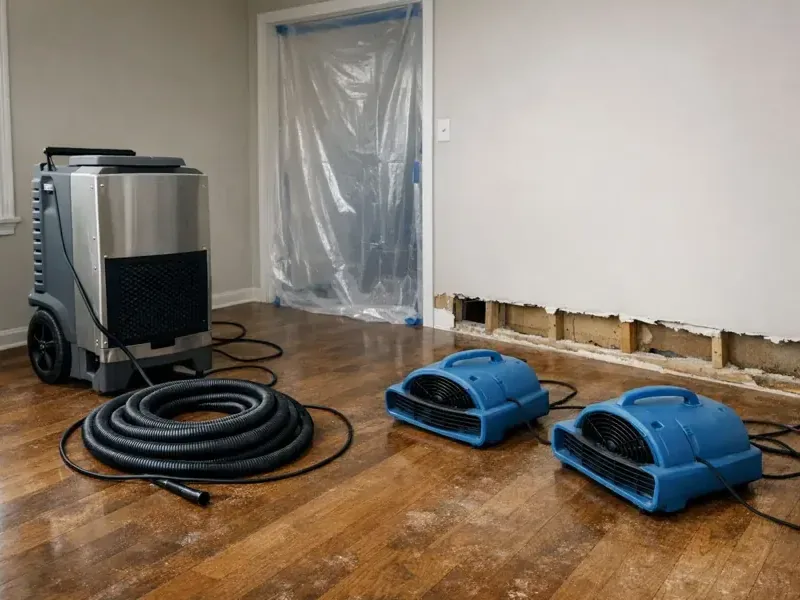
Fair Lawn Structural Drying
Drying succeeds when moisture can leave the affected assembly and the progress can be measured. Fair Lawn structural drying connects access, air movement and dehumidification to the materials that remain after cleanup.
(888) 471-9821Discuss the drying measurement planHow structural drying is handled in Fair Lawn
Structural drying treats water retained in framing, floors and wall assemblies after accessible liquid is removed. Equipment is selected around the exposed materials, while repeated measurements determine whether the arrangement is producing useful progress throughout the affected area.
First steps for structural drying
- 1
Confirm the source is controlled
Drying progress depends on stopping new water from entering the assembly. Any renewed dripping or fresh pooling should be reported so the source can be checked before the arrangement continues.
- 2
Keep the equipment paths accessible
Furniture and stored belongings should not block the intended airflow or service access. Occupants should follow the work area's instructions before moving equipment, hoses or items around retained wet materials.
- 3
Share changes in room conditions
New stains, wet edges or interrupted equipment operation should be reported. These observations help the assessment decide whether the arrangement needs adjustment or another concealed section requires inspection.
- 4
Request the material drying record
The handoff should describe measurements and remaining repairs. That information helps distinguish completed moisture work from the finish installation or rebuilding needed to restore the room.
What does structural drying cost in Fair Lawn, NJ?
Structural drying in Fair Lawn is planned at $1,000 to $7,000+. Assembly depth, access restrictions, connected rooms and measured progress influence the scope, with retained material conditions determining equipment adjustments and the readiness for subsequent repairs.
Accessible small zone
- Open wet surfaces
- Defined measurement locations
- Limited equipment arrangement
Several connected rooms
- Multiple material types
- Shared humidity management
- Expanded monitoring footprint
Dense or concealed moisture
- Purposeful cavity access
- Slower drying layers
- Additional equipment adjustments
Compare the scope with the water damage cost calculator. The restoration company prices the inspected damage, material access and equipment needs separately from source repairs, replacement finishes and contents work.
The structural drying process
- 1
Define the retained wet assembly
The initial record identifies affected materials, accessible surfaces and suitable dry references. Measurement locations are chosen to represent the actual wet footprint, including edges or concealed sections that may require a different access strategy from the open room.
- 2
Create a workable moisture removal arrangement
Air movement and dehumidification are positioned around the materials selected for retention. Necessary openings and safe equipment routes are coordinated with occupancy, providing a practical path for moisture to leave the assembly and the room air.
- 3
Use repeated readings to make adjustments
Progress is checked at relevant locations rather than judged by appearance alone. Equipment placement or access is reconsidered when a section remains wet, and changes are documented so the drying record explains how the arrangement evolved.
- 4
Establish the handoff condition for repair
The final assessment records material conditions and remaining replacement work. That account gives the repair trade a clear basis for closing openings or restoring finishes, while keeping any unresolved moisture issue visible in the scope.
Equipment running in a room is only part of a drying plan. The important question is whether moisture is leaving the materials that received water. Structural drying in Fair Lawn begins with a record of the affected assembly, useful measurement points and the access needed to reach layers hidden behind the room's finish.
Different buildings need different access decisions
Radrock Estates developed around 1940. Fair Lawn Promenade includes apartments, shops, offices and restaurants along Route 208. These settings may present very different room uses and access arrangements. The drying scope identifies the actual framing, floor and wall layers at the property before equipment quantities or opening locations are selected.
Lyncrest includes older stone houses. Where a loss affects several material types, the assessment tracks them separately rather than treating the room as a single drying surface. A finish, a timber member and the substrate behind it can retain moisture differently and may need different access to support effective treatment.
Measurements should answer a practical question
A starting reading helps define the wet area. A suitable dry reference adds context. Later readings show whether the drying arrangement is working at the chosen locations. Together those observations support decisions about equipment placement, additional access and the point at which retained materials can move forward to repair.
- Identify each material selected to remain in place.
- Choose repeatable locations around the wet boundary.
- Keep airflow paths open throughout the drying area.
- Record changes when equipment placement is adjusted.
Air movers help moisture leave accessible surfaces, while dehumidifiers remove humidity from the air. Their arrangement needs to suit the room and the exposed assembly. If a covered layer stays wet, adding equipment elsewhere may accomplish less than improving access to the section that is slowing the drying process.
Use the result to plan the next trade
The drying record should describe the condition reached, not simply the period equipment remained onsite. Repairs can then be planned around the retained materials and any layers removed for access. That distinction matters when the room looks ready but a floor edge, cavity or dense material still requires attention.
Occupancy also shapes the arrangement. Hoses and cords need safe routes, and equipment settings should remain coordinated with the drying plan. Changes to room conditions can affect progress. The owner should receive clear instructions about the work area and a practical explanation of any adjustments made during the monitoring visits.
Extraction and drying answer different questions
Water removal addresses accessible liquid. Structural drying addresses what the retained assembly absorbed. The transition should be based on source control, cleanup conditions and material access, with a record that shows why equipment remains after the room no longer contains visible standing water.
Structural drying coverage
Drying assessments cover Radrock Estates, Fair Lawn Promenade and Lyncrest, with equipment and access selected for the actual building assemblies and occupied spaces affected by the release.
The same service nearby: structural drying in Paramus, Glen Rock, Maywood.
Structural Drying questions
Why leave equipment after the floor looks clear?
Visible water removal does not resolve what framing, floors or walls absorbed. Equipment remains according to the condition of retained materials, with measurements used to track drying progress and determine when the assembly can move toward repair.
Do all materials in a room dry together?
Different materials and layers can release moisture at different rates. The assessment identifies those differences and monitors relevant sections, adjusting access or equipment when the open surface improves while a concealed part remains affected.
Can opening a window replace a dehumidifier?
Room conditions influence drying, and uncontrolled changes can interfere with the planned arrangement. Equipment and ventilation decisions should follow the assessment rather than a general household routine, with instructions explaining how the work area should be maintained.
What makes an access opening necessary?
A covered layer may prevent inspection or effective drying of the material behind it. The scope should explain the purpose of the opening, the condition found and how the access supports treatment or removal of affected layers.
How is a dry reference useful?
A suitable unaffected material provides context for interpreting readings in the wet area. Combined with repeated measurements and inspection, it helps describe the condition being approached instead of relying on a single isolated instrument result.
Does completed drying include all rebuilding?
Drying and reconstruction are distinct parts of recovery. The handoff should identify openings, removed materials and finish work still needed, allowing the owner to understand what has been completed and what the next repair scope covers.
Turn drying readings into repair decisions
A documented plan explains equipment placement, needed access and the material condition reached before finish work can proceed.