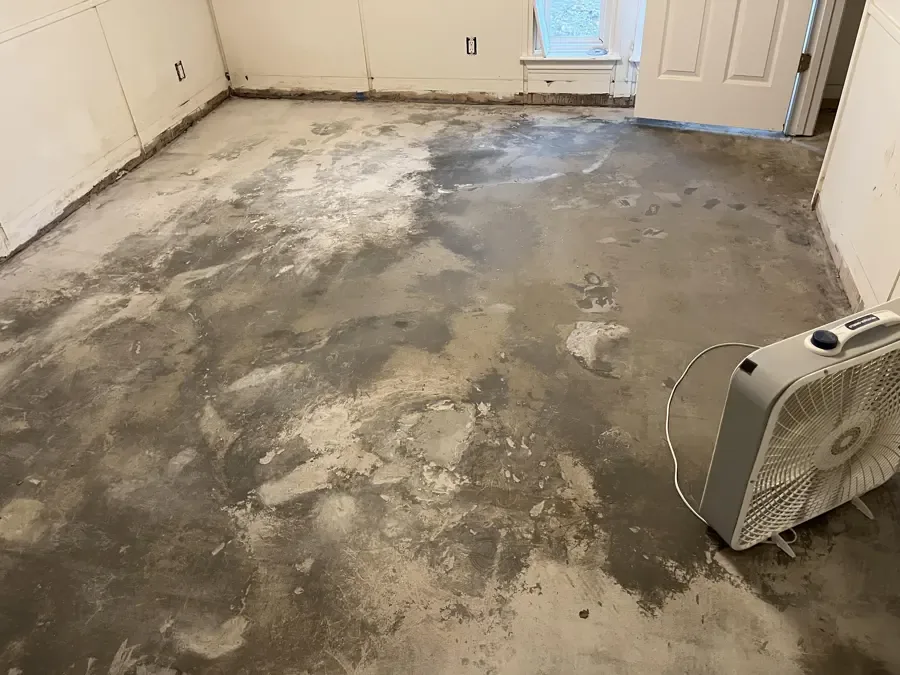
Fair Lawn Slab Leak Water Damage
An unexplained damp floor needs a traced source before concrete is opened. Fair Lawn slab leak cleanup connects plumbing findings with the condition of the finish, underlayment and surrounding wall bases.
(888) 471-9821Discuss the damp floor sourceHow slab leak water damage is handled in Fair Lawn
A suspected leak beneath concrete calls for coordinated diagnosis and damage assessment. The cleanup work addresses wet finishes and nearby materials while plumbing testing determines whether access to the supply below the slab is necessary.
First steps for slab leak water damage
- 1
Keep the damp area visible
A rug or stored box should not conceal the changing moisture pattern. Accessible belongings can be moved safely while photographs preserve the original location and floor condition.
- 2
Arrange targeted plumbing diagnosis
The suspected below floor source needs testing before destructive access is selected. The restoration assessment can proceed alongside that work to identify the materials already affected.
- 3
Avoid covering the wet finish
New floor coverings or surface treatments should wait until the source and substrate condition are understood. Covering the area can obstruct inspection of the developing damage.
- 4
Request separate scope items
The written plan should distinguish plumbing access, damaged material removal, drying and finish replacement so the owner can see what each stage is intended to accomplish.
What does slab leak water damage cost in Fair Lawn, NJ?
Fair Lawn slab leak damage planning spans $1,500 to $8,500+, with floor layers, concealed spread and access needs affecting the scope. Plumbing diagnosis, concrete access and replacement finishes should be distinguished from the drying work in the estimate.
Limited floor area
- Localized finish inspection
- Nearby base checks
- Accessible material drying
Several wet layers
- Underlayment access needs
- Multiple material readings
- Selective finish removal
Broad concealed spread
- Extended floor footprint
- Connected room assessment
- Expanded drying arrangement
Compare the scope with the water damage cost calculator. The restoration company prices the inspected damage, material access and equipment needs separately from source repairs, replacement finishes and contents work.
The slab leak water damage process
- 1
Connect symptoms with source testing
The assessment records the damp floor pattern and visible finish changes while the plumbing investigation identifies the source. Both sets of findings inform access decisions, keeping the repair opening aligned with the actual damage and pipe location.
- 2
Inspect the layers beneath the covering
Affected flooring is evaluated for retention and safe access to the substrate. Loose edges, trapped moisture and damaged underlayment receive individual attention, with the reason for any removal documented before the floor assembly changes.
- 3
Address moisture after the repair
Extraction and drying begin according to the condition of the exposed materials. Equipment is arranged around the accessible footprint, and readings are repeated at relevant points to track remaining moisture near edges and adjoining walls.
- 4
Prepare a clear flooring handoff
The final record describes the moisture condition reached and the repairs still needed. Flooring installation or concrete restoration can then be planned around the actual substrate, including any preparation required by the replacement material selected for the room.
A damp patch that returns after wiping deserves a closer look beneath the surface. In Fair Lawn, a suspected slab leak assessment starts by mapping where moisture appears and asking how the plumbing behaves. The flooring condition and source testing together determine the next step, including whether a concrete opening is needed.
A neighborhood name cannot choose the opening
Radrock Estates centers on Well Drive and Split Rock Road. For a property there, the relevant details are the floor construction, supply route and pattern of moisture inside the building. Plumbing diagnosis should narrow the suspected source before restoration work removes more finish than necessary to inspect the affected assembly.
Radburn contains Radburn station and Daly Field. A floor complaint in that community still needs a property level inspection. Moisture at a seam may originate below the finish, at an adjoining wall or from another indoor source. The assessment connects the wet pattern to the tested cause before repair access is selected.
Keep the finish and substrate in view
Berdan Grove has single family homes. Inside an affected house, the floor covering may hide several layers with different drying behavior. A surface reading alone can miss water held beneath an underlayment. The scope should identify the exposed finish, the substrate and any adhesive or insulation affected by the loss.
- Mark the boundary of the damp floor.
- Check wall bases bordering the affected finish.
- Identify loose edges and changed floor texture.
- Record the plumbing diagnosis beside moisture observations.
Selective removal may be needed when covered layers cannot be reached or retained. That decision should explain the condition found, the access required and the intended drying approach. Concrete exposure, plumbing repair and finish replacement are distinct tasks, even when they occur in the same small section of a room.
Rebuild only after the moisture decision
Once the source is controlled, accessible liquid is removed and the remaining materials are assessed for drying. Measurements should be taken at useful locations around the original damp area. A dry looking patch at the center does not resolve moisture along an edge or underneath a finish that remains in place.
Replacement flooring has its own substrate requirements. The record should identify the condition reached before new materials are installed and any further preparation needed. This prevents a completed pipe repair from becoming the only basis for closing an access opening and covering an assembly that still needs attention.
Describe the pattern before moving the furniture
The first damp spot, nearby wall changes and whether moisture returns during water use are useful observations. Photos can preserve that pattern before belongings are relocated. The hardwood damage assessment addresses wood finish concerns when the wet area includes planks, while source testing remains part of the plumbing diagnosis.
Slab leak water damage coverage
Floor moisture assessments extend to Radrock Estates, Radburn and Berdan Grove, with inspection based on the actual foundation, finish layers and plumbing arrangement at the property.
The same service nearby: slab leak water damage in Paramus, Glen Rock, Maywood.
Slab Leak Water Damage questions
Does a damp floor always require concrete removal?
The source must be located first. Water can appear at a floor from several routes, and the damage pattern alone should not determine the opening. Testing and material inspection establish where access is needed and why.
Can the finish remain while the slab dries?
That depends on the floor covering, adhesive, underlayment and ability to reach the moisture beneath them. Some layers obstruct drying or have sustained damage that requires removal. The assessment should explain the condition of each retained material.
What should be reported during the first call?
Useful details include where dampness began, whether it returns, changes in floor texture and any plumbing symptoms. The room layout and accessible entrance also help organize an inspection without relying on guesses about the foundation.
Is a warm patch enough to locate the leak?
A temperature change can be part of the observations, but plumbing diagnosis determines the source. The restoration scope then follows the wet materials around that location and checks adjoining areas for moisture beyond the obvious patch.
Why inspect the baseboard beside the floor?
Moisture beneath a finish can reach the wall base or collect along its edge. Checking that boundary helps identify wet trim and lower wall materials that could remain affected even after the central floor area is exposed.
When can replacement flooring be scheduled?
Scheduling should follow source repair, material drying and confirmation that the substrate is suitable for the selected floor. The closeout information should separate completed moisture work from any remaining concrete repair or preparation needed before installation.
Give the floor a complete assessment
A written scope can explain source access, material removal and the moisture conditions needed before replacement flooring begins.