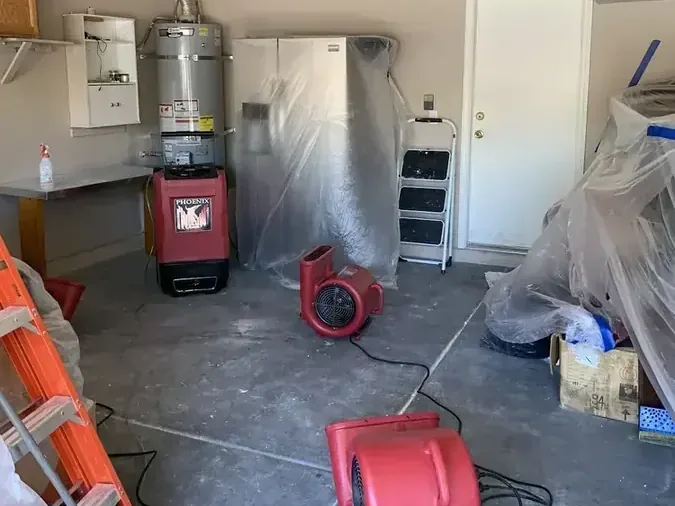
Fair Lawn Water Heater Leak Cleanup
Water around a heater can escape the utility area before the tank is repaired. Fair Lawn cleanup examines the floor, nearby walls and adjoining rooms while the appliance receives its own safe service assessment.
(888) 471-9821Discuss the wet utility areaHow water heater leak cleanup is handled in Fair Lawn
Heater leak restoration deals with the room materials affected by released water. Source repair or replacement is coordinated separately, while extraction and moisture checks establish whether the loss extends beneath walls or neighboring floor finishes.
First steps for water heater leak cleanup
- 1
Avoid wet heater controls
Occupants should not operate electrical or fuel controls while standing near leaked water. The appropriate service professional can establish how the appliance and its supply should be made safe.
- 2
Describe the room arrangement
The first report can identify whether the heater sits in a closet, garage or other utility space, and which finished rooms or storage areas adjoin it.
- 3
Preserve the hidden damage record
Accessible photographs of wet boxes, flooring and wall bases can show where water traveled. Items should be handled only when the area and appliance conditions permit safe access.
- 4
Coordinate removal and inspection
If replacement requires moving the tank, the exposed footprint should be assessed before another appliance covers it. That sequence helps keep room drying connected to the service work.
What does water heater leak cleanup cost in Fair Lawn, NJ?
Water heater leak cleanup in Fair Lawn is planned from $800 to $5,500+. Access around the appliance, adjoining finish damage and concealed wet edges affect restoration costs; heater service or replacement should appear as a separate scope.
Accessible utility area
- Open floor extraction
- Nearby base inspection
- Limited material drying
Adjoining room spread
- Threshold moisture checks
- Neighboring finish assessment
- Expanded equipment placement
Concealed broad damage
- Covered layer access
- Wider material removal
- Extended drying records
Compare the scope with the water damage cost calculator. The restoration company prices the inspected damage, material access and equipment needs separately from source repairs, replacement finishes and contents work.
The water heater leak cleanup process
- 1
Establish safe appliance and room access
The heater condition, utilities and surrounding water are assessed before equipment enters the work area. Service coordination identifies the source task while the restoration assessment records the wet footprint around the appliance and nearby stored belongings.
- 2
Extract water from accessible surfaces
Liquid removal follows the room layout and obstructions around the tank. Exposed flooring, thresholds and storage edges are checked as pooling clears, revealing where water has entered absorbent materials or traveled into an adjoining finished space.
- 3
Use the service opening for inspection
When appliance work exposes previously covered flooring, the material condition can be documented. Any necessary removal or drying access is coordinated with the service sequence so a new installation does not conceal an unresolved wet area.
- 4
Verify the utility room recovery
Moisture readings track retained surfaces through the drying stage. The handoff explains remaining floor or wall repairs and distinguishes them from completed heater service, giving the owner a clear account of both the appliance and building work.
A replacement heater may solve the appliance problem while leaving a wet floor behind it. Fair Lawn water heater cleanup keeps the room in view from the beginning. The assessment follows water around the tank base, through nearby openings and beneath stored items that can conceal the edge of the release.
Make room for both kinds of work
Warren Point is residential and sits near Broadway District. A heater leak in a home there needs a workable path for appliance service and restoration equipment. The owner can describe the heater location and nearby rooms so the assessment accounts for access before heavy equipment or a replacement tank is moved.
Rivercrest includes split level and Cape Cod style houses near Memorial Park. Within an affected property, changes in floor level and the location of utility equipment influence where released water collects. Inspection follows those actual transitions, including finished areas that may appear separate from the original utility space.
Look behind the storage pattern
Hendersonville contains two family Cape Cod style homes. When utility equipment serves occupied living areas, the responsible contacts should coordinate safe access and service arrangements. Cleanup decisions remain focused on the materials contacted by water, including wall bases and flooring beyond the visible tank room puddle.
- Leave wet appliance controls and wiring untouched.
- Identify a dry route to the utility area.
- Document soaked boxes before handling their contents.
- Check the threshold into the adjacent room.
Storage can hide a slow developing leak. Cardboard against a wall, a floor mat or a cabinet base may retain water after the exposed floor looks clear. Those items are assessed separately from the appliance so cleanup includes the absorbed moisture and any damaged material blocking access to the underlying surface.
Coordinate tank replacement with material drying
A plumber or appropriate appliance professional evaluates the heater and its connections. Restoration then addresses water already released into the room. If the appliance must move, the work sequence can create an opportunity to inspect the area underneath before a replacement obscures it again, while maintaining safe service access.
Drying equipment is arranged around retained materials and safe clearances. Measurements at the perimeter and adjoining floor help establish whether moisture remains outside the utility area. The completion record should separate the condition of the repaired appliance from the condition of the room, including any finish replacement that is still needed.
A dry center can hide a wet edge
Water may disappear from an open floor while remaining under a wall plate or beneath the neighboring finish. Inspection should follow the boundary around the heater location. Where the release has spread into another room, water extraction and targeted drying can be coordinated with the utility area cleanup.
Water heater leak cleanup coverage
Utility area cleanup is assessed in Warren Point, Rivercrest and Hendersonville, with the heater location, equipment access and adjoining floor construction considered for each individual property.
The same service nearby: water heater leak cleanup in Paramus, Glen Rock, Maywood.
Water Heater Leak Cleanup questions
Does a new heater finish the damage cleanup?
Replacement addresses the appliance. Water already absorbed by walls, flooring or stored items still needs assessment. The room should be checked before and after service so the new tank does not hide an affected section beneath it.
Should belongings beside the tank be discarded immediately?
Their condition should be documented and assessed before disposal decisions are made. Wet boxes may conceal damaged contents or moisture against a wall. Safe handling and a clear record help determine what can be retained.
Can water leave a utility closet unnoticed?
Water can move beneath a threshold or wall base and reach the adjoining finish. The assessment checks that perimeter rather than stopping at the closet door, especially when the neighboring room contains absorbent flooring.
Who handles the appliance connections?
An appropriate plumbing or appliance professional evaluates the heater and its connections. The restoration scope addresses the surrounding water damage, with access and timing coordinated so both tasks can be completed without concealing affected materials.
Why measure a garage floor after extraction?
Surface pooling can clear before neighboring trim, wall bases or covered floor areas dry. Measurements and inspection identify the materials still affected and help establish whether the drying arrangement needs to extend beyond the obvious puddle.
Can drying equipment block the heater service area?
Equipment placement should preserve safe access and the clearances needed for service. The restoration and appliance work are coordinated so hoses, movers and dehumidifiers support the room recovery without obstructing necessary inspection or replacement.
Restore the space around the replacement
An inspection can identify hidden wet edges before appliance service covers the original footprint and room repairs begin.