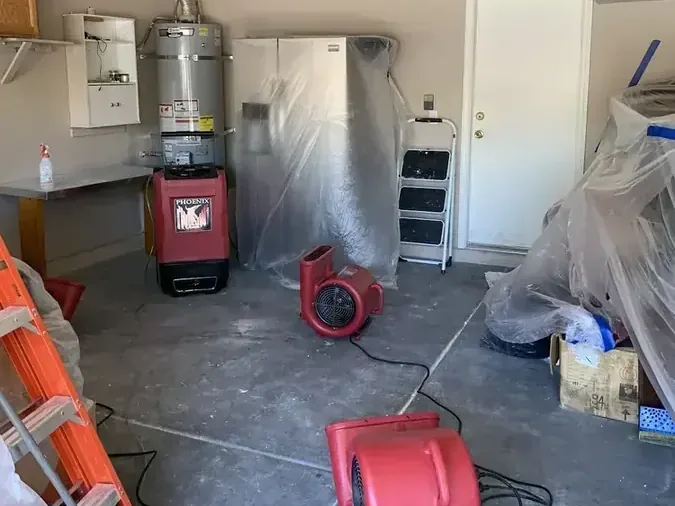
Water Heater Leak Cleanup in Maywood
Water around a heater can reach an adjoining room before the tank problem is discovered. Safe equipment isolation comes first, followed by inspection of the floor, wall bases and belongings along the escape path.
(888) 471-9821Assess this heater water releaseHow water heater leak cleanup is handled in Maywood
Water heater cleanup treats the building damage around a leaking appliance. A qualified trade addresses the heater and its connections; restoration follows the released water through nearby finishes and establishes a drying plan for retained materials.
First steps for water heater leak cleanup
- 1
Avoid the wet equipment area
Keep clear of hot water, wet electrical components and the heater controls. Arrange source isolation with the appropriate professional rather than reaching around the appliance through pooled water.
- 2
Describe the tank surroundings
Identify nearby shelving, doors and adjoining floor coverings when requesting assessment. Include any obstruction behind the heater so appliance service and restoration access can be planned together from the start.
- 3
Separate soaked storage items
Leave heavy wet cartons for safe handling and keep unaffected belongings away from the spill. Record which items contacted water before sorting changes the original arrangement around the tank.
- 4
Check the next room
Note damp carpet, swollen trim or water crossing the utility doorway. Reporting those signs helps the inspection extend beyond the heater enclosure to the materials that absorbed the release.
What does water heater leak cleanup cost in Maywood, NJ?
Water heater cleanup in Maywood commonly falls within planning ranges of $800 to $5,500+. Access behind the appliance, adjoining floor damage and wet storage affect restoration work. Heater repair or replacement should be priced separately.
Accessible utility area
- Wet utility floor
- Limited nearby finish damage
- Simple focused drying access
Adjoining room spread
- Water beyond utility doorway
- Wet adjoining floor layers
- Wall edge checks
Concealed broad damage
- Hidden platform moisture
- More involved finish removal
- Expanded connected room drying
Compare the scope with the water damage cost calculator. The restoration company prices the inspected damage, material access and equipment needs separately from source repairs, replacement finishes and contents work.
The water heater leak cleanup process
- 1
Coordinate isolation with the appliance trade
The heater and its connections receive appropriate attention before restoration equipment enters the work zone. The initial assessment records continuing flow, access restrictions and the surrounding surfaces that may have received water during the release.
- 2
Map the spill around storage and doorways
Inspection follows the floor from the appliance to shelving, platforms and adjoining rooms. Wet contents are distinguished from damaged construction, allowing the scope to identify access needs and avoid overlooking moisture hidden beneath a stored item.
- 3
Remove water and expose affected edges
Accessible liquid is extracted, while damaged layers are considered for removal according to condition and access. The drying arrangement addresses retained wall bases and flooring without obstructing required service access to the repaired or replacement heater.
- 4
Verify the utility area before storage returns
Repeated readings document the response of retained materials. The final handoff identifies completed drying, remaining finish work and any access area that should stay clear, so replacement storage does not conceal an unresolved damp surface.
A small stream escaping beneath a utility room door may originate at a heater, its connections or nearby plumbing. The restoration assessment begins after safe source isolation, with attention to hot water and equipment hazards. Handling the tank itself belongs with the appropriate trade before cleanup reaches behind or beneath it.
Clear the access problem before moving equipment
Central Avenue and Passaic Street are main roads in Maywood, and Route 17 also passes through the borough. For a property reached from these corridors, describe whether the heater sits behind storage, through a narrow doorway or near other equipment. Those details determine practical cleanup access.
Stored cartons can absorb water and hide the wet wall base. Moving them may reveal a wider path than the open floor suggests. Keep dry belongings protected while exposed items are assessed, and avoid using the heater or its fittings as support when carrying objects out.
- Report whether the water appears hot or continues flowing.
- Identify nearby electrical equipment from a dry position.
- Keep the tank access area clear of dry storage.
- Photograph the wet boundary before contents are relocated.
Inspect the room beyond the heater enclosure
Water can pass beneath a door threshold and enter adjacent carpet or wood flooring. The utility area may look nearly dry while those absorbent layers retain moisture. Inspection should compare both sides of the doorway and check lower wall edges that share the same wet floor.
A drain pan can limit a release only when its arrangement and drainage function suit the problem. The technician should assess the actual setup rather than assume the pan protected surrounding construction. Water beneath the platform or behind the tank may require coordinated access during appliance repair.
Dry retained finishes around a repaired source
Tank replacement does not remove moisture from nearby wallboard, shelving or flooring. Those materials need condition checks and, where suitable, controlled drying. The scope should explain any removal needed to reach concealed surfaces and how the work will coordinate with the new or repaired heater.
Equipment placement must preserve access for service and avoid interfering with the appliance. A useful plan identifies the retained materials receiving airflow and the points that will be measured again. This makes the drying decision understandable even after the visible puddle has disappeared from the utility floor.
Keep appliance replacement separate from room recovery
Ask for a clear description of who isolates and repairs the heater, who handles affected belongings and who dries the construction. A replacement tank can make the space look restored while damp wall edges remain behind it. Before the area is packed with storage again, retain the moisture findings and any photographs of opened finishes so the next repair step remains clear.
Water heater leak cleanup coverage
Maywood water heater losses can be assessed in utility rooms, garages and adjoining interior spaces, with equipment access and water spread described before the cleanup scope is established.
The same service nearby: water heater leak cleanup in Paramus, River Edge, Fair Lawn.
Water Heater Leak Cleanup questions
Does water beside the tank prove the tank failed?
The tank, its connections and nearby plumbing all need inspection. A qualified trade identifies the source before replacement decisions are made. Restoration then follows the water that escaped, regardless of which component ultimately required the source repair.
Can the heater be moved for drying immediately?
Moving it involves plumbing and equipment safety considerations. Coordinate access with the appropriate professional before attempting to shift the appliance. The cleanup plan should identify which concealed surfaces need inspection and how they can be reached safely.
Why inspect a hallway outside the utility room?
Water can move under a threshold and soak flooring beyond the enclosure. The hallway may retain moisture after the utility floor clears. Checking transitions and wall bases helps establish the full release boundary before drying equipment is removed.
Are wet cardboard boxes part of the cleanup?
They need a separate contents decision based on condition and what they hold. Soaked boxes can hide moisture underneath and fail during lifting. Photograph their original position, then use a handling plan that protects the unaffected storage area.
Does a new heater mean restoration is complete?
Appliance replacement restores the equipment function but leaves surrounding materials to be assessed. Wallboard, trim and flooring can remain wet after installation. Keep those repairs and drying checks visible in the work scope before the room is restocked.
What changes the size of the drying job?
The duration of leakage, connected floor layers and access behind the appliance matter. A limited utility spill differs from water beneath several adjoining finishes. Inspection establishes those conditions before selecting equipment and estimating the restoration work required.
Recover the room around the repaired heater
The restoration plan should address retained finishes before belongings conceal the utility area again.