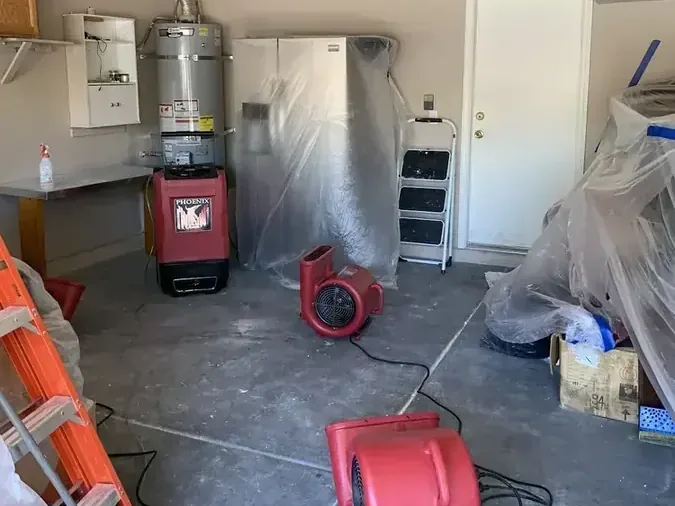
Water Heater Leak Cleanup in Glen Rock
A leaking tank may be replaced while its surrounding floor remains wet. Glen Rock water heater cleanup follows water beyond the appliance footprint, including nearby wall bases, stored contents and any connected finished room.
(888) 471-9821Discuss the wet tank areaHow water heater leak cleanup is handled in Glen Rock
Cleanup after a water heater release addresses the building around the appliance. Safe equipment isolation and repair coordination come first, followed by water removal, moisture checks and treatment of the affected floor and wall materials.
First steps for water heater leak cleanup
- 1
Leave appliance controls to qualified help
Water around heating equipment can create hazards beyond damp flooring. Qualified attention should establish safe appliance conditions before anyone approaches the tank or moves nearby stored belongings.
- 2
Look beyond the equipment base
Water reaching a doorway or wall edge identifies another inspection point. Those surfaces may stay damp after the tank stops leaking, requiring further assessment.
- 3
Protect dry stored contents
Boxes and other absorbent belongings can draw water from the floor. A safe handling plan separates affected items from dry storage and avoids carrying dripping materials into connected living areas.
- 4
Coordinate tank work with floor access
Tank replacement can expose blocked surfaces. Coordinating that access lets cleanup inspect and treat flooring beneath or behind the equipment before installation makes those areas difficult to reach again.
What does water heater leak cleanup cost in Glen Rock, NJ?
Glen Rock water heater leak cleanup planning ranges are $800 to $5,500+. The estimate depends on floor spread, concealed dampness and access around equipment, with tank repair or replacement addressed separately from building cleanup.
Accessible utility area
- Reachable equipment area
- Small moisture boundary
- Limited drying setup
Adjoining room spread
- Water crosses a threshold
- Nearby finishes retain moisture
- Connected surfaces need treatment
Concealed broad damage
- Hidden floor layers affected
- Multiple wet edges opened
- Wider monitored drying scope
Compare the scope with the water damage cost calculator. The restoration company prices the inspected damage, material access and equipment needs separately from source repairs, replacement finishes and contents work.
The water heater leak cleanup process
- 1
Connect appliance isolation with the cleanup boundary
Once equipment conditions permit assessment, inspection maps water around the tank and across connected floors. The source repair responsibility stays clear while restoration personnel determine which finishes, wall bases and stored contents were affected by the release.
- 2
Remove the collected water and assess contents
Extraction addresses accessible floor water, with suitable handling for saturated belongings or damaged material. Access around the appliance is coordinated with the qualified trade so the treatment can reach spaces that would otherwise remain blocked during cleanup.
- 3
Dry the surrounding building materials
Floor seams, adjacent wall bases and any wet finished area receive targeted assessment. Equipment supports drying of retained materials, while readings establish whether a narrow utility space or concealed edge needs a different arrangement to make useful progress.
- 4
Check the area before restoring normal storage
The final condition record should cover the appliance footprint and the outward water path. Once source work and drying are complete, the owner can coordinate any remaining finish repair and return contents without covering an unassessed damp section.
A water heater can sit in a space filled with practical obstacles: stored belongings, nearby walls and equipment connections. When water escapes, those same obstacles make the damage harder to see. Glen Rock cleanup follows the release around the tank and outward, while qualified appliance work establishes safe access to the source.
The appliance failure and floor damage need coordination
A new tank may stop the leak without changing the moisture beneath nearby flooring. The cleanup assessment needs to identify what water contacted before the appliance work was completed. Any useful access created during replacement should be coordinated with inspection of the surrounding floor and wall edges.
At a property in Ferndale, the equipment room may connect to other interior spaces through thresholds or wall assemblies. The inspection follows those actual connections. Floor finishes, stored items and the route out of the room determine which handling steps belong in the immediate cleanup plan.
- Water spreading away from the tank base
- Wet packaging touching nearby walls or flooring
- Doorway edges leading into another room
- Areas hidden behind equipment or stored contents
Remove collected water without missing enclosed edges
Accessible pooling can be extracted once conditions permit safe work. Saturated contents and damaged finishes then need their own assessment. A narrow gap behind the appliance may remain wet even when the open floor appears clear, so inspection needs a way to account for that space.
Homes around Hillman Avenue and Maple Avenue should receive a plan based on the appliance arrangement present. A wall base beside the tank can need different treatment from an open hard floor. Documenting those differences helps explain equipment placement and any selective access needed for drying.
Return the utility area to use in stages
The end of appliance repair and the end of structural drying may occur at different points. Retained materials need suitable moisture conditions before they are enclosed or covered by stored contents. Measurements at the perimeter help show whether the water path has been treated beyond its visible starting point.
The work record should also distinguish appliance replacement costs from cleanup and finish repairs. That separation makes the estimate easier to understand and gives the owner a practical account of remaining tasks. It avoids treating a working heater as the sole sign that the surrounding room is ready.
- Coordinate access when equipment is being moved
- Check damp boundaries at adjoining wall bases
- Record conditions below affected storage items
- Confirm drying before concealing the floor again
Useful cleanup reaches past the visible puddle
A tank release often draws attention straight to the appliance. The building around it needs the same deliberate assessment, especially where water has passed under a threshold or remained behind equipment. Clear notes on access, affected materials and drying results connect the source work with the final condition of the room. The owner can then restore storage and finishes with an understood sequence instead of covering the area immediately after replacement.
Water heater leak cleanup coverage
Water heater damage assessment serves Glen Rock homes in Ferndale and around Hillman Avenue and Maple Avenue, with the appliance setting determining access and adjacent material checks.
The same service nearby: water heater leak cleanup in Paramus, Fair Lawn, Oradell.
Water Heater Leak Cleanup questions
Does replacing the heater remove the water damage?
Replacement addresses the appliance failure. Water already in floor layers or wall bases may still need treatment. Inspection around and beyond the equipment identifies remaining dampness before the room returns to ordinary use or storage.
Should the homeowner reach behind the tank?
Access around wet heating equipment can involve electrical or other appliance hazards. Qualified personnel should establish safe conditions. Useful observations can be made from outside the wet area without reaching behind the tank or handling unfamiliar controls.
Why inspect an adjoining room?
Water can cross a doorway or travel under a partition from the equipment area. A neighboring finish may show only slight moisture at first. Checking the connected boundary helps identify damage that survives after the visible utility floor dries.
What happens to wet storage boxes?
Absorbent packaging can retain water and hide moisture against the floor. Its condition and contents need assessment before handling. A planned route keeps wet items separated from dry belongings and preserves useful documentation of damaged possessions.
Can the floor beneath the tank be checked?
Access may depend on the repair or replacement arrangement. Coordinating the trades allows inspection when the affected surface is reachable. The written scope should explain any access limitation and how that area will be addressed during the work.
What information is useful for the first discussion?
The tank location, visible water spread and any safety concerns help establish the assessment needs. Details about planned appliance repair and affected adjoining rooms also help connect source control with the cleanup work around the equipment.
Treat the floor around the replaced tank
Coordinated appliance work and moisture checks help the cleanup reach surfaces that ordinary access to the utility area can miss.