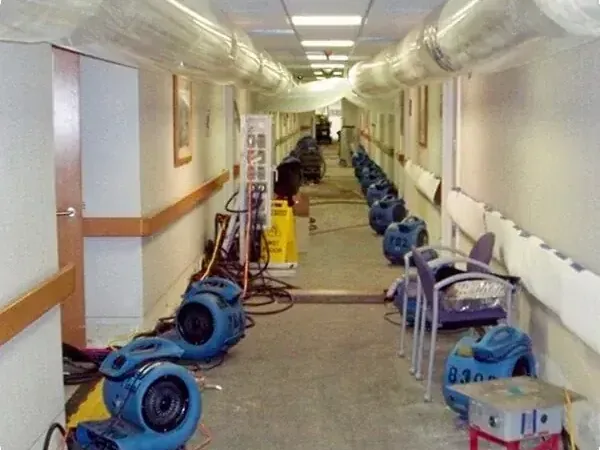
Glen Rock Commercial Water Damage
A business water loss affects access and inventory alongside walls and floors. Glen Rock commercial cleanup defines the wet work area, coordinates building responsibilities and protects usable space while damaged materials receive appropriate treatment.
(888) 471-9821Discuss the business water lossHow commercial water damage is handled in Glen Rock
Commercial restoration organizes water removal and drying around the affected premises. The assessment considers tenant boundaries, stock, shared access and building systems so cleanup responsibilities remain clear while retained materials move toward suitable moisture conditions.
First steps for commercial water damage
- 1
Identify the building contacts
The manager and property representative may control different decisions. Clear contacts help arrange source repair, access and the authority to address damage extending beyond the tenant space.
- 2
Separate work and occupied routes
Staff and customers need visible boundaries around hazards. Planning circulation before equipment arrives keeps hoses and removed materials from obstructing the routes approved for continued use.
- 3
Protect stock and records
Dry goods should stay outside wet handling areas. Contacted inventory needs documentation and suitable treatment decisions before it is moved or mixed with unaffected business contents.
- 4
Report adjoining space involvement
Water may cross a shared wall or tenant boundary. Describing those connections helps inspection include the relevant property contacts and affected surfaces beyond the first visible pool.
What does commercial water damage cost in Glen Rock, NJ?
Commercial cleanup in Glen Rock has planning ranges of $2,500 to $15,000+. Affected tenant areas, contents handling and access constraints influence the estimate, with source repairs and business finish restoration separately defined in the work scope.
Contained tenant area
- Defined tenant area
- Clear equipment route
- Limited contents coordination
Several connected zones
- Water crosses interior boundaries
- Occupied zones coordinated
- Broader material drying and records
Broad business disruption
- Extensive affected floor assemblies
- Complex stock and access needs
- Expanded monitoring records
Compare the scope with the water damage cost calculator. The restoration company prices the inspected damage, material access and equipment needs separately from source repairs, replacement finishes and contents work.
The commercial water damage process
- 1
Map the loss around building responsibilities
Inspection identifies the affected spaces and the contacts needed for source correction or shared access. The work boundary records wet materials and contents while distinguishing tenant decisions from building responsibilities that need coordination before restoration can proceed efficiently.
- 2
Arrange extraction and contents handling together
Water removal needs a practical equipment route, and nearby inventory may block access to wet edges. Handling decisions protect dry stock and document contacted items, allowing extraction to reach the affected floor without creating avoidable disruption in usable areas.
- 3
Dry retained materials within controlled work zones
Equipment placement accounts for circulation, shared walls and the building's actual wet assemblies. Measurements track progress in each treated zone, while changes to access or operation are coordinated so staff do not unintentionally interrupt the drying setup.
- 4
Give the manager a usable repair handoff
Completion records identify treated rooms, retained material conditions and separate remaining tasks. That information supports decisions about finish replacement and business use, with clear responsibility for anything outside the initial extraction, cleaning and drying scope agreed for the premises.
Water in a business creates decisions that extend beyond the wet floor. Staff need access, stock may block damaged wall edges and a neighboring tenant may share the affected assembly. Glen Rock commercial restoration brings those conditions into the work plan so extraction and drying can proceed with clear responsibilities.
Use the business layout to define the response
The central business district runs along Rock Road between the train stations. Glen Rock Main Line station is at Rock Road and Main Street, while Glen Rock Boro Hall station is at Harding Plaza between Maple Avenue and Rock Road. These locations provide practical references for arranging property access.
Inside the premises, the inspection follows room connections rather than the storefront boundary alone. Water can reach shared walls, storage areas and common circulation. The manager and property representative need a clear account of those findings before cleanup assumes that every affected section falls under the same responsibility.
- Occupied routes that must remain clearly separated
- Inventory or records near the wet boundary
- Shared assemblies connecting adjoining tenant areas
- Building contacts controlling source repair and access
Coordinate contents before equipment fills the floor
Extraction hoses and drying equipment need room to work. Stock placed against a wall may hide damp material or obstruct treatment, so contents decisions should be part of the initial scope. Dry goods remain separate while contacted items receive documentation and condition specific handling before removal or treatment.
The assessment also considers whether water condition requires restricting a larger area. A business with wastewater contact needs different handling from a localized supply release. Clear work boundaries and a controlled waste route help prevent staff circulation from spreading the damage into spaces that initially remained usable.
Measure progress in the areas the business understands
Room or zone names make the drying record easier for a manager to follow. Measurements can identify a wet corridor edge, storage wall or affected tenant section without reducing the whole property to a single equipment count. That clarity supports decisions when one assembly dries differently from another.
Any change in business access should be coordinated with the treatment arrangement. Blocking airflow or moving equipment can alter the result. A practical handoff explains which zones completed cleanup, their retained material condition and any separate finish repairs needed before the premises return to the intended use.
- Record source repair responsibilities at the outset
- Keep unaffected stock outside wet handling routes
- Track material progress within defined work zones
- Identify remaining repairs for the property manager
A readable scope helps keep decisions moving
The business needs to know where work is happening, why access is restricted and which contact can resolve a changed condition. An itemized restoration scope connects those practical issues with the water damage itself. It should separate extraction, material handling and drying from source repairs or rebuilding, giving the manager a useful record for coordinating the premises through each stage of recovery.
Commercial water damage coverage
Commercial water damage assessment serves Glen Rock's Rock Road business district and properties around Main Street and Harding Plaza, coordinating cleanup with the actual occupied space and access arrangements.
The same service nearby: commercial water damage in Paramus, Fair Lawn, Oradell.
Commercial Water Damage questions
Can part of a business remain accessible?
That depends on hazards, contamination and the ability to separate usable space from restoration work. The access assessment should define boundaries and equipment routes. Continued use needs coordination with the property's conditions rather than a blanket promise of uninterrupted operation.
Who authorizes work across a tenant boundary?
The responsible property contacts need to establish access and scope for adjoining spaces. Cleanup should document where water traveled and coordinate the relevant permissions through those contacts, keeping tenant responsibilities and building responsibilities clear during the response.
How should wet stock be handled?
Affected goods need documentation and condition specific decisions. Dry inventory should remain separate from contaminated or saturated items. A planned handling area and removal route help protect unaffected stock while the work reaches floors and walls previously blocked by contents.
Why measure a shared corridor after extraction?
A corridor can connect wet tenant spaces and hold moisture in flooring or wall bases. Visible removal does not show every retained layer's condition. Measurements help determine whether the route also needs drying before finishes or ordinary use resume.
Does the estimate include lost business income?
Cleanup estimates describe the restoration work and related agreed tasks. Business interruption questions belong to the relevant policy and financial records. Keeping those issues separate makes the scope of water removal, material handling and drying easier to assess.
What should staff know during drying?
Staff need the restricted area boundaries, approved access routes and a contact for required changes. Moving equipment or closing a drying opening can affect treatment. A clear daily arrangement helps the business coordinate necessary activity with the restoration setup.
Organize the water response around the premises
A defined work boundary connects removal and drying with stock protection, property responsibilities and the next repair decisions for the business.