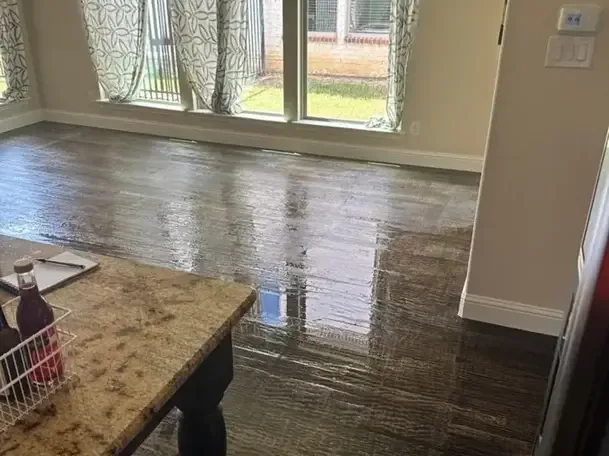
Appliance Leak Water Damage in Maywood
The floor in front of a dishwasher may dry before the space underneath does. Appliance leakage needs an inspection behind the visible edge, with attention to cabinetry, wall bases and layered flooring.
(888) 471-9821Inspect this appliance spillHow appliance leak water damage is handled in Maywood
Appliance water damage restoration follows a leak from the machine or connection into surrounding construction. The scope separates appliance service from water removal, cabinet inspection and drying of materials that remain beneath adjacent finishes.
First steps for appliance leak water damage
- 1
Pause the affected appliance cycle
Stop operation using safe dry controls and avoid restarting the machine. A service professional can assess its connections and failed components without repeating the release.
- 2
Keep the machine in safe position
Keep the appliance connected until safe service access is arranged. Describe its position and surrounding cabinets before anyone moves it.
- 3
Document concealed edge symptoms
Record swelling at toe kicks, damp flooring transitions and stains behind the appliance. Those signs help define inspection points even if the open walkway has already been wiped dry.
- 4
Protect the adjoining usable space
Keep dry furniture and stored items out of the wet boundary. Separate exposed contents without blocking the route needed for appliance access, extraction equipment and later material moisture checks.
What does appliance leak water damage cost in Maywood, NJ?
Appliance leak cleanup in Maywood uses planning ranges from $700 to $5,000+. Cabinet access, layered flooring and adjoining room spread affect restoration costs. Repairing the appliance and replacing damaged cabinetry require separately described work.
Open floor release
- Accessible surface water removal
- Limited adjoining finish exposure
- Focused drying equipment placement
Cabinet or floor spread
- Wet cabinet base access
- Affected floor covering layers
- Additional concealed moisture checks
Several assemblies wet
- Multiple connected finish sections
- Appliance access coordination
- Broader retained material drying
Compare the scope with the water damage cost calculator. The restoration company prices the inspected damage, material access and equipment needs separately from source repairs, replacement finishes and contents work.
The appliance leak water damage process
- 1
Coordinate safe appliance and connection access
The service arrangement establishes how the leaking machine will be isolated and moved if necessary. Restoration inspection records nearby electrical conditions, cabinetry and floor surfaces that need protection or additional access during that work.
- 2
Inspect beneath the visible installation edge
Once safe access is available, checks extend to the substrate, cabinet bases and adjoining wall. Moisture findings identify whether the release stayed near the machine or traveled into neighboring finishes and room transitions.
- 3
Expose and dry the retained materials
Water is extracted and unsuitable layers are considered for removal. Equipment then targets accessible retained construction, with cabinet or floor openings added where necessary to reach moisture that a closed surface would otherwise conceal.
- 4
Check conditions before normal use resumes
Repeated measurements establish drying progress at the original affected points. The handoff distinguishes appliance repair from building restoration and identifies finish replacements needed before cabinets, floor coverings or the machine conceal the work area again.
A dishwasher release can disappear beneath a cabinet toe kick while the kitchen walkway looks manageable. A washer leak may travel behind its enclosure before appearing in the adjoining room. In either case, stopping appliance use is only the beginning; the inspection must reach the surfaces that concealed the water.
Use the appliance position to plan access
West Pleasant Avenue has shops and restaurants in the district between Maywood Avenue and Lincoln Avenue. Whether the affected machine serves a home or a business, the access plan needs its location, connection arrangement and surrounding finishes. A tight installation can make hidden water harder to inspect.
Disconnecting or shifting a machine belongs with someone equipped to handle its supply, drainage and electrical connections safely. Pulling it across wet flooring can damage the finish or disturb another connection. Coordinate appliance service with restoration so the newly exposed surface is inspected before the machine returns.
- Stop using the leaking machine until its source is addressed.
- Note water emerging from cabinet bases or floor joints.
- Photograph the appliance position and nearby damaged finishes.
- Leave connection handling to the appropriate service professional.
Check the hidden layers around cabinetry
Cabinet panels can swell along their lower edges while the central floor dries. The underside, backing and wall behind the unit may need access to establish the damage. Inspection should explain which parts are sound, which block drying and which have changed shape enough to require replacement.
Layered flooring complicates the picture because water can move between coverings and remain beneath an apparently dry top surface. Transitions into a dining area or hall deserve a moisture check. The visible front edge of the appliance should not become the automatic boundary of the cleanup.
Match drying to the exposed construction
After extraction, retained wood and wall materials need airflow and humidity control appropriate to their location. A fan directed at a closed cabinet front may do little for moisture behind its backing. Access and measurements should establish whether the drying arrangement reaches the part of the assembly that is still wet.
For a laundry leak, the inspection may also need the wall behind the washer and the floor under a nearby dryer. Equipment should not be moved casually through the wet area. The source repair and material access plan should describe how each obstruction will be handled without enlarging the damage.
Inspect before reinstalling the appliance
The space becomes easiest to examine when the appliance is safely moved for repair. Use that opportunity to document the substrate, connections and cabinet edges. A repaired machine can conceal the same wet patch again if it returns before drying decisions are complete. Keep the source service record with the restoration findings so the appliance function and the room condition remain separate, understandable parts of recovery.
Appliance leak water damage coverage
Appliance leak assessments cover Maywood kitchens, laundry areas and connected rooms where water has reached cabinetry, floor coverings or concealed edges around the affected machine.
The same service nearby: appliance leak water damage in Paramus, River Edge, Fair Lawn.
Appliance Leak Water Damage questions
Should the machine run again to locate the leak?
Avoid repeating a cycle that may release more water. Tell the service professional what was operating when the problem appeared. Diagnosis should be arranged safely while the restoration assessment records the water already in surrounding finishes.
Can a dry cabinet face hide damage underneath?
Yes. Lower edges, backing and concealed surfaces can hold moisture after the visible face looks normal. Inspection beneath the cabinet or through an appropriate access opening helps establish its condition and the drying needs of adjacent materials.
Does every appliance leak require cabinet replacement?
Replacement depends on material condition, contamination and access. Sound components may be retained when they can dry properly. Swollen or deteriorated panels need a separate decision, documented before the surrounding installation is closed or reassembled.
Why inspect beyond the kitchen doorway?
Water can travel between floor layers and cross a threshold beneath the visible finish. Checking the next room establishes the real damage boundary. It also helps prevent a dry looking doorway from concealing moisture under an adjoining floor covering.
Who moves a washer for inspection?
Movement should be coordinated with a professional able to manage its plumbing and electrical connections. Restoration needs may influence when it is moved and returned. The access plan should protect the floor and preserve a safe route through the room.
What confirms that the hidden space has dried?
Measurements at the affected substrate and adjoining materials show progress. Surface appearance alone is insufficient where the machine or cabinetry concealed moisture. Keep the final findings with the appliance repair record before reinstalling parts that limit inspection access.
Check beneath the machine before it returns
Drying decisions should include cabinet edges and floor layers around the repaired appliance.