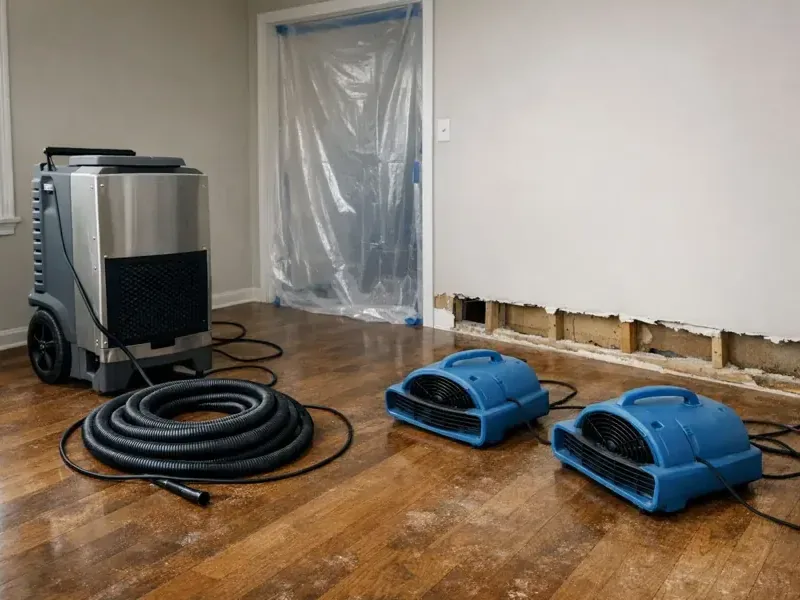
Structural Drying in Maywood
A room can feel comfortable while its wall cavity remains damp. Structural drying focuses on moisture inside retained construction, using access, airflow and repeated material readings to establish progress toward repair readiness.
(888) 471-9821Assess the retained wet materialsHow structural drying is handled in Maywood
Structural drying removes absorbed moisture after source control and initial cleanup. The plan considers the wet assembly, room conditions and access limitations, then uses recorded readings to adjust equipment and determine when retained materials are ready.
First steps for structural drying
- 1
Confirm the source is controlled
Explain any continuing drip, recurring wet patch or unresolved repair before equipment is planned. Drying cannot make lasting progress if new water keeps entering the same retained wall or floor assembly.
- 2
Identify materials intended to remain
Ask which framing, finishes and floor layers can be retained after cleanup. Their condition and access determine the drying arrangement, while unsuitable materials need a separate removal decision first.
- 3
Keep planned airflow paths open
Keep equipment and necessary openings as arranged. Report access problems or noise concerns so adjustments preserve drying conditions while allowing safe use of adjacent spaces.
- 4
Request comparable progress findings
Ask how the originally wet points are responding. Readings should connect to the affected materials, helping explain any added opening, equipment change or extension of the drying work before repairs begin.
What does structural drying cost in Maywood, NJ?
Structural drying in Maywood uses planning bands of $1,000 to $7,000+. The retained material volume, access and moisture response determine the work. Removal, source repair and rebuilding should be distinguished from equipment operation and monitoring.
Accessible small zone
- Limited wet construction
- Direct airflow to surfaces
- Focused material reading locations
Several connected rooms
- Broader moisture control area
- Multiple affected assembly checks
- Additional equipment placement needs
Dense or concealed moisture
- Restricted cavity drying access
- Slower retained layer response
- More involved progress adjustments
Compare the scope with the water damage cost calculator. The restoration company prices the inspected damage, material access and equipment needs separately from source repairs, replacement finishes and contents work.
The structural drying process
- 1
Set an assembly specific drying objective
The assessment identifies retained materials and their initial moisture pattern. Suitable reference conditions and access points establish what progress will mean, giving the equipment plan a measurable purpose rather than relying on a room feeling dry.
- 2
Arrange equipment around the moisture pathways
Air movement and humidity control are selected for the exposed assembly and affected space. Openings or other access measures are considered where finishes prevent the equipment from reaching the wet layer that needs attention.
- 3
Compare findings and correct stalled progress
Repeated checks return to the affected materials and examine changes in room conditions. If a location responds poorly, the plan addresses the cause through adjusted access, equipment placement or investigation of renewed moisture entry.
- 4
Record the endpoint and remaining construction work
The final drying findings are organized with the original affected area record. They identify what can move toward reconstruction and what repairs remain, supporting a clear transition from equipment use to restoration of the finished room.
Removing standing water changes the room immediately, but absorbed moisture leaves construction more slowly. Structural drying addresses that remaining load. The equipment arrangement should be tied to particular wet materials and accessible pathways, with measurements showing whether moisture is actually moving out of the assembly.
Define what is staying in the building
The 2020 census recorded 3,829 housing units in Maywood. The borough also has shops and restaurants on West Pleasant Avenue between Maywood Avenue and Lincoln Avenue. Each property presents its own materials and access constraints, so the drying plan begins with the inspected assembly.
Retained framing, wall surfaces and floor layers need a clear condition assessment. Materials that are unsuitable to keep should be removed before they obstruct drying of the construction behind them. The scope should identify what remains, where it is wet and how equipment will reach it.
- Identify representative wet points before equipment placement.
- Record access restrictions inside walls and floor assemblies.
- Keep airflow paths clear of stored belongings.
- Explain the material objective for ending equipment use.
Make airflow and humidity control work together
Air movement helps moisture leave an exposed surface, while dehumidification manages water vapor in the drying space. If the assembly remains covered, stronger airflow in the room may not solve the access problem. A wet cavity can require a targeted opening or another suitable method of reaching retained materials.
Equipment placement also affects room use. Cords, hoses and airflow paths should be arranged with safe access in mind. Occupants need to know which doors or openings support the plan so routine changes do not undermine the conditions established for the affected construction.
Respond to the readings instead of the calendar
Progress checks should return to comparable locations and materials. A persistently damp point may indicate blocked airflow, another wet layer or continued entry from the source. The next decision should address that finding instead of simply leaving the same arrangement running without explanation.
A completion record connects the initial wet pattern with the final measurements. It identifies the retained areas assessed and any surfaces that remain inaccessible. This gives the repair contractor useful information before new insulation, flooring or wall finishes cover the material again.
Equipment removal should have a clear reason
The room sounding quieter is a welcome change, but the stopping decision belongs to material findings. Ask which areas met the drying objective and what reconstruction remains. Keep the reading record with source repair and removal photographs. Together those documents explain why the assembly was ready to move forward and where any additional repair responsibility begins.
Structural drying coverage
Structural drying assessment serves Maywood residential and commercial interiors with retained wet framing, wall materials or floor assemblies after the source and initial cleanup needs have been addressed.
The same service nearby: structural drying in Paramus, River Edge, Fair Lawn.
Structural Drying questions
Why does the room feel dry before the wall is ready?
Room air and construction hold moisture differently. A comfortable room can still contain damp framing or covered wall layers. Material readings show the condition that matters for closure, while room conditions help explain how the drying arrangement is working.
Can more fans solve a concealed wet cavity?
Additional airflow helps only when it reaches the affected material under suitable conditions. A closed layer may block that path. The assessment should consider access and humidity control before assuming extra equipment in the room will resolve the concealed moisture.
Should equipment be switched off when occupants leave?
Follow the operating arrangement established for the drying work. Unplanned interruptions can change conditions and delay progress. If access, electrical or comfort concerns arise, report them so the equipment plan can be adjusted appropriately for the affected space.
What does a stalled moisture reading mean?
It calls for investigation. The material may have limited drying access, another wet layer or continuing water entry. Comparable readings help identify the problem and support a specific adjustment rather than relying on an unchanged setup for an unexplained period.
Does every material reach the same reading?
Different materials and measurement methods require appropriate interpretation. The drying objective should suit the assembly and reference conditions. Ask for an explanation of the findings for each retained material instead of comparing unrelated values across wood, wallboard and concrete.
What should the repair contractor receive after drying?
Provide the affected area description, removal photographs and final material findings. Identify any access limitations and remaining source work. That information helps the contractor close or refinish the assembly with an understanding of the conditions established during restoration.
Move toward repairs with a measured drying record
Access, equipment adjustments and comparable readings establish the next step for the affected construction.