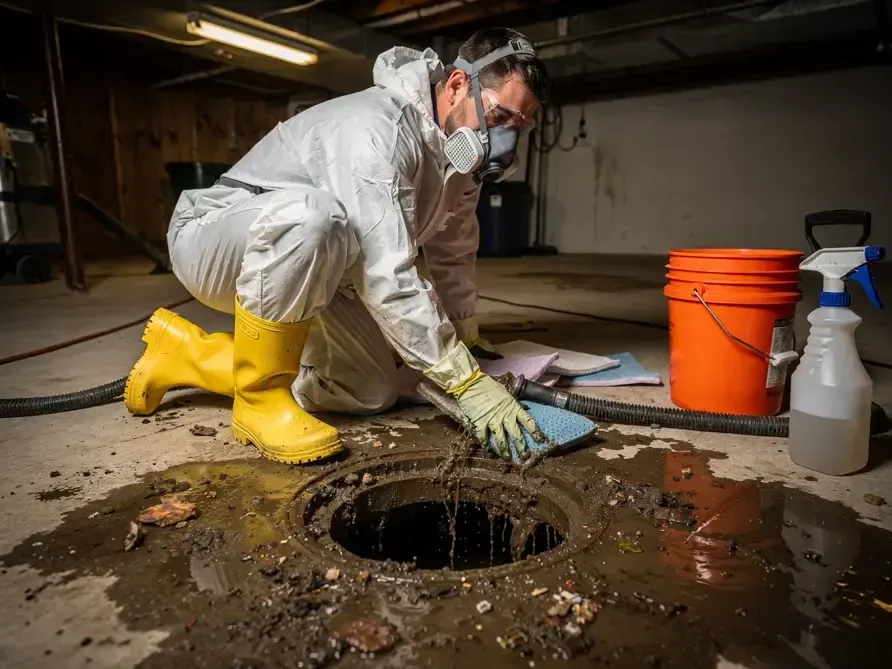
Sewage Backup Cleanup in Maywood
Wastewater returning through a drain creates a contact area larger than the visible pool. Limit entry, stop adding water to affected drainage and arrange source diagnosis alongside a controlled cleanup assessment.
(888) 471-9821Assess the returning wastewaterHow sewage backup cleanup is handled in Maywood
Sewage restoration manages wastewater contact with rooms, contents and concealed construction. It combines containment, removal decisions and cleaning with a drying plan for suitable retained materials after the drainage problem receives attention.
First steps for sewage backup cleanup
- 1
Restrict entry to contacted areas
Keep occupants and animals outside the wastewater boundary. Avoid crossing it for belongings, and identify a dry route that keeps contaminated footwear out of unaffected rooms.
- 2
Reduce additions to affected drainage
Stop using fixtures associated with the backup and tell the plumber whether other drains react. Describe when wastewater returns so source investigation can assess the pattern without repeated household testing.
- 3
Keep exposed belongings separated
Keep soaked contents outside clean storage. Photograph their location before the handling plan determines cleaning options and a controlled removal route.
- 4
Arrange coordinated source and cleanup work
Request drainage diagnosis and a contamination assessment together. Restoring flow should be followed by a clear plan for contacted surfaces, unsuitable porous layers and retained construction requiring cleaning and drying.
What does sewage backup cleanup cost in Maywood, NJ?
Sewage cleanup in Maywood has planning ranges from $2,000 to $10,000+. Contamination spread, porous material removal and controlled access influence the cost. Drain diagnosis, repair and replacement finishes should have clearly separated descriptions and prices.
Limited contaminated area
- Localized wastewater contact
- Accessible controlled removal
- Limited retained surface treatment
Several contacted rooms
- Connected contaminated floor areas
- Additional porous material removal
- Broader cleaning and drying
Extensive backup
- Large affected contents volume
- Complex contaminated access routes
- Widespread concealed material inspection
Compare the scope with the water damage cost calculator. The restoration company prices the inspected damage, material access and equipment needs separately from source repairs, replacement finishes and contents work.
The sewage backup cleanup process
- 1
Establish the wastewater boundary and source symptoms
The initial assessment records backing fixtures, timing and visible contact surfaces. It establishes restricted access and identifies any source investigation needed before cleanup can proceed without additional wastewater arriving in the same work area.
- 2
Plan controlled removal for affected materials
Porous layers, contents and retained hard surfaces are assessed separately. The scope identifies disposal and cleaning decisions, along with a route for water and debris that protects clean rooms during handling and equipment movement.
- 3
Clean accessible retained construction thoroughly
After unsuitable materials and wastewater are removed, retained surfaces receive cleaning appropriate to their exposure. Concealed edges are reached where necessary so the work does not leave residue beneath flooring or behind finishes simply because the room looks clear.
- 4
Dry and document the restoration handoff
A monitored drying arrangement addresses moisture in retained construction after cleaning. The final record describes the contact area, material decisions and remaining repairs, allowing reconstruction and room use decisions to follow the completed scope rather than odor or appearance.
A drain that pushes wastewater back into the room requires more than a mop. The affected boundary includes every surface, object and pathway contacted by the backup. Keep traffic outside that boundary and report other backing fixtures so the source investigation can establish whether the problem reaches beyond a single opening.
Give the plumber the complete drainage pattern
The Borough of Maywood operates a public wastewater collection system. A March 13, 2012 engineering report documented sanitary sewer sediment removal and identified breaks, cracks and a sag on Magnolia Avenue. Those dated records belong to the borough history; the current backup needs its own drainage diagnosis.
The same report identified sewer siphons on Brook Avenue and Prospect Avenue. For a present indoor loss, record which fixtures backed up, what was being used and whether the water returned after use stopped. Those observations help distinguish the building symptoms that need attention during source investigation.
- Keep affected toilets, sinks and connected appliances unused.
- Prevent shoes and carts from crossing contaminated flooring.
- Leave household fans outside the wastewater work zone.
- Photograph contacted storage without handling it unnecessarily.
Separate cleanable construction from absorbent losses
Wastewater can soak into carpet backing, wallboard and stored cartons. Those layers need a handling decision based on exposure and condition. A surface that dries quickly can still carry contamination, so the plan should establish what requires removal and what can receive appropriate cleaning before drying.
Hoses, bags and wet contents should move through a controlled route. Unaffected rooms need protection where that route passes a doorway or stair. Clear separation of the dirty work area reduces the chance that cleanup activity spreads the loss into storage or living spaces that remained dry.
Inspect cavities reached from the floor
Water at a drain can travel beneath partitions or flooring before it becomes visible in the next room. The inspection follows those seams and checks absorbent edges. Opening damaged material may be necessary to reach contaminated construction, especially where a finished surface prevents effective cleaning.
Once unsuitable layers are removed and retained surfaces are cleaned, drying addresses their remaining moisture. Equipment should serve the defined work area and its exposed assemblies. Records should explain the contact boundary, removal decisions and drying findings so reconstruction does not conceal an untreated surface.
Normal drainage and a clean room are separate outcomes
Clearing an obstruction can stop the backup while leaving wastewater damage behind. The owner needs both a source correction record and a restoration scope that explains the materials contacted. Before the room reopens, check that cleaning, retained material drying and any necessary finish replacements have been addressed. Odor alone is not a reliable measure of the work still required beneath flooring or behind a wall base.
Sewage backup cleanup coverage
Maywood sewage assessments address wastewater in occupied rooms, utility spaces and lower levels, with source investigation and controlled access planned around the contacted materials and building layout.
The same service nearby: sewage backup cleanup in Paramus, River Edge, Fair Lawn.
Sewage Backup Cleanup questions
Should water use stop throughout the building?
Report which fixtures are affected and follow the plumbing assessment for use restrictions. Connected appliances can add wastewater even when a sink is unused. Avoid testing several drains repeatedly while the backup continues entering the room.
Can a backup stay contaminated after it dries?
Yes. Drying removes moisture while residue can remain in contacted materials. Contamination assessment, removal and cleaning precede drying of retained construction. Completed treatment and material checks establish when the room is ready for use.
What makes porous materials harder to retain?
Wastewater can penetrate layers that cannot be cleaned effectively from their exposed face. Their condition and access determine the decision. The restoration scope should identify each affected material and explain whether it can be treated or requires removal.
Does the historic sewer report identify the current cause?
The current cause must be established by investigating the affected drainage. Report present symptoms, fixture use and recurrence. Those observations help the plumber evaluate the active problem while restoration documents the surfaces reached by this particular backup.
Can normal fans run after the water is removed?
Equipment use should follow the contamination plan. Residue can remain after extraction, and uncontrolled airflow may spread it. Cleaning and suitable containment establish when and where air movement can support drying without affecting clean parts of the building.
What belongs in the completion record?
Keep source repair information, contacted area photographs, removal decisions and cleaning descriptions with the final drying findings. That record explains both wastewater handling and construction recovery, including any remaining finish work needed before the space returns to normal use.
Restore the contacted space after drainage correction
Removal, cleaning and measured drying address the room beyond the cleared drain.