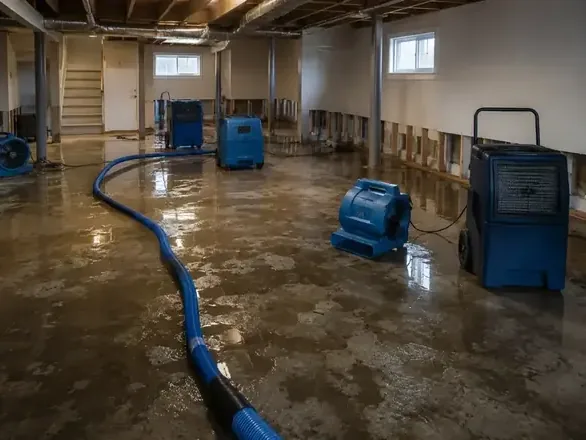
Basement Water Cleanup in Maywood
Water at the bottom of the stairs can hide electrical hazards and damage behind finished walls. Basement recovery starts with safe entry and source identification before pumping, contents handling and inspection of retained construction proceed.
(888) 471-9821Assess water below the stairsHow basement water cleanup is handled in Maywood
Basement restoration addresses accumulated water and the lower room materials it reaches. The inspection distinguishes entry routes, contamination and finished assemblies, then plans controlled removal, cleaning and drying around stairs, utilities and stored belongings that affect access.
First steps for basement water cleanup
- 1
Assess the stair approach first
Remain above the water if utilities or floor conditions are uncertain. Identify electrical equipment and explain whether the bottom of the stair is submerged.
- 2
Describe the incoming water pattern
Explain whether water appears through a wall, opening, drain or appliance area and whether it is still rising. Those observations help establish source control and the removal method before equipment arrives.
- 3
Leave heavy wet storage undisturbed
Do not lift saturated boxes or furniture while standing in water. Photograph accessible contents from dry ground and preserve a clear route for controlled handling once the lower level is safe.
- 4
Include finished edges in the scope
Report wet trim, wallboard and flooring around the room perimeter. Those surfaces may retain moisture after pumping, so the assessment should consider concealed layers before the basement returns to routine storage.
What does basement water cleanup cost in Maywood, NJ?
Basement cleanup in Maywood has planning ranges of $1,500 to $10,000+. Depth, contamination, stair access and finished lower room materials shape the cost. Source correction, contents restoration and rebuilding should have separately explained scopes.
Shallow accessible water
- Shallow floor accumulation
- Controlled pumping access
- Perimeter moisture checks
Finished lower-level damage
- Wet wall and floor layers
- Additional contents access decisions
- Broader retained material drying
Deep or contaminated loss
- Deeper accumulation
- Contaminated material removal
- Difficult equipment access
Compare the scope with the water damage cost calculator. The restoration company prices the inspected damage, material access and equipment needs separately from source repairs, replacement finishes and contents work.
The basement water cleanup process
- 1
Establish entry safety and the active source
Assessment begins with the stair route, utilities and apparent inflow. It identifies any conditions requiring separate professional attention and documents the water path before selecting removal equipment or sending people into the affected lower room.
- 2
Remove accumulation through a controlled route
Pumping or extraction addresses accessible liquid after the site conditions permit it. The plan accounts for water handling, hoses and stairs, while contents movement is arranged to protect clean areas and expose surfaces that need further inspection.
- 3
Assess finishes and clean retained construction
Wall bases, flooring and storage contact areas are checked after the water clears. Contamination and material condition determine removal or cleaning, with suitable retained layers prepared for drying rather than concealed beneath damaged finishes or returning belongings.
- 4
Measure the lower room before repair handoff
Drying equipment targets the exposed assembly and progress checks return to the affected edges. The completion record identifies remaining construction work and source concerns, supporting a clear decision about finish replacement and normal use of the basement.
The first step down into a wet basement may lead toward an electrical hazard or a concealed obstacle. Stay at a dry access point while the conditions are assessed. The removal plan needs to establish what is entering, whether it continues and how equipment can reach the accumulation without putting occupants in the water.
Identify the route before choosing the response
Briarcliff Avenue drainage improvements addressed roadway ponding and were installed in spring 2023. The borough recorded Sanzari Place drainage construction as completed on November 1, 2024. At an affected basement, inspection follows the actual entry point, whether that appears at an opening, a wall joint or indoor plumbing.
The borough engineering report also recorded completion of the Stelling Avenue drainage and road project in late 2011. For the current property loss, document what happened at the building: water at a window, a backing drain or a leaking appliance. That observation informs immediate cleanup and later source repair.
- Keep occupants off stairs that lead directly into water.
- Report electrical panels and appliances near the wet area.
- Describe continuing inflow before removal equipment is arranged.
- Photograph reachable wall bases and stored items safely.
Reach water concealed by lower room finishes
A finished basement can hide moisture behind trim, wallboard and floor coverings. Pumping clears accessible liquid but leaves those materials to be assessed. The inspection should check the lower edges of partitions and the space beneath stored contents, particularly where absorbent items have been sitting directly on the floor.
Water quality determines cleaning and handling decisions. A supply release and wastewater returning through a drain require different treatment of porous layers. The scope should describe the source history and contact area before deciding what stays, what must be removed and how debris will leave the lower level.
Plan equipment access around stairs and storage
Hoses and removed materials need a controlled path through the building. Protect clean rooms along that route and keep the remaining stairs usable only where the work plan establishes safe passage. Heavy wet contents should not be stacked where they block inspection or place new loads on damaged finishes.
After removal and cleaning, retained wall and floor materials receive drying suited to their construction. Air movement should reach the wet assembly rather than circulate only through the open center of the room. Repeated readings help identify hidden layers that need further access before rebuilding begins.
Pumping is a milestone rather than the full repair
A clear basement floor makes inspection easier. The next checks examine moisture and material condition behind the finished walls. Ask for the findings on retained materials and a list of remaining repairs. Keep entry photographs and source repair notes with those findings so future work can address both the current damage and the route by which water reached the lower room.
Basement water cleanup coverage
Maywood basement assessments cover lower rooms with standing water, damp finishes or affected storage, with source identification and safe access established before removal and drying work begins.
The same service nearby: basement water cleanup in Paramus, River Edge, Fair Lawn.
Basement Water Cleanup questions
Is shallow basement water safe to walk through?
Electrical equipment, hidden objects and contamination can make even shallow water hazardous. Remain on dry ground and describe the utilities and access conditions before entering the lower room to move belongings or arrange removal equipment.
Does pumping address water behind finished walls?
It removes accessible liquid, while wall cavities can retain absorbed moisture and trapped water. The perimeter needs inspection after pumping. Material condition and access findings determine whether finishes need opening before retained construction can be cleaned and dried.
Should stored boxes be moved upstairs immediately?
Keep exposed contents apart from clean storage until safe handling is established. Wet boxes can collapse or carry residue through the building. Document their position and use a controlled route that does not spread moisture into unaffected rooms.
Can outside entry and a plumbing leak be treated alike?
The source history affects contamination and material decisions. Identify how water arrived and what it contacted before selecting a cleanup approach. The actual lower room conditions determine removal, cleaning and drying needs for the affected construction.
Why inspect the perimeter after the center looks dry?
Water can remain beneath trim, floor coverings and storage along the walls. Those edges may dry differently from the exposed floor. Checking them helps prevent a clean central area from masking damage that will be covered again during reconstruction.
What records help with later entry prevention work?
Keep photographs of the original entry point, water path and affected room edges, together with source repair notes. Drying and removal records explain this loss. A separate property assessment can then consider the work needed to reduce future entry.
Recover the basement beyond the visible pool
Finished edges and stored belongings need their own cleanup decisions alongside water removal and drying.