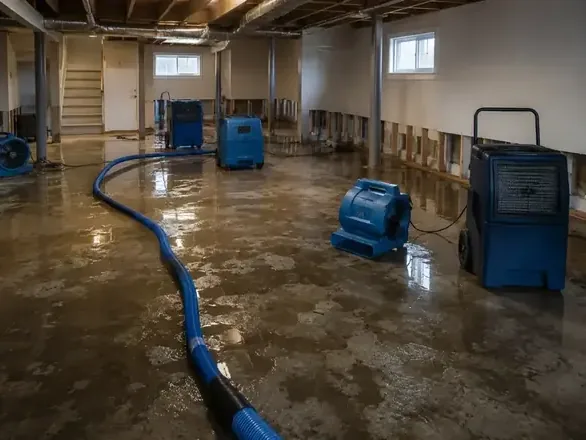
Basement Water Cleanup in Oradell
A wet basement needs an access decision before a pump is carried downstairs. The source, electrical equipment and condition of the lower level determine how water removal, contents handling and drying can proceed safely.
(888) 471-9821Assess the wet lower levelHow basement water cleanup is handled in Oradell
Basement cleanup evaluates standing water and the lower-level materials it reached. The work distinguishes rain entry, plumbing releases and suspected sewer backups, then coordinates removal, cleaning and drying around utilities, stored belongings and any finished assemblies.
First steps for basement water cleanup
- 1
Stop before entering the water
Keep occupants away from the lower level. Standing water near electrical equipment, loose storage or uncertain footing needs assessment before anyone descends into the affected area.
- 2
Describe how the water appeared
Report whether rain, a plumbing leak or drain symptoms preceded the flooding. Include any continuing rise, and follow the borough instruction to contact DPW first when a sewer backup is suspected.
- 3
Identify utility and storage obstacles
From existing knowledge, describe equipment, shelving and enclosed rooms below. These details help establish an access route without requiring someone to cross water or shift heavy contents before the hazards are understood.
- 4
Prepare records and authorization
Gather available photographs and identify the person who can approve removal or opening of finishes. Note important stored possessions so contents decisions can be included in the initial lower-level cleanup plan.
What does basement water cleanup cost in Oradell, NJ?
Oradell basement cleanup ranges are $1,500 to $3,200 for shallow accessible water, $3,200 to $6,500 for finished lower-level damage, and $6,500 to $10,000+ for deep or contaminated loss. Source and access affect scope.
Shallow accessible water
- Open removal route
- Limited contents handling
- Lower wall checks
Finished lower-level damage
- Wet coverings and partitions
- Targeted concealed layer access
- Broader drying plan
Deep or contaminated loss
- Complex pumping and handling
- More contaminated material contact
- Expanded cleaning and monitoring
Compare the scope with the water damage cost calculator. The restoration company prices the inspected damage, material access and equipment needs separately from source repairs, replacement finishes and contents work.
The basement water cleanup process
- 1
Establish the source and entry conditions
The assessment identifies the reported water route, current level and utility concerns. It incorporates any sewer backup coordination and checks the approach to the lower level, creating a practical access boundary before pumping or contents movement begins.
- 2
Remove water through a controlled route
Equipment and hoses are arranged around the established access plan. Water removal proceeds with attention to continuing entry and concealed obstacles, while stored belongings are documented and separated according to contact and the handling needs of their materials.
- 3
Expose and clean the contacted assembly
Affected floor coverings and wall finishes are evaluated for removal where needed. Suitable retained surfaces are cleaned, and hidden layers are checked so the lower level's visible floor does not become the only area addressed during the cleanup.
- 4
Dry and record the lower-level materials
Moisture measurements track retained walls, floors and supporting layers after removal and cleaning. The handoff identifies completed areas, remaining repair needs and any spaces that still require access, helping the owner coordinate reconstruction around the actual material conditions.
The bottom stair can be a useful observation point only when the approach is safe and dry. Water below it may conceal cords, displaced storage and floor changes. Basement cleanup in Oradell begins by identifying the current source and hazards before anyone enters the lower level to retrieve possessions or move equipment.
Distinguish the source before planning removal
April 2022: The rising Hackensack River flooded several blocks of homes in the borough. A wet basement today still needs an assessment of its own entry route. Rain-related entry, a plumbing release and wastewater returning through a drain lead to different handling and source coordination decisions.
For properties around Delford, Maple Avenue and Kinderkamack Road, describe whether water appeared after rain or fixture use and whether it continues rising. If a sewer backup is suspected, contact the Department of Public Works before an outside contractor so the borough can check its sewer main.
- Keep away from submerged electrical equipment.
- Describe the water level from safe access.
- Note any continuing flow or returning drain water.
- Identify stored items blocking the stair route.
Plan contents handling around the lower level
Boxes and shelving can trap water and conceal the wall base. Moving wet storage upstairs without a plan may carry residue into occupied rooms. A contents inventory and suitable staging area help separate items that need cleaning, disposal or further evaluation before removal begins.
The room's actual construction determines the cleanup scope. An exposed floor, a carpeted area and a finished partition present different access needs. Inspection should record what lies behind affected finishes and whether water has reached insulation, framing or a concealed floor layer that cannot dry from above.
Check the walls after standing water is gone
Removing the visible water creates access for detailed material checks. A dry-looking floor can remain connected to wet wall bottoms or hidden backing. Extraction, cleaning and drying should follow those findings rather than treating the disappearance of a puddle as the end of the lower-level work.
When outside water entered, storm flood cleanup addresses debris and contaminated contact. For retained materials, moisture readings establish equipment needs and progress. The completion record should list the lower-level areas assessed and any utility or access restriction that prevented inspection of another section.
- Inspect behind damaged lower wall coverings.
- Keep utility access clear during equipment placement.
- Separate contents decisions from structural drying.
- Document inaccessible corners or enclosed rooms.
Lower water does not automatically mean safe entry
Electrical concerns, unstable stored items and concealed debris can remain after the level drops. An owner should describe what can be seen from a safe location and leave entry decisions to the appropriate assessment. The removal plan needs to account for both the water and the building conditions around it. Once entry is established, the cleanup can progress through contents handling, material access and drying in a controlled order. Keeping the source status visible also helps avoid repeated pumping while new water continues entering the same space.
Basement water cleanup coverage
Oradell basement assessments consider the actual lower-level access and water source. Properties near Delford, Maple Avenue or elsewhere in the borough need utility and contents details before cleanup arrangements.
The same service nearby: basement water cleanup in Paramus, River Edge, Maywood.
Basement Water Cleanup questions
Can a homeowner enter when the water looks shallow?
Shallow water can conceal electrical contact, unstable storage and floor hazards. Stay at a dry observation point and arrange assessment of the lower-level conditions before entering to retrieve items or carry equipment down into the affected space.
Does basement water always come from outside?
Plumbing and sewer problems can also wet a lower level. The timing, entry point and drain symptoms help direct source investigation. Cleanup decisions should follow the actual source and water contact rather than assuming every wet basement has storm flooding.
What is the first contact for a suspected backup?
The borough directs residents to contact the Department of Public Works before an outside contractor so its sewer main can be checked. Keep fixtures unused and people away from wastewater while that source coordination begins for the property.
Can stored boxes be carried into living areas?
Wet or contaminated boxes should be assessed before they move through dry rooms. A planned staging area and contents inventory help prevent spread and preserve a record. Handling decisions depend on the material and the water it contacted.
Why open finished walls after pumping?
Water can remain behind lower wall finishes and within insulation after the floor is cleared. Targeted access allows inspection, cleaning or drying of those layers. The scope should explain which openings are needed and what each opening reaches.
How is the end of basement cleanup determined?
Completion includes more than removing standing water. The record should identify cleaning, contents decisions and the condition of retained materials after drying. It should also list repair needs and any inaccessible area that remains outside the completed work.
Plan recovery below the main floor
Arrange an Oradell basement assessment around the actual source, current water level and safe approach.