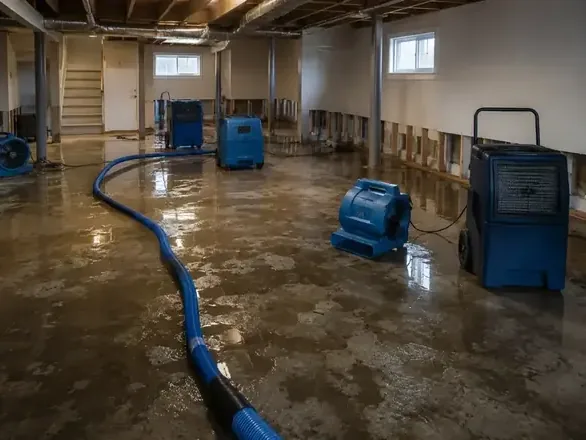
River Edge Basement Water Cleanup
Water at the bottom of a stairway needs a source and access assessment before pumping begins. River Edge basement cleanup considers plumbing leaks, outdoor entry and sewage separately while checking the finishes and belongings affected.
(888) 471-9821Describe water below the living spaceHow basement water cleanup is handled in River Edge
Basement restoration addresses collected water and the lower-level materials it reaches. The plan accounts for electrical conditions, the entry route, contamination and finished assemblies, with stored belongings and safe equipment access included in the initial scope.
First steps for basement water cleanup
- 1
Stay above unsafe basement conditions
Do not enter water near electrical equipment or descend beneath unstable finishes. Describe visible conditions from a safe position so the assessment can establish an appropriate access route.
- 2
Identify the observed entry point
Mention a leaking pipe, wet window opening or backing-up drain if visible. The removal and cleaning approach depends on the source, so avoid treating all lower-level water as the same exposure.
- 3
Keep belongings from spreading water
Leave heavy soaked items and contaminated boxes for organized handling. Moving them upstairs without controls can drip across dry floors and create additional contact areas beyond the original basement damage.
- 4
Explain the full access arrangement
Describe interior stairs, outside doors, stored objects and affected finished rooms. Those details help plan equipment movement and the inspection of wall bottoms or floor layers hidden behind belongings.
What does basement water cleanup cost in River Edge, NJ?
River Edge basement cleanup planning runs $1,500 to $3,200 for shallow accessible water, $3,200 to $6,500 for finished lower-level damage, and $6,500 to $10,000+ for deep or contaminated loss requiring broader treatment.
Shallow accessible water
- Reachable collected water
- Clear equipment route
- Initial perimeter checks
Finished lower-level damage
- Wet wall assemblies
- Floor covering decisions
- Expanded moisture treatment
Deep or contaminated loss
- Complex removal conditions
- Contaminated material handling
- Broader cleaning requirements
Compare the scope with the water damage cost calculator. The restoration company prices the inspected damage, material access and equipment needs separately from source repairs, replacement finishes and contents work.
The basement water cleanup process
- 1
Determine source, hazards and lower-level access
The assessment identifies the observed entry and conditions that affect safe work. Electrical concerns, stairs and the presence of contaminated water shape the removal plan, while the initial material map includes finished walls, flooring and accessible storage areas.
- 2
Remove collected water with organized contents handling
Water removal proceeds through a planned route, and belongings are documented before suitable movement. Revealing the floor perimeter allows inspection of concealed wet edges and helps distinguish the visible accumulation from the broader contact area beneath stored items.
- 3
Clean and expose assemblies needing treatment
The source and material condition determine cleaning and removal requirements. Damaged porous layers or inaccessible wet coverings are evaluated for opening, allowing retained structural materials to receive appropriate surface treatment and the access needed for an effective drying arrangement.
- 4
Measure the lower level before finish restoration
Progress readings track wall bottoms, floor interfaces and connected cavities after liquid removal. The final handoff describes source status, removals and remaining repairs, giving rebuilding a starting point that includes hidden portions of the basement assembly.
The lowest room can collect water from several very different sources. River Edge basement cleanup identifies whether the release came from household plumbing, an outdoor opening or a drain backup before choosing handling methods. The Hackensack River is part of the local setting; the assessment at a property follows the actual route that brought water into its lower level.
Make safe access the first basement decision
A stairway may be the only visible approach, and electrical equipment can sit near the accumulated water. Do not descend into uncertain conditions to check depth or retrieve belongings. The removal plan needs information about the entrance, equipment location and any signs of unstable finishes or continued entry.
In North Hackensack, a property with an outside basement entrance may offer a different handling route from a home reached only through interior rooms. Describe the available access rather than assuming a pump can be placed anywhere. Safe removal also needs a suitable plan for the water being collected.
- Identify where water was first seen entering.
- Keep occupants away from wet electrical equipment.
- Describe stairs, doorways and stored objects blocking access.
- Separate sewage contact from ordinary supply water exposure.
Inspect finished walls from the bottom upward
Basement wall coverings and insulation can hold moisture above the visible floor water. Base trim, partition bottoms and enclosed storage deserve inspection after removal makes access possible. The wet boundary may extend into a cavity even when the exposed wall face has only a narrow mark.
At a Cherry Hill home, carpet or another covering can conceal water against the supporting floor. The source and material condition determine whether those layers can remain. Cleaning needs must be addressed before drying equipment is arranged around retained framing and other suitable assemblies.
Treat belongings as part of the access plan
Storage containers, furniture and stacked boxes can hide low areas or obstruct the wet wall perimeter. Moving them without a plan can spread dirty water into clean living space. Document contacted belongings and organize their evaluation so the building surfaces beneath them become accessible without enlarging the damage area.
For a property near Brookside Park, the final scope should distinguish water removal from concealed material drying. A cleared basement floor may still have wet partitions or floor layers. Where sewage was involved, wastewater cleanup adds the handling and surface treatment needed before the retained assembly is dried.
Describe returning water as a separate observation
If water reappears after an initial removal, note the location and timing without entering unsafe conditions. Ongoing entry can change the equipment plan and delay useful drying progress. The source work, removal method and material treatment need to remain connected until the lower level can reach a stable condition for repairs.
Basement water cleanup coverage
Lower-level cleanup assessments serve North Hackensack, Cherry Hill and homes near Brookside Park, with removal methods based on the basement conditions, source and available entry route.
The same service nearby: basement water cleanup in Paramus, Oradell, Maywood.
Basement Water Cleanup questions
Should the basement be entered to check water depth?
Avoid entering when electrical conditions or structural stability are uncertain. Describe visible conditions from a dry safe position. The assessment can establish access and removal methods without requiring a homeowner to walk through water to measure it.
Does basement water always come from outdoors?
No. Plumbing releases and sewage backups can also collect below living space. The observed entry route and source findings determine handling, cleaning and repair coordination. That distinction matters before equipment is selected or affected materials are moved.
Can a finished wall stay wet above the puddle?
Yes. Moisture can move into wall coverings and insulation beyond the visible floor boundary. Inspection and readings at the lower assembly help determine whether selective opening is needed to reach wet layers and dry retained framing.
What should happen to wet storage boxes?
Document the contents and keep contacted items separate from dry belongings. Saturated boxes can fail during movement or carry contamination upstairs. An organized handling plan makes the floor beneath accessible while limiting spread into unaffected living spaces.
Why might water return after pumping?
An active source or continued entry can replace removed water. Record where and when it returns, then coordinate source attention with cleanup. Drying cannot make stable progress while the affected assembly keeps receiving additional water.
Is an empty basement floor ready for new finishes?
Not necessarily. Cleaning needs and concealed moisture must be resolved first. Retained walls and floor layers require assessment, and the repair handoff should describe the condition reached before replacement coverings or wall finishes conceal those materials.
Recover the basement beyond the visible puddle
Source-specific cleaning and measured material drying connect water removal with the repair of affected walls, floors and storage areas.