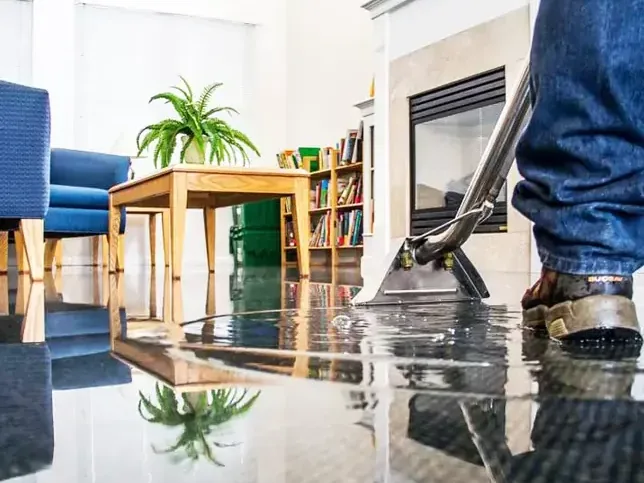
Water Extraction in Oradell
A room full of water can hide uneven flooring, debris and electrical hazards. Extraction starts with safe access and a route for removing water without spreading it into dry rooms.
(888) 471-9821Assess the pooled waterHow water extraction is handled in Oradell
Water extraction removes recoverable liquid from affected rooms and accessible materials. The assessment considers depth, debris, water source and the layers beneath floor coverings before choosing equipment and planning further cleanup.
First steps for water extraction
- 1
Pause at the doorway
Observe the room from dry ground and keep occupants outside. Water near outlets, submerged cords or an unstable floor needs qualified safety assessment before entry.
- 2
Describe the incoming water
Report whether the level is rising and whether rainfall, a pipe or a drain preceded it. That sequence helps establish source control before equipment placement.
- 3
Protect dry travel paths
Move accessible dry belongings away from the proposed work route without crossing wet flooring. Leave submerged objects in place until removal can be handled safely.
- 4
Gather the room information
Identify the floor covering, adjoining rooms and any lower space beneath the damage. Share photographs already available rather than stepping into water for additional pictures.
What does water extraction cost in Oradell, NJ?
Oradell extraction planning ranges from $600 to $1,400 for surface pooling, $1,400 to $3,200 for saturated rooms, and $3,200 to $4,500+ for deep or dirty water. Access and affected materials shape the scope.
Surface pooling
- Open accessible floor water
- Limited equipment handling
- Focused residual moisture checks
Saturated rooms
- Wet coverings across rooms
- Additional extraction passes needed
- Broader floor edge inspection
Deep or dirty water
- Pumping and debris handling
- Contaminated contact surfaces
- More complex removal access
Compare the scope with the water damage cost calculator. The restoration company prices the inspected damage, material access and equipment needs separately from source repairs, replacement finishes and contents work.
The water extraction process
- 1
Establish the removal conditions
The assessment identifies the source status and electrical concerns, then checks water depth and debris. These observations determine whether direct extraction is suitable or whether safety and source work must happen before equipment enters.
- 2
Collect liquid from accessible areas
Pumps or extraction tools remove water along a planned route. Work proceeds with attention to changes in level and concealed obstacles, while collection and handling methods reflect the condition of the water being removed.
- 3
Inspect the uncovered surfaces
As the water recedes, technicians inspect flooring seams, wall bases and connected spaces. Saturated layers are assessed for cleaning, removal or continued drying, and inaccessible pockets are listed rather than treated as completed areas.
- 4
Transfer findings into drying
Measurements and photographs record what remains wet after extraction. Equipment needs and access decisions are then tied to those materials, with a clear explanation of additional cleaning or removal needed before drying can progress effectively.
April 2022: Rising Hackensack River water flooded several blocks of homes in Oradell. For a flooded room today, the first useful question is whether water is still entering. Pumping against an active source can leave the same space filling again, so extraction planning includes source status and a safe place for equipment.
Clear a route before moving equipment
Kinderkamack Road runs through the borough, and Oradell station stands at Oradell Avenue and Maple Avenue. For properties around these locations, explain the actual entrance and floor involved. A familiar landmark helps arrange access, while conditions inside the building determine the work.
Hoses and collection equipment need a route that avoids occupied dry rooms where possible. Soaked rugs, loose objects and submerged steps can obstruct that route. Technicians assess those obstacles from safe areas before beginning removal, particularly when the water hides the floor surface.
- Identify the dry entrance and exit route.
- Keep powered devices away from standing water.
- Describe debris visible from outside the affected room.
- Keep pets clear of hoses and equipment.
Separate bulk removal from retained water
A pump can lower standing water without drying a carpet backing or the underside of a floating floor. After bulk extraction, the work shifts toward remaining pockets and water held within materials. Accessible thresholds and floor edges help reveal where the release traveled beyond its visible boundary.
Water condition matters as much as quantity. Outside floodwater, a drain release and a fresh supply leak call for different handling decisions. Saturated porous layers may require removal, while appropriate hard surfaces can be cleaned before further drying begins. Equipment selection follows those conditions.
Make the drying handoff specific
Once the floor is visible, measurements establish which assemblies still contain excess moisture. A wet wall base can point to insulation or framing that needs access. A damp subfloor may need a different drying arrangement than an exposed washable surface in the same room.
The extraction record should identify rooms treated, coverings removed and areas that could not be reached. That record helps shape the next stage of structural drying and prevents a clean-looking walkway from becoming the only measure of completion after water removal.
- Record residual moisture beside affected wall bases.
- Separate disposed coverings from retained materials.
- Check connected closets and adjoining floor transitions.
- Keep inaccessible areas visible in the scope.
When the water level keeps returning
A rising level after pumping calls for another look at the source. Rain entry, an open supply connection or a backed-up drain can continue adding water while equipment runs. The owner should describe when the level changes and which fixtures were operating, without entering the wet area to investigate. If a sewer backup is suspected, the borough directs residents to contact the Department of Public Works before an outside contractor. Source coordination and safe access take priority over repeated extraction that leaves the same materials soaking again.
Water extraction coverage
Assessment access in Oradell includes homes around Delford and Kinderkamack Road. Describe the wet floor, available entrance and any obstacles before equipment arrangements are made.
The same service nearby: water extraction in Paramus, River Edge, Maywood.
Water Extraction questions
Can a household vacuum remove standing water?
An ordinary household vacuum is unsuitable for standing water. Equipment must be appropriate for liquid recovery and the water's condition. Electrical safety still needs assessment before any powered tool enters the affected space.
Does clear water mean the room is safe?
Water handling depends on the source, contact with building materials and any drain involvement. Keep people outside the wet area while those factors and electrical access are assessed, even when the water looks clear.
Will extraction save a soaked carpet pad?
Retention depends on exposure and the condition of the backing and pad. After extraction from the carpet surface, the underside and supporting floor need separate checks for water contact, material damage and moisture that remains within the assembly.
Why inspect a closet that looks unaffected?
Liquid can move beneath a threshold or covering before becoming visible. A connected closet may hold damp edges that the main room's extraction tool cannot reach. Targeted readings help identify that hidden continuation.
Can pumping start while rain continues?
The answer depends on safe access and whether the entry route can be controlled. Continuing rainfall may replenish the water. An assessment should explain the active source and the practical limits of the initial removal work.
What comes after the puddles disappear?
The next decision concerns retained moisture and water contact. Materials may need cleaning, opening or controlled drying. Documented readings support those choices and distinguish the end of bulk water removal from completion of the entire cleanup.
Give the flooded floor a clear next step
Discuss access and the source status before arranging removal equipment for an Oradell property.