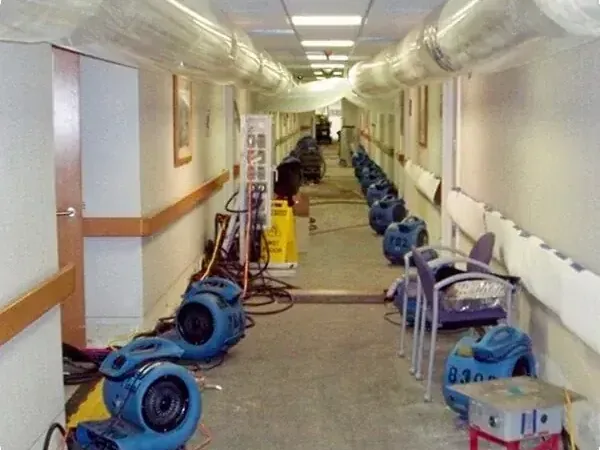
River Edge Commercial Water Damage Cleanup
A wet business space needs decisions about people, equipment and building materials together. River Edge commercial cleanup defines the affected work area and coordinates restoration access around the property's operating needs.
(888) 471-9821Describe the affected business roomsHow commercial water damage is handled in River Edge
Commercial restoration addresses water in occupied or temporarily closed business premises. The scope separates building damage, contents handling and operational access, with source repair and drying decisions coordinated among the parties responsible for the space.
First steps for commercial water damage
- 1
Set a safe occupancy boundary
Keep staff and visitors away from wet electrical equipment, unstable finishes and affected walkways. Identify a usable entrance before moving business contents or beginning work around the damaged space.
- 2
Name an authorized site contact
Explain who can provide keys, approve material decisions and coordinate source repairs. A clear contact helps connect the cleanup scope with building management and the business's immediate access requirements.
- 3
Record affected contents separately
Photograph inventory or equipment from a safe position and identify items needing specialized handling. Keep clean stock apart from contacted goods so movement does not enlarge the water damage footprint.
- 4
Describe the operating constraints
Mention shared corridors, occupied rooms and access restrictions. These details organize equipment and removal routes around building conditions and occupant needs.
What does commercial water damage cost in River Edge, NJ?
River Edge commercial restoration planning ranges from $2,500 to $5,000 for a contained tenant area, $5,000 to $9,500 for connected zones, and $9,500 to $15,000+ for broad business disruption involving extensive work.
Contained tenant area
- Defined room damage
- Accessible equipment route
- Focused material treatment
Several connected zones
- Shared assembly assessment
- Expanded work boundaries
- Multiple equipment areas
Broad business disruption
- Complex contents handling
- Extensive finish access
- Coordinated drying phases
Compare the scope with the water damage cost calculator. The restoration company prices the inspected damage, material access and equipment needs separately from source repairs, replacement finishes and contents work.
The commercial water damage process
- 1
Establish authority and the affected premises
The assessment identifies authorized contacts, source status and the rooms showing damage. Access needs and occupancy concerns are documented alongside the wet material map, giving the restoration scope a practical starting point for both building work and business coordination.
- 2
Organize extraction and contents movement
Water removal proceeds with a defined equipment route and separation from usable areas. Contents are evaluated and documented before relocation, while damaged building materials receive specific retention or removal decisions that can be communicated to the property contact.
- 3
Monitor connected assemblies through the work zones
Drying equipment is arranged around retained materials and the available room configuration. Repeated readings check adjoining partitions, floor layers and concealed sections, allowing equipment changes to follow moisture progress while the work boundary remains clear to occupants.
- 4
Deliver a repair and access status record
The closing handoff identifies completed cleanup, final material conditions and remaining reconstruction needs. Contents decisions and any ongoing access restrictions are stated separately, helping the business and property representatives coordinate the next stage using the same description of the restored space.
Water across a business floor creates an access problem before the material damage is fully visible. River Edge commercial cleanup starts by defining which spaces are affected, who can authorize work and how equipment can enter. The plan then connects removal and drying with the practical needs of occupants, stored goods and adjacent areas.
Identify the decisions that need a property contact
A tenant, building manager and owner may have different responsibilities for fixtures, finishes and contents. The cleanup discussion should establish the authorized contact and the source repair status. Clear task descriptions help prevent a wet assembly from being overlooked while responsibility for the leak is being clarified.
For a property on Kinderkamack Road or Main Street, the actual loading entrance and indoor route determine equipment access. Mention shared corridors, locked rooms and sensitive contents. Those details help identify a suitable entrance and define a workable setup for removing wet materials.
- Identify who can approve access and material decisions.
- Separate wet work routes from usable entrances.
- Document contacted inventory before organized movement begins.
- Describe adjoining units or rooms showing water changes.
Map connected spaces before limiting the scope
Water can pass beneath partitions or along a shared floor assembly. A dry-looking neighboring room may still need measurements at its boundary. The restoration area should follow the building's wet materials, with occupied spaces kept separate where the conditions and work arrangement allow continued use.
Near New Bridge Landing station, a property's operating pattern may influence when inspection and equipment movement are practical. Near River Edge station, the same discussion begins with the premises' own access needs. The cleanup scope should state the required room access and any restrictions created by opened finishes or hoses.
Track the building and contents independently
Inventory, records and equipment can require handling decisions different from the wall or floor beneath them. Keep those items documented and separated from clean stock. Their return should be coordinated with surface treatment and drying so restored space is not obstructed before remaining moisture checks are complete.
Building readings provide the basis for equipment changes and reconstruction planning. Where the release affected several connected assemblies, structural drying can address the remaining moisture after extraction. Cosmetic repairs and business reopening decisions should account for the condition and access needs of the entire treated area.
Use a clear handoff between each responsible party
The work record should identify source correction, affected rooms, contents decisions and material removals. Closing measurements then explain which building tasks are complete and what repair work remains. A shared description reduces confusion when the business, property contact and repair trades each manage a different part of the recovery.
Commercial water damage coverage
Assessments serve business properties around Kinderkamack Road, Main Street and New Bridge Landing station, with scheduling discussions focused on entrances, affected rooms and authorized site access.
The same service nearby: commercial water damage in Paramus, Oradell, Maywood.
Commercial Water Damage questions
Can part of the business remain open?
That depends on the hazards, contamination and separation available within the premises. The assessment should identify usable areas and safe access routes. Opened finishes, equipment and connected wet assemblies may limit occupancy even outside the most visible damage.
Who should approve the restoration scope?
The authorized property or business representative should be identified before material decisions proceed. Tenant and owner responsibilities may differ, so the written scope needs clear task descriptions and a contact able to coordinate access, source work and repairs.
Are inventory losses handled with wall damage?
They should be documented separately because contents and building materials may need different treatment. The cleanup plan can coordinate their handling while keeping decisions clear about relocation, specialist attention, disposal and the repair of the surrounding premises.
Why inspect a neighboring room that looks dry?
Water can travel beneath partitions or through a shared floor assembly. Boundary readings help determine whether the wet area extends beyond the visible spill. This protects the repair plan from overlooking concealed moisture in connected business spaces.
Can equipment be moved during operating hours?
Equipment changes should be coordinated with the drying plan. Relocation can alter airflow or access to wet materials. Discuss operating needs so any adjustment preserves safe passage and remains tied to the measurements guiding restoration progress.
What should management receive at completion?
A useful record includes affected rooms, source status, removals, closing readings and remaining repairs. It should also identify unresolved contents tasks or access restrictions, allowing the parties responsible for the premises to coordinate the next stage clearly.
Give business recovery a documented work boundary
Clear room mapping and material records help coordinate extraction, drying, contents handling and the repairs needed before full use resumes.