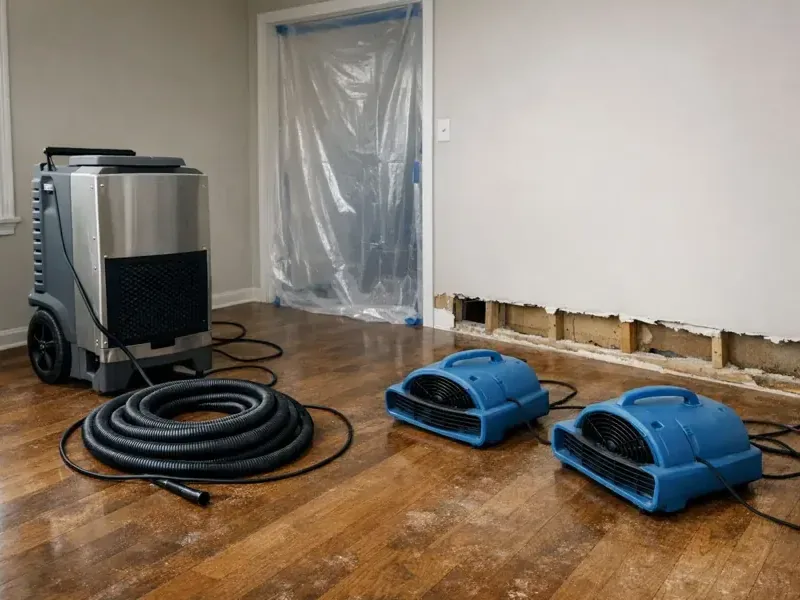
Structural Drying in River Edge
After extraction, the building can still hold water inside its materials. River Edge structural drying uses repeat measurements to direct air movement, moisture removal and access to concealed wet layers.
(888) 471-9821Describe the remaining damp materialsHow structural drying is handled in River Edge
Structural drying manages moisture in retained building materials after the source is controlled and necessary cleaning is complete. The plan connects equipment placement with measurable changes in framing, floors and accessible cavities over time.
First steps for structural drying
- 1
Confirm the release has stopped
Describe the source repair status before interpreting drying progress. Continued entry can keep materials wet and obscure whether the equipment is improving the condition of the original affected assembly.
- 2
Preserve access to measured locations
Avoid covering wet edges with stored belongings or moving items into opened cavities. The same material locations need to remain accessible for meaningful comparisons as the drying work progresses.
- 3
Discuss equipment and room use
Explain which rooms remain occupied and where normal movement occurs. Equipment placement should preserve safe passage while maintaining airflow and moisture removal around the wet materials.
- 4
Leave adjustments within the drying plan
Do not unplug or reposition equipment without discussing the effect on the treated area. Noise or access concerns can be addressed through planned changes that keep the measurements useful.
What does structural drying cost in River Edge, NJ?
Structural drying in River Edge has planning ranges of $1,000 to $2,500 for an accessible small zone, $2,500 to $4,800 for connected rooms, and $4,800 to $7,000+ for dense or concealed moisture.
Accessible small zone
- Defined wet materials
- Open treatment access
- Focused progress readings
Several connected rooms
- Shared assembly tracking
- Expanded equipment layout
- Multiple comparison locations
Dense or concealed moisture
- Restricted layer access
- Targeted cavity treatment
- Additional drying adjustments
Compare the scope with the water damage cost calculator. The restoration company prices the inspected damage, material access and equipment needs separately from source repairs, replacement finishes and contents work.
The structural drying process
- 1
Establish the wet assembly baseline
Initial readings and accessible inspection identify retained materials still holding moisture. The record includes comparison conditions and source status, creating a basis for deciding where equipment should operate and which layers may need improved access.
- 2
Arrange a controlled drying environment
Air movement is directed toward suitable wet surfaces while dehumidification removes moisture released into the room. The setup accounts for openings, connected spaces and practical access so the treated assembly can respond consistently rather than being judged by equipment count.
- 3
Use repeat measurements to make changes
Progress checks compare the material response at recorded locations. A lagging section prompts examination of access, continued entry or concealed layers, and the equipment arrangement is adjusted to address the identified obstacle instead of following a fixed schedule.
- 4
Document the condition supporting repairs
The final assessment records the retained assembly's moisture condition and any remaining physical damage. That handoff distinguishes completed drying from finish reconstruction, giving the repair work a measured starting point and a clear description of removed materials.
A room can feel comfortable while the lower wall remains wet behind its finish. Structural drying in River Edge focuses on that difference between room air and building materials. The 2020 census counted 4,337 housing units in the borough; each affected property's drying plan still starts with its own wet assemblies and available access.
Measure materials before arranging the equipment
The first moisture map establishes where the release traveled and which layers remain wet after removal. Comparison readings from suitable unaffected areas help interpret those measurements. Framing, wall finishes and flooring can respond differently, so the plan should identify the materials being tracked rather than relying on room humidity alone.
In North Hackensack, a small enclosed cavity may need more focused access than a broad open wall. Equipment placement should respond to that geometry. Air movement supports evaporation at exposed surfaces, while moisture removal controls the room environment receiving the water released from those materials.
- Record starting conditions at meaningful material locations.
- Identify coverings that restrict access to retained moisture.
- Keep equipment paths clear of household traffic.
- Compare repeat readings before reducing the drying area.
Investigate a slow area instead of assuming progress
A stubborn wet spot can indicate a hidden layer, limited airflow or renewed entry. Adding equipment without checking those causes may leave the actual obstacle untouched. The next inspection should explain why the material is lagging and whether selective opening or source attention is needed.
At a property near Roosevelt School, connected rooms may share a wet floor or wall cavity even when their surfaces look different. The drying boundary needs to follow that connection. Closing a doorway or moving equipment can change conditions in a section that is still being treated.
Make the endpoint useful for reconstruction
The record should show the locations measured, the changes observed and the retained materials' closing condition. This information gives finish repair a clearer starting point than a calendar estimate. Cavity closure follows assessment of the concealed layers as well as the exposed wall face.
For a Greenway Terrace home, the handoff may include removed trim, opened wall sections and floor edges still requiring finish work. If water has not yet been cleared from the room, surface extraction precedes the sustained material drying phase.
Ask what each equipment change is meant to accomplish
A useful explanation connects an adjustment to the material readings. Moving an air mover, changing the drying boundary or opening a concealed layer should address a specific condition. That connection makes progress understandable and helps keep the repair schedule tied to the building's measured response.
Structural drying coverage
Drying assessments cover North Hackensack and properties near Roosevelt School or Greenway Terrace, with equipment layout matched to the retained wet assemblies and available room access.
The same service nearby: structural drying in Paramus, Oradell, Maywood.
Structural Drying questions
Is room humidity enough to judge drying?
No. Room air conditions help manage the environment, but affected materials need their own measurements. A comfortable room can contain wet framing or floor layers, so both the air and the assembly response belong in the drying record.
Why might one wall stay wet longer?
Restricted airflow, denser materials, concealed insulation or continued entry can slow a section. The assessment should investigate the cause and adjust access or equipment accordingly. Repeated measurements show whether that change improves the material's response.
Can equipment be turned off overnight?
Equipment operation should follow the drying plan. Interruptions can change the environment and delay moisture removal. Discuss noise, room use or access concerns so adjustments can be made with attention to the readings and affected assemblies.
Does every cavity need to be opened?
Access depends on the material condition and ability to reach retained moisture. Some assemblies can be treated through existing access, while damaged or inaccessible layers may need selective removal. The proposed opening should have a specific drying purpose.
How long will drying take?
The duration depends on the materials, exposure, source control and available access. Repeat readings provide a better basis for scheduling than a fixed promise. The plan should explain progress and any condition that is slowing the affected assembly.
What should be available when equipment leaves?
A useful handoff includes closing readings, the areas treated, material removals and remaining repair needs. These records show why drying ended and help the next trade avoid covering a cavity or floor layer whose condition remains unresolved.
Let the measurements set the next step
A clear drying record connects equipment decisions with the condition of the building and the timing of finish repairs.