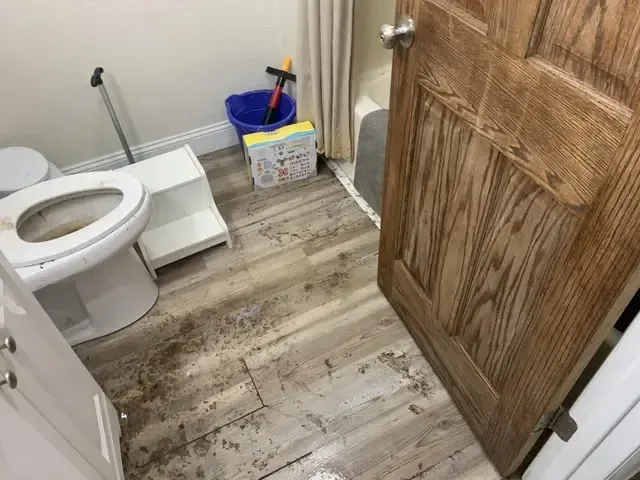
River Edge Toilet Overflow Cleanup
An overflowing bowl can wet more than bathroom tile. River Edge cleanup considers the water's contents, its path across thresholds and the materials hidden beneath the visible floor.
(888) 471-9821Describe the bathroom overflowHow toilet overflow cleanup is handled in River Edge
Toilet overflow restoration addresses contamination and moisture together. The response identifies contacted finishes, coordinates plumbing attention and decides which materials can be cleaned or need removal before the remaining assembly is dried.
First steps for toilet overflow cleanup
- 1
Keep the fixture out of use
Avoid repeated flushing while the overflow cause remains unresolved. Stop a reachable water supply only from a safe position, and arrange plumbing attention for the source of the release.
- 2
Restrict the contaminated route
Keep people and animals outside the wet bathroom. Leave soaked mats in place until the contents and contact area are assessed and handling is organized.
- 3
Observe nearby finishes safely
Look for water at the doorway, vanity base and room below without entering the spill. These observations help identify concealed spread and connected surfaces needing inspection alongside the bathroom floor.
- 4
Preserve a simple incident record
Note when the overflow appeared, whether it continues and what was moved. Photograph contact boundaries safely before extraction and material removal change the scene.
What does toilet overflow cleanup cost in River Edge, NJ?
River Edge toilet overflow cleanup planning spans $800 to $1,800 for a contained bathroom spill, $1,800 to $3,500 for floor-edge spread, and $3,500 to $5,500+ when wastewater reaches across rooms.
Contained bathroom spill
- Limited contact area
- Accessible hard surfaces
- Localized cleanup controls
Floor-edge spread
- Wet threshold layers
- Adjoining trim assessment
- Concealed edge access
Wastewater across rooms
- Broader contamination boundary
- Porous material decisions
- Expanded cleaning work
Compare the scope with the water damage cost calculator. The restoration company prices the inspected damage, material access and equipment needs separately from source repairs, replacement finishes and contents work.
The toilet overflow cleanup process
- 1
Define contact and source conditions
The assessment establishes the overflow status, affected water type and visible contact boundary. Adjoining floors and lower rooms are checked where observations indicate spread, allowing the plumbing response and cleanup controls to address the complete incident.
- 2
Remove water with controlled material handling
Accessible water and exposed porous items are handled within the established work area. Movement through the building is organized to protect clean spaces, while damaged layers are documented and evaluated for removal based on their exposure and condition.
- 3
Clean retained surfaces and reach hidden edges
Hard surfaces receive appropriate cleaning, including accessible joints and edges where residues collect. Selective openings may be needed where contaminated water entered concealed porous layers, creating access for inspection and treatment of the retained supporting assembly.
- 4
Dry and document the bathroom repair scope
After necessary cleaning, moisture treatment addresses suitable retained materials. Closing notes describe the condition reached, removals performed and remaining finish work, so reuse and rebuilding decisions account for the entire affected assembly rather than the tile surface alone.
A toilet overflow can cross a bathroom threshold before anyone sees how much water escaped. Cleanup in River Edge starts by limiting contact and establishing where the spill traveled. Tile may look easy to wipe, but seams, trim and adjoining absorbent finishes can require a wider assessment of both contamination and moisture.
Contain the bathroom before moving wet items
Household traffic can carry residue from the bathroom into clean rooms. Restrict the affected space and avoid carrying soaked bath mats or towels through the house. The cleanup plan should identify a handling route and assess the water's contents before equipment is positioned to move air.
In Cherry Hill, an overflow on an upper floor may also affect the ceiling beneath the bathroom. Mention any new stain or drip below. The inspection needs to follow the actual wet path through the building instead of stopping at the room where the toilet sits.
- Stop using the affected toilet until assessed.
- Keep pets and children outside the wet area.
- Identify contacted mats, trim and adjacent floor coverings.
- Describe any water appearing on the level below.
Check the edge where tile meets other materials
A hard tile surface and the layers beneath it are different parts of the assembly. Water can enter joints or collect beneath a threshold. The condition of backing, underlayment and nearby wall bottoms determines whether cleaning the exposed face is enough or selective removal is necessary.
For a property near New Bridge Center, the cleanup scope follows the spill across each contacted surface. A small spill reaching porous finishes outside the door may require careful handling across several materials. Contact boundaries and moisture readings help explain which surfaces belong in the work area.
Restore the affected assembly after plumbing control
The plumbing correction prevents another overflow, while cleanup treats the water already released. A cleared blockage does not remove residues from contacted surfaces. Cleaning, damaged material removal and drying should appear as clear tasks in the scope, with finish replacement addressed after the retained assembly is ready.
At a Continental Avenue home, fixed vanities or base trim may conceal the farthest edge of the spill. Those locations deserve inspection before the bathroom is returned to normal use. If wastewater emerges from multiple fixtures, the broader sewage backup assessment may be relevant.
Describe what crossed the bathroom doorway
Include the floor covering outside the room and any wet items moved after discovery. That account helps locate secondary contact areas. A focused cleanup plan separates the original spill boundary from handling-related spread and gives each affected material an appropriate cleaning or removal decision.
Toilet overflow cleanup coverage
Bathroom overflow cleanup covers Cherry Hill and homes near New Bridge Center or Continental Avenue, with handling routes planned around the bathroom entrance and adjacent rooms.
The same service nearby: toilet overflow cleanup in Paramus, Oradell, Maywood.
Toilet Overflow Cleanup questions
Is a toilet overflow always limited to tile?
No. Water may cross the threshold, reach wall bottoms or pass into layers below the finish. The assessment follows contacted surfaces and moisture readings to determine whether adjoining rooms or the ceiling beneath also need attention.
Should a fan be used immediately?
Air movement should wait for the contamination assessment and cleanup plan. A fan placed without controls can move residues beyond the original area. Restrict access and arrange removal and cleaning appropriate to the water and contacted materials.
Can bathroom mats be washed and returned?
The answer depends on exposure and material condition. Keep contacted mats separate until evaluated, and avoid carrying them through clean rooms while dripping. Handling and recovery decisions should fit the contamination assessment for the incident.
Does clearing the toilet blockage finish the job?
It resolves the plumbing problem if the cause has been corrected, but released water remains a separate concern. Contacted surfaces, porous layers and concealed moisture still require cleanup decisions before the bathroom is returned to normal use.
Will the vanity need removal?
Its condition and access beneath it determine the work. A sound accessible assembly may be treatable, while swollen porous components or trapped contaminated moisture can require removal. The scope should identify the reason for disturbing any fixed cabinet.
What if a downstairs ceiling becomes wet?
Treat that as part of the same potential water path and keep clear of unstable overhead material. Describe the location and timing so the assessment can connect bathroom cleanup with the affected cavity and finish below.
Contain the spill and recover the room
Source correction, controlled cleaning and material drying prepare the affected bathroom assembly for the next repair step.