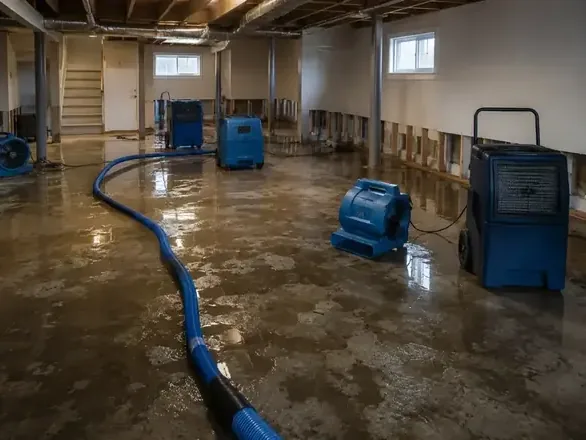
Fair Lawn Basement Water Cleanup
The basement stairs can lead toward electrical hazards, concealed depth and soaked storage. Fair Lawn basement cleanup first establishes safe access, then identifies the entry route and the materials affected across the lower level.
(888) 471-9821Discuss conditions below the stairsHow basement water cleanup is handled in Fair Lawn
Basement restoration combines water removal with inspection of the source, stored belongings and lower wall assemblies. The plan accounts for utility equipment, floor finishes and any contamination before deciding how the retained lower level materials can be cleaned and dried.
First steps for basement water cleanup
- 1
Check entry hazards
Water around utility equipment or cords can make the lower level unsafe. Occupants should remain on dry ground and describe visible conditions without crossing the affected area.
- 2
Report where water first appeared
Useful observations include a dripping pipe, water at a wall opening or a changing floor drain. The current source conditions help determine the removal approach and any separate trade involvement needed.
- 3
Document stored contents
Photos of accessible boxes, furnishings and floor contact can document the original damage. Wet belongings should not be carried through clean rooms before an appropriate handling route and material decisions are established.
- 4
Identify finished areas
The report should describe carpet, partitions and adjoining utility space where visible. Those details help the inspection plan reach hidden floor and wall layers after accessible water has been removed safely.
What does basement water cleanup cost in Fair Lawn, NJ?
Basement water cleanup in Fair Lawn has planning ranges of $1,500 to $10,000+. Depth, source conditions, contents and finished wall contact determine the scope, with electrical work and source repairs separated from extraction, cleaning and drying.
Shallow accessible water
- Defined extraction area
- Accessible perimeter checks
- Limited contents handling
Finished lower-level damage
- Wet partition assessment
- Covered floor access
- Broader drying setup
Deep or contaminated loss
- Controlled removal planning
- Extensive material decisions
- Expanded cleaning requirements
Compare the scope with the water damage cost calculator. The restoration company prices the inspected damage, material access and equipment needs separately from source repairs, replacement finishes and contents work.
The basement water cleanup process
- 1
Establish safe entry and source conditions
The assessment considers water around utilities, access from the stairs and the observed entry route. Those conditions determine whether removal can proceed and which electrical, plumbing or other source related work needs coordination before equipment is placed.
- 2
Remove liquid and expose the perimeter
Extraction follows a suitable handling route, while stored items are documented and assessed. As the floor clears, the inspection expands to wall bottoms, partitions and hidden edges that were concealed by water or belongings at the first visit.
- 3
Treat the affected lower level materials
Source conditions determine cleaning and retention decisions. Unsuitable layers are removed where necessary, and the remaining assembly receives a drying arrangement that reaches wet edges while preserving access for monitoring and essential service activity in the basement.
- 4
Explain the drying outcome and remaining work
Material readings and photographs document progress through the lower level. The handoff identifies repaired or retained areas, replacement needs and separate source corrections, helping the owner understand what is complete before stored contents or finished surfaces return.
The view from the top of the stairs rarely shows the full basement loss. Water can collect behind storage, reach utility equipment and travel beneath finished partitions. Fair Lawn basement cleanup starts with the safety of entering that space, then establishes the source and the contact area before a removal plan is selected.
Determine the source inside the property
Memorial Park neighborhood borders the Passaic River. Dunkerhook lies on both sides of the Saddle River near Fair Lawn Avenue. For a wet basement in either setting, the inspection looks at the actual entry points, drain behavior and water marks. Those observations determine the handling needed for the particular loss.
Rivercrest includes split level and Cape Cod style houses near Memorial Park. The lower room's connection to stairs, finished walls and utility areas matters to the assessment. A small visible pool beside a storage stack may connect to wet flooring or wall bases that remain hidden until access is created.
Make storage part of the assessment
Cardboard, textiles and items resting directly on the floor can absorb water and conceal its boundary. The owner should preserve a record of affected belongings before handling changes the scene. The cleanup scope distinguishes contents decisions from the removal or drying of the building materials underneath and behind them.
- Keep clear of submerged electrical equipment and cords.
- Report any water rising from a floor drain.
- Photograph stored items from a safe accessible position.
- Identify finished partitions bordering the pooled floor.
Water source and contamination influence the material decisions. A supply release, outside intrusion and wastewater backup require different handling assessments. The plan should explain the source findings and the treatment of contacted surfaces rather than applying the same approach to every basement simply because the water collected below the main floor.
Inspect the finished edges after removal
Once safe access and source conditions are established, extraction exposes more of the floor perimeter. Base trim, wall bottoms and covered floor layers are checked for retained moisture. Selective opening can be needed where finishes prevent inspection or where unsuitable wet material must be removed before the retained assembly is cleaned and dried.
Dehumidification and directed airflow address the moisture left after liquid removal and appropriate cleaning. Equipment routes must keep the stairs and necessary service access usable. The drying record should identify the condition of retained materials and the repair work still required, including any source correction separate from interior cleanup.
Water near a utility area deserves extra caution
Occupants should not descend into standing water to reach a panel, heater or plugged in device. Safe isolation and access need assessment first. If the source is wastewater from a drain, sanitary backup cleanup addresses the contact and cleaning requirements alongside the basement's extraction and drying needs.
Basement water cleanup coverage
Lower level assessments include Memorial Park, Dunkerhook and Rivercrest, with entry safety, utility locations and the observed water source determining the cleanup approach inside each affected basement.
The same service nearby: basement water cleanup in Paramus, Glen Rock, Maywood.
Basement Water Cleanup questions
Is it safe to walk downstairs through the water?
Standing water near electrical equipment, cords or unstable surfaces requires assessment before entry. Occupants should remain on dry ground and report visible conditions. Reaching a shutoff or belongings does not justify crossing an unsafe lower level.
Does every wet basement need the same treatment?
The source, contamination, depth and materials determine the work. A supply leak differs from outside water or a sanitary backup. The scope should explain those findings and connect them to cleaning, removal and drying decisions.
Why inspect walls after the floor is pumped clear?
Wall bases and finished partitions can retain moisture after visible pooling disappears. Checking those edges identifies covered wet layers and any access needed, preventing an apparently clear basement floor from ending the assessment too early.
Should soaked boxes be emptied into another room?
Affected contents should be documented and handled through a controlled route. Moving wet boxes into clean living areas can transfer water or residue. Their condition and the source of contact determine the appropriate next handling step.
Can utility equipment remain operating beside the loss?
Its safety needs assessment based on water contact and the equipment involved. Occupants should avoid wet controls or plugs. The appropriate service professional determines isolation or operation while restoration plans safe access around the utility area.
When can basement finishes be replaced?
Replacement follows source control, appropriate cleaning and the material drying decision. The completion record should identify remaining moisture or repair needs, so new flooring and wall finishes do not cover an assembly still requiring attention.
Recover the basement beyond the pooled floor
A room specific plan follows water into finished edges and connects cleanup with the repairs still needed below.