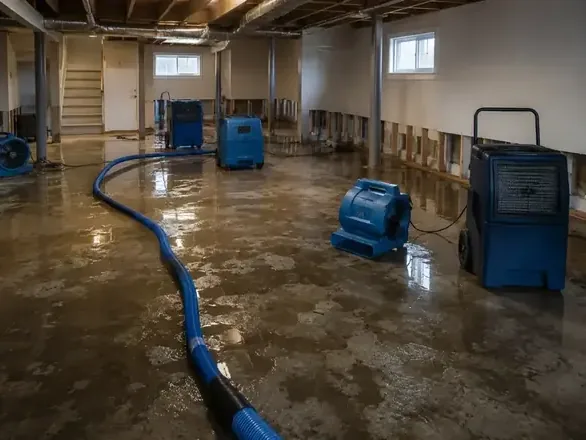
Basement Water Cleanup in Glen Rock
A flooded basement can hide hazards below the stair landing and moisture behind finished walls. Glen Rock cleanup begins with access conditions, identifies the water source and follows the wet boundary through storage areas and retained building materials.
(888) 471-9821Discuss water on the lower levelHow basement water cleanup is handled in Glen Rock
Basement restoration organizes pumping or extraction around safe lower level access. The plan considers water condition, stored belongings and finished assemblies before appropriate cleaning and drying address the structure that remains after necessary material handling and removal.
First steps for basement water cleanup
- 1
Stay above uncertain water conditions
Floodwater can conceal electrical hazards and unstable footing. Occupants should remain above the affected space until qualified assessment establishes safe access to the lower level.
- 2
Describe how the water arrived
A plumbing release, drain backup and outside entry require different source responses. Observations about the first wet location and continuing inflow help direct assessment without requiring anyone to cross the water to investigate it.
- 3
Identify storage and finished areas
Boxes against walls, floor coverings and enclosed rooms can hide the water boundary. A description of those areas helps plan access and material handling once conditions permit inspection of the lower level.
- 4
Keep the removal route controlled
Pumping hoses and wet contents need a practical removal path. Coordinating that route protects dry living spaces and limits transfer of dirty water at the stairs.
What does basement water cleanup cost in Glen Rock, NJ?
Basement cleanup in Glen Rock has planning ranges of $1,500 to $10,000+. Depth, water condition, finished materials and stair access influence the estimate, with source correction and later rebuilding distinguished from extraction and structural drying.
Shallow accessible water
- Clear lower level access
- Limited floor collection area
- Focused material checks
Finished lower-level damage
- Wet finished walls
- Saturated floor coverings
- Contents and removal handling
Deep or contaminated loss
- Complex pumping and access
- Contaminated surfaces require treatment
- Broader structural drying
Compare the scope with the water damage cost calculator. The restoration company prices the inspected damage, material access and equipment needs separately from source repairs, replacement finishes and contents work.
The basement water cleanup process
- 1
Assess lower level access before arranging removal
Depth, electrical conditions and stair access determine the removal approach. Assessing the source and continuing inflow helps select equipment for the whole basement, including areas hidden from the landing by water or contents.
- 2
Extract water and account for stored contents
Pumping or floor extraction follows a controlled route. Stored items can conceal damp surfaces or require separate handling, and their condition should be documented before moving them through the building or opening the floor and wall edges they cover.
- 3
Open and treat the affected finished assemblies
Floor coverings, trim and wall finishes may hide moisture or unsuitable contaminated material. The scope identifies necessary access and cleaning, preparing suitable retained components for drying and identifying the damp edges that still need attention after water removal.
- 4
Measure the remaining structure before rebuilding
Drying readings focus on the retained wet materials after removal and cleaning. A clear final record connects those conditions to the original water path and identifies any separate source or finish work needed before the lower level returns to its intended use.
The first view from a stairway can make basement flooding look like a simple pumping problem. Below the surface, water may surround equipment, saturate stored contents and enter finished wall edges. Glen Rock lower level cleanup begins with safe access and the source, then follows those less visible contact areas through the room.
Identify the entry before choosing the handling plan
Ho-Ho-Kus Brook runs along the eastern side of the borough, while Diamond Brook flows through the west. The September 24, 2026 borough notice reported flooding in previously unaffected areas. Those observations provide context when outside water reaches a basement, alongside the property's actual entry route and affected surfaces.
The flood plain beside Ho-Ho-Kus Brook includes land east of Prospect Street and south of Grove Street. For an individual lower level, inspection distinguishes outdoor entry from a plumbing release or sewage backup. That distinction affects material handling and source correction throughout the cleanup sequence that follows.
- Visible entry points or continued water inflow
- Electrical equipment near the affected floor level
- Finished rooms connected through low wall edges
- Stored belongings blocking access to wet surfaces
Arrange removal around the stairway and contents
Standing water can conceal footing changes and other hazards, so occupants should avoid entering until conditions are assessed. Pumping or extraction then needs a controlled route. Hoses and wet contents should be managed without transferring dirty water through otherwise unaffected living spaces above the basement.
A property in Ferndale may have storage arranged along the perimeter or finished sections dividing the lower level. The actual layout determines access. Contents decisions should identify what requires handling and what can remain, making room for inspection at wall bases that were hidden when the water arrived.
Look beyond the cleared floor before rebuilding
Finished wall cavities and floor coverings can retain moisture after the pump stops. Some materials require removal because of damage, contamination or the need to reach enclosed wet components. Suitable retained structure then needs cleaning as appropriate and drying that accounts for the assembly's density and accessibility.
Measurements help show whether the lower level is progressing uniformly or whether a concealed edge needs another approach. The completion record should connect those observations with source work and remaining repairs. That gives the owner a practical basis for restoring furnishings without covering a wet or unfinished section.
- Document contents before clearing perimeter storage
- Check retained components behind removed finishes
- Separate pumping completion from material drying
- Identify remaining repairs before returning belongings
A usable lower level needs an accounted for perimeter
The open center of the room often improves first. The perimeter can hold the remaining work: wall bases, enclosed corners and the floor beneath stored contents. A clear scope includes those areas and explains how their condition was assessed. With source correction, handling and drying recorded separately, the owner can understand what is complete and what needs attention before the basement resumes its ordinary role in the household.
Basement water cleanup coverage
Basement water assessment serves Glen Rock properties around Prospect Street, Grove Street and Ferndale, with the individual lower level, source and access conditions establishing the cleanup plan.
The same service nearby: basement water cleanup in Paramus, Fair Lawn, Oradell.
Basement Water Cleanup questions
Should the homeowner go downstairs to check depth?
Entry can expose someone to concealed electrical hazards or unsafe footing. Observations should stay outside uncertain water conditions. Qualified assessment establishes safe access and the removal approach before anyone crosses the affected lower level to inspect or move belongings.
Does basement water always come from outside?
A basement can receive plumbing water, sewage or outdoor entry. The actual source determines repair responsibilities and handling requirements. The inspection follows the visible route and property conditions before deciding which cleanup sequence fits the water in that space.
Why inspect behind finished lower level walls?
Water can enter at the wall base and remain behind finishes after the floor clears. Access and moisture checks identify that concealed condition. Suitable retained framing then needs drying before replacement finishes close the area and prevent further inspection.
Can stored boxes be left in place during drying?
Boxes can retain water and block access to affected walls or floors. Their condition and safe handling need assessment. Moving suitable items in a planned sequence exposes the wet boundary while keeping dry contents separate from contaminated or saturated belongings.
How do the borough's brooks relate to the assessment?
Ho-Ho-Kus Brook and Diamond Brook provide local watercourse context. The cleanup plan for a basement still follows its actual entry point, water condition and contacted materials, using those property observations to determine removal and treatment needs.
When can the basement be refurnished?
The source needs attention and retained materials need suitable moisture conditions after appropriate cleanup. The completion record should identify any remaining repairs. Returning furniture or storage then needs to account for that work instead of covering an unfinished damp area.
Account for the basement beyond its open floor
Removal, material handling and measured drying should follow the actual water path behind finishes and beneath affected storage areas.