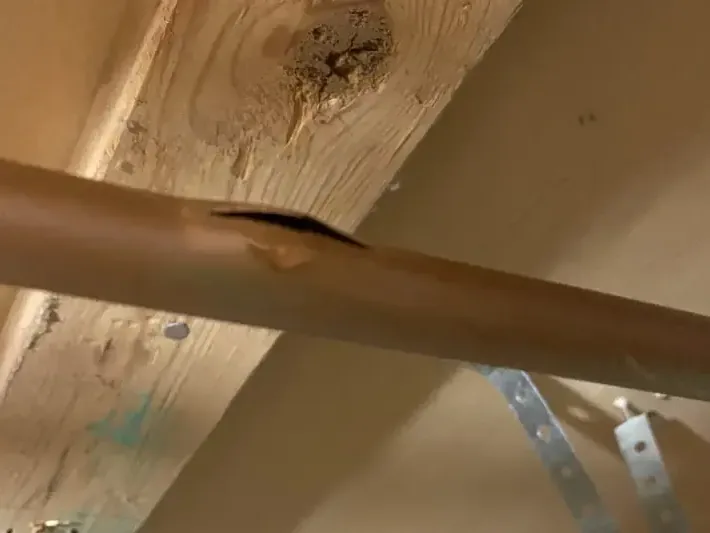
Fair Lawn Burst Pipe Water Damage
A ruptured supply can wet several spaces before the shutoff is reached. Fair Lawn pipe damage cleanup follows the release through connected rooms and cavities after the plumbing source is brought under control.
(888) 471-9821Discuss the ruptured supplyHow burst pipe water damage is handled in Fair Lawn
Burst pipe restoration addresses the building materials that absorbed the release. Plumbing repair controls the damaged supply, while extraction, selective access and measured drying address water that already traveled beyond the original break.
First steps for burst pipe water damage
- 1
Reach a safe shutoff
The water supply should be isolated from a dry location when the valve is accessible. Occupants should avoid crossing pooled water or unstable overhead finishes to reach it.
- 2
Arrange the pipe repair
A plumber evaluates the failed section and the surrounding supply. The cleanup scope should identify the repair location so access and drying decisions support the same work area.
- 3
Notify affected occupants
In a shared building, the responsible contact should arrange access to rooms below or beside the break. Visible staining in another unit deserves its own inspection.
- 4
Document the changing damage
Photographs can capture the first drip location, wet belongings and ceiling changes. Keeping the sequence clear helps explain how the loss developed before the supply stopped.
What does burst pipe water damage cost in Fair Lawn, NJ?
Burst pipe damage in Fair Lawn has planning ranges of $1,200 to $7,500+. The affected levels, wet insulation, access openings and drying needs shape the cleanup scope; the plumbing repair should be identified separately.
Localized pipe loss
- Nearby material inspection
- Limited access opening
- Contained room drying
Concealed spread
- Hidden wet layers
- Expanded cavity access
- Connected floor checks
Several levels
- Overhead damage assessment
- Multiple drying zones
- Broader removal needs
Compare the scope with the water damage cost calculator. The restoration company prices the inspected damage, material access and equipment needs separately from source repairs, replacement finishes and contents work.
The burst pipe water damage process
- 1
Locate the break and its reach
The initial assessment combines the reported release with visible wet marks and material readings. Rooms adjoining the pipe route are checked so the scope reflects the water movement rather than only the repair opening.
- 2
Create purposeful access to wet layers
Affected finishes are evaluated for retention or removal. Openings are placed where they allow inspection, necessary material removal and equipment access, with attention to occupied rooms and the protection of surfaces outside the wet footprint.
- 3
Dry the connected building assemblies
Extraction removes accessible liquid before air movement and dehumidification are arranged. Framing, floor layers and ceiling materials receive separate attention where they dry differently or cannot be reached through the same exposed surface.
- 4
Confirm readiness for repair finishes
Later measurements show whether concealed sections are progressing toward suitable dry conditions. The closeout record identifies remaining replacement work and distinguishes completed moisture control from the carpentry, flooring or painting needed to restore the room.
Shutting off the water changes a pipe emergency, but it does not empty a wall. Water already released can continue dripping through framing, collecting beneath cabinets or spreading under flooring. A Fair Lawn burst pipe assessment follows those routes while the plumber addresses the failed section and checks the repaired supply.
Shared occupancy changes the inspection
Hendersonville includes two family Cape Cod style houses. A supply rupture in that setting can require access to more than the room containing the break. Occupants should identify which areas are accessible and who can authorize inspection of adjoining living space, especially when water appears below the original release.
Columbia Heights is near Wagaraw Road and Lincoln Avenue. A caller there can describe the affected level and whether the sound of running water stopped at the shutoff. Those observations help organize the visit, while the onsite assessment establishes which materials actually received water and which remain dry.
Follow the release through construction layers
Rivercrest includes split level and Cape Cod style houses near Memorial Park. Changes in floor elevation can complicate the visible wet pattern. The inspection follows wall bases, stair openings and ceiling transitions as applicable to the property, rather than treating the room with the largest stain as the entire loss.
- Check the wall cavity around the break.
- Inspect flooring beneath the dripping pipe route.
- Document ceiling changes in the room below.
- Identify wet insulation before closing any opening.
Access openings should serve a clear purpose. A limited opening may reveal the repair area but leave saturated insulation or framing beyond reach. The restoration scope explains where additional access is needed, which finishes can be retained and how the drying equipment will reach the affected materials behind them.
Keep plumbing and restoration decisions connected
A repaired fitting and a dry wall are separate milestones. The water supply needs its own check before normal use resumes. Building materials need moisture measurements and a drying plan. Recording both prevents a successful plumbing repair from being mistaken for completion of the damage cleanup in connected rooms.
Contents also affect the work sequence. Furniture can hide wet baseboards, while stored items may block access to the damaged pipe. Safe relocation and documentation create room for the inspection without losing track of what was exposed. Rebuilding follows the material assessment and any necessary replacement of unsalvageable layers.
A quieter pipe can still leave active dripping
Drips after shutoff may come from water held inside a cavity. The affected ceiling or wall should remain isolated until its stability and drainage path are assessed. Continuing flow also warrants another source check. Structural drying addresses the moisture that remains once the release and accessible liquid are controlled.
Burst pipe water damage coverage
Pipe loss assessments include Hendersonville, Columbia Heights and Rivercrest, with attention to the occupied rooms, floor transitions and concealed spaces connected to each damaged supply.
The same service nearby: burst pipe water damage in Paramus, Glen Rock, Maywood.
Burst Pipe Water Damage questions
Is the cleanup complete when the plumber leaves?
The plumbing work stops or repairs the source. Water that already entered insulation, framing or floors still needs assessment. Restoration continues according to the materials affected, their condition and the access needed for effective drying.
Can damage cross into another occupied space?
A release can follow a cavity or floor assembly into adjoining rooms. In Hendersonville two family housing, coordinated access may be needed to inspect both occupied areas and avoid leaving a wet section unseen.
Should dripping drywall be pressed to drain it?
Occupants should keep clear of a bulging or unstable section. Disturbing it can release water and damaged material unexpectedly. Controlled access follows an assessment of overhead stability, electrical exposure and the location of the wet cavity.
Why can the floor feel wet after shutoff?
Water held inside a wall or beneath a fixture can continue reaching the floor. The inspection determines whether this is retained water or an unresolved source, then adjusts extraction and opening decisions accordingly.
Does every burst require removing the entire wall?
Removal depends on the wet footprint, material condition and ability to dry the assembly. The scope should explain specific access needs instead of assuming every finish must come out or every covered section can remain.
What records belong with a pipe loss?
Useful records include the source location, affected rooms, photographs, moisture readings and the plumbing repair information. Together they describe the sequence of work and help distinguish source control from the restoration of water damaged materials.
Account for every affected room
A coordinated cleanup scope connects the repaired supply with extraction, cavity access and the drying work still required.