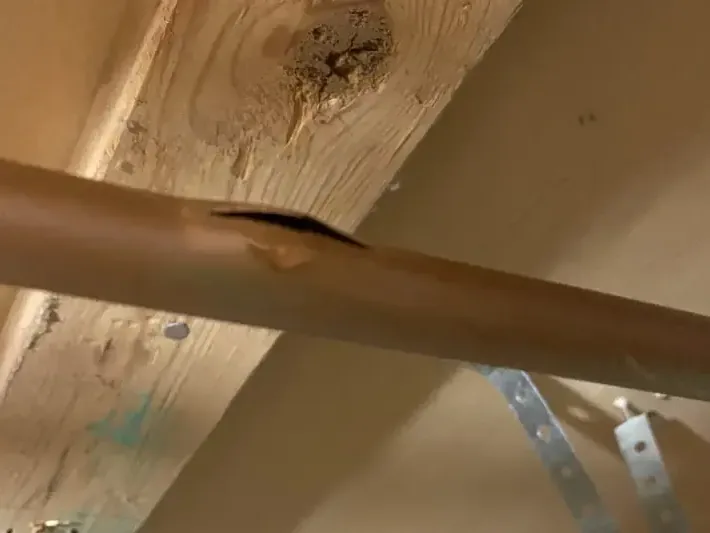
Burst Pipe Water Damage in Maywood
A split supply pipe can send water sideways before a ceiling starts dripping. The cleanup plan follows the release through connected construction after a safe shutoff stops the active flow.
(888) 471-9821Trace this pipe spillHow burst pipe water damage is handled in Maywood
Burst pipe restoration addresses saturated building materials after the plumbing failure is controlled. The work identifies the water path, removes damaged layers when necessary and tracks drying inside the affected assembly.
First steps for burst pipe water damage
- 1
Shut off only with safe access
Reach the building water shutoff from dry ground if possible. If access involves wet electrical equipment or unstable overhead material, leave that task to the appropriate professional.
- 2
Keep the wet cavity exposed
Do not patch the plumber access opening immediately after repair. The surrounding wall or floor may need inspection and drying before a finish contractor closes the damaged area.
- 3
Check the room below
From a safe doorway, note ceiling drips, swelling or water around fixtures beneath the break. Report the whole vertical pattern when describing the loss for an assessment.
- 4
Save the repair information
Keep photographs and plumbing invoices with the discovery date. A clear record of source control helps explain why extraction, material access and further drying were needed after repair.
What does burst pipe water damage cost in Maywood, NJ?
Planning for burst pipe cleanup in Maywood starts around $1,200 and can exceed $7,500 when several levels are wet. Concealed moisture, damaged insulation and access openings affect restoration costs; plumbing work needs its own stated scope.
Localized pipe loss
- Small accessible wet zone
- Limited surrounding finish removal
- Focused material drying setup
Concealed spread
- Water inside connected cavities
- Wet insulation access decisions
- Broader moisture monitoring work
Several levels
- Upper and lower surfaces
- Multiple affected room boundaries
- More extensive drying equipment
Compare the scope with the water damage cost calculator. The restoration company prices the inspected damage, material access and equipment needs separately from source repairs, replacement finishes and contents work.
The burst pipe water damage process
- 1
Connect the rupture to visible symptoms
The inspection starts with the damaged plumbing and follows stains, drips and moisture readings through adjoining construction. It records where water has accumulated and whether further access is needed to define the wet boundary.
- 2
Coordinate repair access with material removal
A plumber addresses the failed supply section while the cleanup scope identifies damaged finishes. Openings should support both repair and effective drying, with retained surfaces protected during access to insulation, wallboard or floor layers.
- 3
Treat the remaining wet construction
Accessible water is removed before drying equipment is arranged around the retained assembly. Measurements at representative wet locations show whether moisture is leaving the materials or whether another opening would improve the drying path.
- 4
Prepare a documented closure decision
Final checks compare the previously wet areas with suitable dry material conditions. The record identifies completed drying and outstanding repairs, giving the finish contractor a clear basis for replacing insulation or closing wall and ceiling openings.
The sound of running water behind a wall deserves attention even when the floor has only a small damp patch. A pressurized release can collect inside a cavity before reaching a visible surface. Once the supply is isolated safely, the inspection needs to connect the rupture with every place the water escaped.
A repaired fitting does not dry the room
Veolia Water serves Maywood customers, while an indoor pipe failure requires attention to the affected building’s plumbing. Tell the plumber which shutoff was used and whether flow stopped completely. Restoration work can then proceed around a stable source rather than competing with continued leakage.
Central Avenue, Passaic Street and Spring Valley Road are main roads in the borough. At a property along these corridors, the useful cleanup details are the floor containing the rupture and the rooms beneath it. Access instructions should identify the wet utility space rather than just the entrance door.
- Listen for continuing flow from a safe location.
- Identify ceiling changes below the suspected break.
- Keep dry storage away from damp wall bases.
- Record plumbing repairs before the cavity closes.
Follow pressure driven water beyond the opening
A spray inside a partition can wet insulation and the opposite face of wallboard. Water may then descend to a floor opening and appear downstairs. Measuring connected surfaces helps establish the release pattern before cutting access holes, reducing the chance of overlooking a wet pocket outside the first repair area.
For example, a leak behind a utility fixture might leave the adjacent room apparently untouched until its baseboard swells. The plan should consider both sides of the shared wall. A small plumbing access opening may reveal the broken pipe but still provide too little access for cleaning or drying.
Separate salvage from replacement
Material condition matters alongside moisture. Sound framing may be dried, while softened wallboard or compressed wet insulation may require removal. The scope should state why each layer stays or leaves, including whether its position blocks access to wetter material deeper in the assembly.
Once drying begins, checks need to return to the original wet locations. A comparison taken somewhere easier to reach can miss a persistently damp end of the cavity. Documented progress allows equipment to be adjusted and helps determine when the plumber’s opening can be finished.
Keep source repair and restoration responsibilities clear
The plumbing repair stops the rupture; extraction and drying address the released water. Replacement wall finishes may be another separate task. A written scope should distinguish these parts and identify any interruption needed for access. Before concealing the pipe, retain photographs of the repair and the material condition around it. That record explains the full loss more accurately than a picture of the finished wall alone.
Burst pipe water damage coverage
Burst pipe assessments serve Maywood properties where released supply water has reached floors, ceilings or connected rooms, with access details established before the cleanup begins.
The same service nearby: burst pipe water damage in Paramus, River Edge, Fair Lawn.
Burst Pipe Water Damage questions
Does a small rupture mean a small cleanup?
The size of the split does not show how far water traveled or how long it escaped. A narrow opening can wet concealed layers extensively. Inspection follows the actual release pattern before deciding the cleanup boundary.
Should a stained ceiling below the pipe be opened?
The decision depends on stability, moisture and access to the cavity. Sagging or softened material needs prompt professional assessment. A stain alone cannot show the condition of insulation and framing above the finished ceiling surface.
Can water keep dripping after the shutoff?
Water already held in insulation or floor cavities can continue draining after source isolation. Report the timing and amount to the plumber and restoration team. Continued pressure at the damaged pipe also needs investigation before drying proceeds.
Is the plumbing invoice enough for the damage record?
It explains source repair but may omit wet flooring, walls and contents. Keep photographs, removal descriptions and drying records with that invoice. Together they show the difference between fixing the pipe and restoring the affected building materials.
Can furniture stay beside the drying wall?
Furniture placement should leave access to the damp assembly and avoid blocking equipment. Wet or vulnerable belongings may need relocation. Ask for a contents arrangement that protects dry items while allowing readings at the original wet points.
When can the wall opening be patched?
Closure follows source repair and satisfactory drying checks for retained materials. The cavity should also receive any required replacement components before finishing. Patching solely because the pipe stopped dripping can conceal moisture that remains inside the wall.
Follow the water beyond the broken fitting
Source repair starts recovery; a defined drying scope addresses the rooms and cavities that absorbed the water.