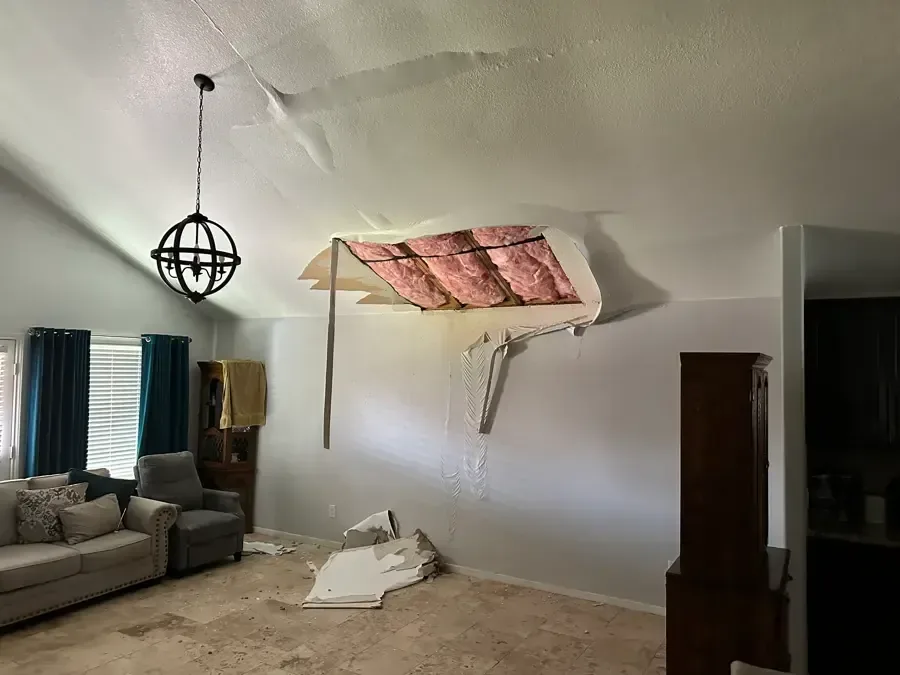
Ceiling Leak Water Damage in Glen Rock
A brown ceiling mark may be far from the opening that released the water. Glen Rock ceiling cleanup examines the space above, the stability below and the materials still holding moisture between them.
(888) 471-9821Discuss the ceiling's conditionHow ceiling leak water damage is handled in Glen Rock
Ceiling water damage work combines source investigation with careful handling of wet board and insulation. The assessment identifies where access is needed, which materials can remain and how the overhead assembly will dry.
First steps for ceiling leak water damage
- 1
Clear the space underneath
A softened or sagging ceiling can release material unexpectedly. Occupants should avoid the affected area and keep furniture handling on hold until a qualified assessment establishes safe access below it.
- 2
Describe what happened above
A bathroom release, appliance leak or rain related drip gives the investigation different starting points. Details about when staining appeared help connect the mark with conditions in the space overhead.
- 3
Avoid puncturing the bulge
Puncturing a swollen ceiling can release water and debris onto the person below. Controlled access must account for stability and safe handling of removed materials.
- 4
Preserve the damage sequence
Photographs taken from a safe location can document changes in staining or sagging. Keeping those observations alongside source repair details helps explain the cleanup boundary and later finish restoration needs.
What does ceiling leak water damage cost in Glen Rock, NJ?
Ceiling leak cleanup in Glen Rock generally falls within planning ranges of $900 to $5,500+. Stability, cavity access and the spread of wet insulation influence the scope, with source repair and refinishing separately identified.
Small stable section
- Limited ceiling wetness
- Accessible measurement points
- Drying after source repair
Open wet cavity
- Damaged overhead material removed
- Insulation condition requires assessment
- Retained framing needs drying
Broad overhead loss
- Several ceiling sections affected
- Wider controlled removal area
- Connected cavities need monitoring
Compare the scope with the water damage cost calculator. The restoration company prices the inspected damage, material access and equipment needs separately from source repairs, replacement finishes and contents work.
The ceiling leak water damage process
- 1
Establish the overhead safety boundary
The ceiling's shape, saturation and surrounding conditions determine access below it. Assessment identifies unstable sections and protects the room while source investigation looks beyond the visible stain for the route water followed through the overhead space.
- 2
Open the assembly with a defined purpose
Selective removal exposes damaged or obstructed wet areas. The scope explains which ceiling material and insulation require handling, while retained components remain accessible for measurements and treatment instead of being hidden behind an early patch.
- 3
Reach damp framing and cavity edges
Drying equipment and any cavity access must suit the overhead construction. Measurements compare affected points over time, helping identify wet corners or connected sections that need a changed approach before the room is ready for finish work.
- 4
Prepare the ceiling for reconstruction decisions
The completion record links source correction, removal boundaries and drying results. It gives the owner and finish contractor a clear account of the remaining assembly, including any separate work required before a replacement ceiling surface can be installed.
The room below a ceiling leak may show only part of the damage. A drip can emerge at a joint after water has traveled across the space above it. Glen Rock ceiling restoration therefore treats the visible mark as a starting point for tracing moisture, while overhead stability governs safe access.
Read the ceiling before working underneath
A bowed section, open seam or heavy wet insulation calls for keeping people away from the area below. Moving a chair or container directly beneath the damage can expose someone to falling material. Assessment should establish the work boundary before any contents handling requires entering that space.
For an affected property around Maple Avenue, useful information includes the room or roof space above the mark. A release from plumbing needs a different source repair from rain entry. That distinction shapes the work sequence without changing the need to inspect the saturated ceiling itself.
- Changes in the ceiling's shape or seams
- Drips appearing away from the first stain
- Water near lighting or other electrical fittings
- Known releases in the space above
Find the wet cavity beyond the finish
A small opening for source repair may leave damp insulation and framing inaccessible. The cleanup plan should explain any further opening needed to handle damaged material or reach retained components. That makes removal purposeful and gives the drying stage access to the surfaces that need treatment.
Homes around Doremus Avenue or in Ferndale require inspection of their own overhead assemblies. Ceiling height, room use and the available equipment path affect practical access. The plan should identify where belongings can remain protected and where the work area needs to stay clear.
Close the opening after the assembly is ready
A ceiling face may feel dry while material above it continues holding water. Repeated moisture readings help identify that difference. If a connected cavity remains damp, airflow or access may need adjustment before a replacement patch hides the area and makes later checking more difficult.
Rock Road provides another reference for arranging a visit, but the repair handoff depends on the interior measurements. Source correction, retained material condition and the planned finish system should be connected in the documentation. The owner can then distinguish completed water cleanup from the remaining ceiling reconstruction.
- Document the source separately from the stain
- Identify insulation or board requiring removal
- Check retained framing at accessible wet points
- Record the condition before closing the cavity
Overhead appearance is only part of the decision
Stopping the drip can make the room feel settled before the assembly is ready for repair. A clear cleanup record explains what happened above the finish, which material was removed and how the remaining components dried. That information helps prevent a cosmetic patch from becoming the first and only response to concealed water. It also gives the finish contractor a practical basis for restoring the room after source and moisture conditions are resolved.
Ceiling leak water damage coverage
Glen Rock ceiling damage assessment serves homes around Maple Avenue, Doremus Avenue and Ferndale, following the overhead water route and the condition of each affected room.
The same service nearby: ceiling leak water damage in Paramus, Fair Lawn, Oradell.
Ceiling Leak Water Damage questions
Can the stain be painted after it stops growing?
A stable looking stain does not show the moisture inside the cavity. The source needs correction and the affected materials need assessment. Paint belongs after suitable drying and repair, when the cause and retained assembly have been addressed.
Is a bulging ceiling safe to drain?
A bulge can contain water and weakened material. Occupants should stay clear rather than puncture it. Qualified personnel can assess stability and establish controlled removal without exposing someone below to an unexpected release of debris.
Why inspect beyond the darkest mark?
Water can travel along framing or seams before reaching the ceiling face. The darkest area may be the collection point instead of the source. Following the overhead route helps locate damp insulation and connected sections that also need attention.
What happens to wet insulation?
Its condition, water contact and accessibility affect whether it can remain. The assessment should explain any removal needed to reach framing or eliminate damaged material, followed by drying of retained components before the ceiling is closed.
Does a ceiling leak always come from the roof?
Plumbing and appliances above the ceiling can also release water. The investigation considers the room arrangement and the circumstances of the leak. Repair planning follows the identified source rather than assuming every overhead stain is rain related.
Will drying equipment occupy the room below?
Equipment access depends on the ceiling assembly and available work space. The plan should explain placement, restricted areas and monitoring needs so occupants understand how the affected room can be used safely during the drying stage.
Make room for safe ceiling assessment
The next step addresses stability, concealed wet material and source repair before a new finish closes the cavity.