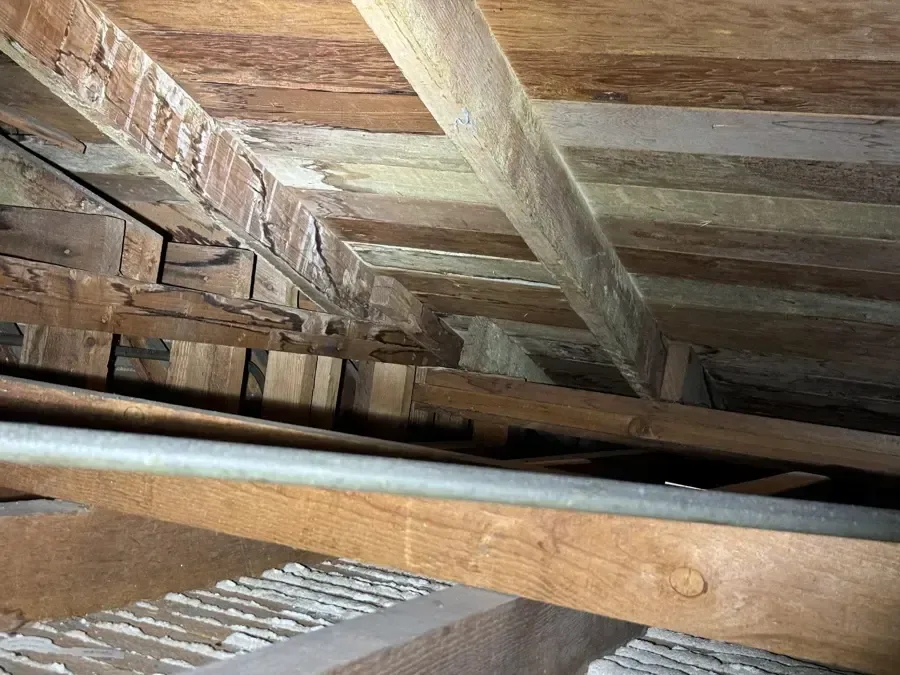
Fair Lawn Roof Leak Water Damage
Rain can travel along roof framing before appearing in a room. Fair Lawn roof leak cleanup traces the interior wet path, checks concealed materials and coordinates drying with the repair of the weather entry point.
(888) 471-9821Discuss rain reaching the interiorHow roof leak water damage is handled in Fair Lawn
Roof leak restoration focuses on water that has entered the building. Attic insulation, framing, ceilings and adjacent walls are assessed together, while the roofing work addresses the opening that allowed rain to enter.
First steps for roof leak water damage
- 1
Stay off the wet roof
Occupants should describe the indoor symptoms from safe ground. Roof access and temporary weather protection require the appropriate trade and conditions suitable for that work.
- 2
Move clear of overhead damage
A room with sagging ceiling material or wet fittings needs restricted access. Belongings should be moved only when the route and overhead surfaces are safe.
- 3
Record the rain sequence
Notes about when dripping began and which rooms changed can help connect the interior pattern with the roof investigation. Photos preserve the original finish condition.
- 4
Coordinate repair and drying
The roofing contact and restoration scope should address their respective tasks. Controlling the entry point and drying the affected materials are both needed before interior finishes are restored.
What does roof leak water damage cost in Fair Lawn, NJ?
Roof leak interior cleanup in Fair Lawn carries planning ranges of $1,000 to $6,500+. Wet attic layers, ceiling access and the number of affected rooms shape the restoration estimate, while roofing repairs require their own defined scope.
Contained ceiling leak
- Small interior footprint
- Accessible finish assessment
- Localized drying setup
Attic and ceiling wet
- Wet insulation evaluation
- Roof space access
- Connected ceiling checks
Multiple rooms affected
- Broader interior removal
- Several drying areas
- Extended moisture tracking
Compare the scope with the water damage cost calculator. The restoration company prices the inspected damage, material access and equipment needs separately from source repairs, replacement finishes and contents work.
The roof leak water damage process
- 1
Establish the indoor rain pathway
The assessment connects visible stains, accessible attic observations and the reported weather sequence. It identifies affected rooms and overhead restrictions while the roofing investigation determines how rain entered and what is required to control that entry.
- 2
Expose materials concealed above the ceiling
Insulation and finishes are evaluated for their condition and effect on drying access. Selective removal reveals the wet assembly where needed, with photographs documenting the route and the materials retained for further moisture treatment.
- 3
Dry after weather control is established
Equipment addresses the interior moisture load once the source is managed. Airflow reaches accessible framing and other retained layers, while dehumidification supports the room conditions needed for absorbed water to leave those materials effectively.
- 4
Separate discoloration from remaining wetness
Repeated measurements determine progress beyond a visual inspection of the stain. The handoff describes dry conditions, remaining replacement work and any renewed entry that requires further roofing attention before the interior finish is closed or painted.
The first indoor drip may be far from the opening in a roof assembly. Water can follow a framing member, collect above insulation and appear at a ceiling joint. A Fair Lawn roof leak cleanup therefore examines the route through the interior instead of treating the visible ceiling mark as the source location.
Read the room and the roof space together
Lyncrest lies south of Morlot Avenue and includes older stone houses. At an affected property, the inspection identifies the actual roof access and interior materials before selecting the drying approach. Stone walls, ceiling finishes and any accessible timber are evaluated as individual parts of the wet assembly.
Radburn is a planned community founded in 1929. For a home there, the useful leak history is when rain first appeared indoors, which room changed and whether an earlier roof repair was made. Those details support the roofing investigation while the restoration scope records the materials that received water.
Separate weather entry from interior cleanup
Berdan Grove Park is on Berdan Avenue. A nearby homeowner reporting rain indoors should describe attic access and ceiling condition from a safe location. Roof climbing and entry into an unstable attic are outside the occupant's first steps. The appropriate repair trade evaluates the exterior opening while cleanup proceeds where safe.
- Photograph the stain without entering unsafe roof space.
- Note which weather conditions accompanied the first drip.
- Check accessible belongings beneath the wet ceiling.
- Keep clear of sagging finishes and wet fixtures.
Wet insulation can conceal both moisture and the route it followed. The assessment determines whether it can remain or requires removal to reach the underlying materials. Any opening should be explained in the scope, including how it improves access for inspection, removal of damaged layers or drying of retained framing.
Confirm the assembly before repairing the finish
A repaired roof does not immediately dry the ceiling below. Dehumidification and directed air movement address absorbed water after the entry point is controlled. Measurements track the retained materials, including locations around the stain where the surface may look unchanged but the assembly remains affected by the same release.
Finishing work should follow a clear moisture endpoint and an account of the roof repair. If new rain causes renewed dripping, the entry route needs another assessment. The interior record should distinguish old discoloration from new wetting so the next decision rests on current conditions rather than appearance alone.
Rain ending is only a change in conditions
A leak may stop dripping when the weather clears while wet insulation continues affecting the ceiling. Interior assessment remains useful during dry weather. Where the overhead finish has weakened, ceiling damage cleanup addresses access and room safety alongside the broader attic and roof space moisture assessment.
Roof leak water damage coverage
Interior rain damage assessments cover Lyncrest, Radburn and Berdan Grove, following the accessible roof space and wet room finishes at each property rather than neighborhood construction assumptions.
The same service nearby: roof leak water damage in Paramus, Glen Rock, Maywood.
Roof Leak Water Damage questions
Why is the drip away from the roof opening?
Water can follow framing or the underside of decking before reaching a ceiling joint. The interior assessment traces the wet route, while the roofing investigation locates the entry point that needs repair above it.
Is cleanup needed once the weather turns dry?
Wet insulation and framing can remain affected after dripping stops. Inspection during dry weather can reveal retained moisture and allow drying to proceed once the source is controlled, before the ceiling finish is repaired.
Does this scope include repairing the roof?
Interior restoration and roofing repair address different parts of the problem. The written scope should identify which work is included and how the roofing contact will coordinate source control with access to the wet interior.
Can attic insulation stay in place?
Its condition, contamination and effect on access determine whether retention is appropriate. Material that holds water or blocks inspection may need removal so the underlying assembly can be assessed and dried effectively.
Should an occupant climb into the attic?
Entry should wait when framing, ceiling support or electrical conditions are uncertain. Indoor observations from a safe room are enough for the first report. The assessment establishes a safe way to inspect the overhead space.
What if the stain remains after drying?
Discoloration can persist after moisture conditions improve. Material readings establish the drying result, while separate finish repairs address appearance. New wetness or renewed dripping requires another source assessment before the surface is covered.
Connect the roof repair with interior recovery
An assessment can identify retained moisture and the finish work that should wait until the assembly is ready.