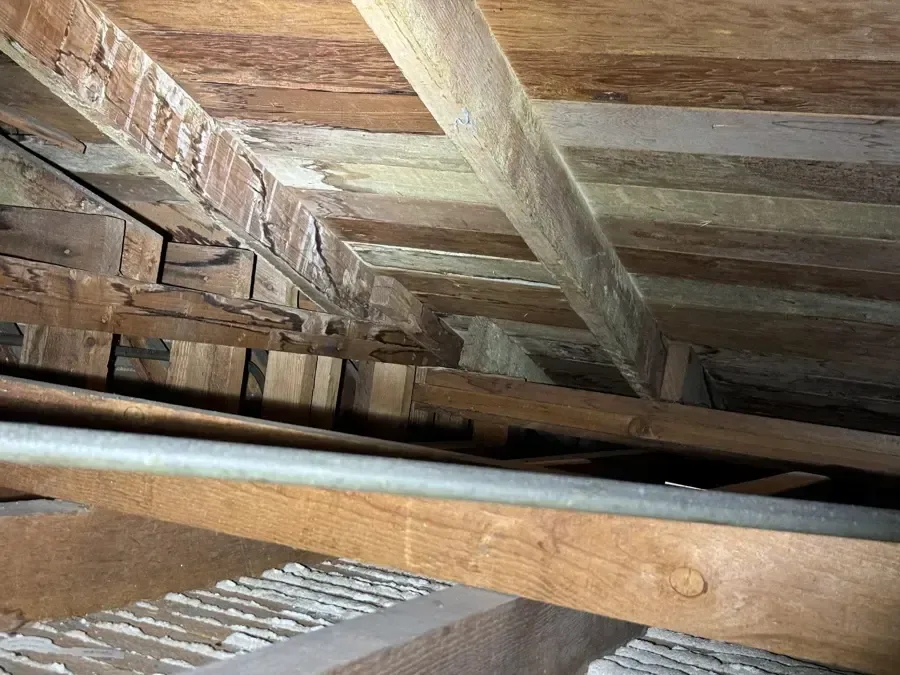
Glen Rock Roof Leak Water Damage
Rain may stop while a roof cavity stays wet. Glen Rock roof leak cleanup examines the path from the entry opening to insulation, framing and interior finishes, alongside arrangements to correct the exterior source.
(888) 471-9821Discuss rain inside the houseHow roof leak water damage is handled in Glen Rock
Roof leak restoration addresses water already inside the building. Exterior repair controls the opening, while interior assessment identifies saturated insulation, damaged ceiling sections and retained framing that needs accessible, measured drying before finishes return.
First steps for roof leak water damage
- 1
Remain off the roof
Occupants should avoid wet roofing and unstable attic areas. Qualified access and exterior source control provide the starting point for investigating rain entry and planning the interior cleanup.
- 2
Note the rain connection
Details about when dripping begins and where it appears help the investigation. A stain can sit away from the entry opening because water travels along framing before reaching the ceiling.
- 3
Keep overhead hazards clear
Any bowed ceiling section or water near an electrical fitting requires a restricted area below. Household belongings should only be moved when the route and overhead conditions permit safe handling.
- 4
Arrange separate repair responsibilities
Roof repair and interior treatment need coordination. The plan identifies who corrects entry, who assesses the wet assembly and what must happen before ceiling replacement.
What does roof leak water damage cost in Glen Rock, NJ?
Glen Rock roof leak cleanup planning ranges run from $1,000 to $6,500+. Attic access, wet insulation and the number of interior rooms affected influence the cleanup estimate, while exterior roof repair needs explicit separate treatment.
Contained ceiling leak
- Limited overhead wet section
- Source access remains manageable
- Focused interior moisture checks
Attic and ceiling wet
- Insulation and framing affected
- Selective ceiling access needed
- Multiple material types monitored
Multiple rooms affected
- Rain travels across cavities
- Several interior finishes damaged
- Expanded drying area and records
Compare the scope with the water damage cost calculator. The restoration company prices the inspected damage, material access and equipment needs separately from source repairs, replacement finishes and contents work.
The roof leak water damage process
- 1
Trace the interior evidence toward entry
Inspection follows stains and wet material toward the likely roof opening, coordinating with the qualified exterior assessment. A record of the water path helps distinguish the source repair location from the larger interior area needing cleanup.
- 2
Assess attic materials before establishing airflow
Wet insulation, roof decking and ceiling board each require a condition assessment. Access must account for footing and overhead stability, while removal decisions identify material that obstructs drying or cannot remain suitable after the water contact.
- 3
Dry retained surfaces within a defined area
The drying plan addresses framing and other retained components that remain damp after extraction or selective removal. Repeated measurements help determine whether airflow reaches the affected surfaces and whether connected sections still need additional access or treatment.
- 4
Confirm readiness before interior finish work
Source repair details and drying records should reach the person restoring the ceiling or wall. The handoff identifies treated materials and remaining repair tasks so a new finish does not conceal wet insulation or an unresolved entry point.
The end of a rain shower does not empty wet insulation. Water that crossed the roof can remain above a ceiling long after the drip slows, and its route may pass several framing members before becoming visible. Glen Rock roof leak cleanup follows that route through the interior assembly.
Weather observations help locate the problem
The borough's September 24, 2026 notice warned of a potential northeaster with heavy rain and strong winds. For a household reporting an interior leak, details about rainfall and the timing of dripping can help direct source assessment. The damaged materials still need an inspection of their own.
At a property near Grove Street, a ceiling mark might be the first visible clue. The investigation considers what lies above it and how water could travel between surfaces. The opening found by an exterior contractor may be separate from the broad patch that appears inside.
- Dripping that begins during particular rain conditions
- Stains spreading along joints or framing paths
- Wet insulation near an identified entry route
- Ceiling changes that restrict access underneath
Exterior correction and interior cleanup work together
A repaired roof opening addresses new entry, but previously soaked materials can still require removal or drying. The scope should connect the exterior work with the inspection indoors. That coordination is especially useful when a temporary measure precedes the final repair and weather conditions remain unsettled.
In Ferndale or around Ackerman Avenue, the attic arrangement at the actual property governs access. Personnel need a safe way to reach affected materials. Equipment placement should not rely on occupants crossing uncertain footing or working below ceiling board that has lost stability from saturation.
Follow moisture before replacing the ceiling
Retained framing, roof decking and adjoining ceiling edges can dry at different rates. Measurements at affected points help explain that variation. If insulation blocks inspection or remains unsuitable after wetting, the removal decision should be documented along with the area it exposed for further drying.
Finish replacement should follow a clear handoff that identifies source control and the condition of the retained assembly. A new ceiling can hide a damp cavity, so the useful endpoint is more specific than the absence of dripping. The room needs an accounted for water path and suitable material conditions.
- Coordinate roof work with interior access needs
- Record insulation removal and retained framing locations
- Measure connected surfaces beyond the darkest stain
- Keep finish replacement tied to drying results
A quiet ceiling can still hold moisture
The change from dripping to silence is welcome, but it is only one observation. Cleanup should explain where the collected water went, which materials remain and how those components were assessed. Photographs of the open cavity and drying records make that explanation concrete. They also help the owner coordinate exterior repair with interior restoration instead of allowing each task to end without a clear connection to the other.
Roof leak water damage coverage
Roof leak damage assessment reaches Glen Rock properties near Grove Street, Ackerman Avenue and Ferndale, with access planned around the affected attic space and interior rooms.
The same service nearby: roof leak water damage in Paramus, Fair Lawn, Oradell.
Roof Leak Water Damage questions
Does the drip show the roof opening's location?
Not always. Water can move along decking or framing before reaching a ceiling joint. Inspection follows that route toward the source and also checks the materials along it, which may be wet beyond the visible mark.
Is an attic visit safe during a leak?
Wet surfaces, uncertain footing and concealed electrical hazards can make attic access unsafe. A qualified assessment should establish the route and work conditions. Occupants can provide observations from safe rooms without climbing into the affected roof space.
Can drying start before the roof is repaired?
Temporary source control and interior mitigation may need coordination, but recurring entry will interfere with drying. The plan should explain how additional rain is being addressed and how retained materials will be checked after the source work.
Why remove insulation if the ceiling looks intact?
Insulation can retain water or obstruct access to damp framing. Its condition determines the removal decision. A sound looking ceiling face cannot reveal everything above it, so the assessment needs to consider the overhead assembly.
How does rain timing help the inspection?
Observations about when dripping starts can help trace the entry route above a stain. The borough notice highlighted preparation for heavy rain and strong winds, while the inspection connects the reported dripping with affected interior materials.
Is repainting included in roof leak cleanup?
The written scope should say whether finish restoration is included or separate. Water cleanup concerns removal, material handling and drying, while exterior repairs and decorative finishes involve additional decisions after source and moisture conditions are resolved.
Resolve the wet interior after rain entry
A connected plan follows the roof opening through damp insulation and framing before the ceiling receives its replacement finish.