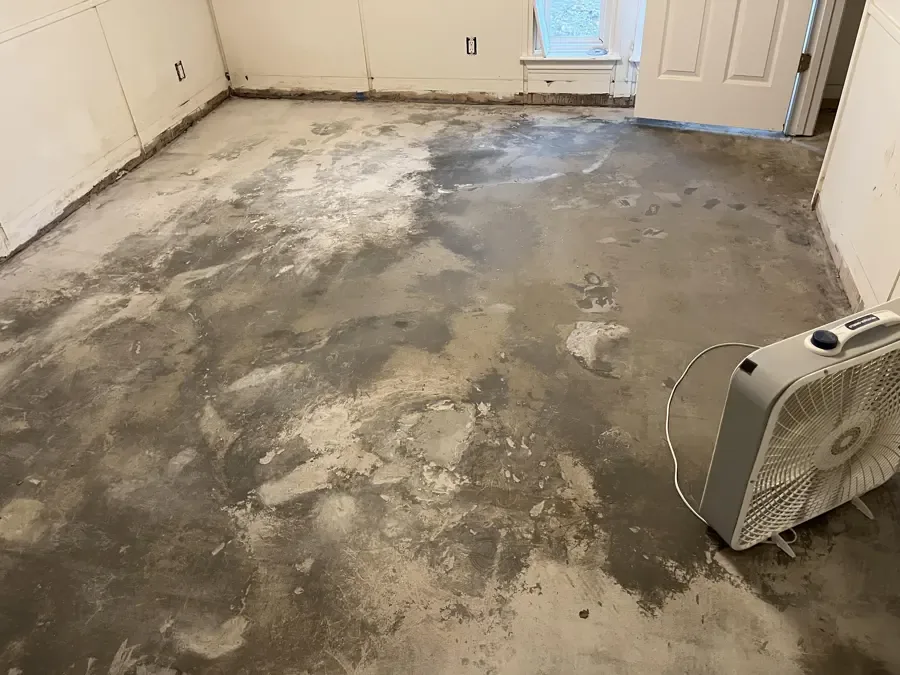
Glen Rock Slab Leak Water Damage
Persistent dampness beneath a floor needs a source investigation before finishes come apart. Glen Rock slab leak cleanup connects the plumbing findings with the wet layers that need access, removal or drying.
(888) 471-9821Discuss moisture below the floorHow slab leak water damage is handled in Glen Rock
Slab related water damage cleanup assesses the affected floor assembly after a concealed release. Detection and plumbing repair establish the source, while restoration addresses moisture in coverings, adhesives and adjoining wall edges.
First steps for slab leak water damage
- 1
Describe the recurring signs
A damp patch that returns, changing floor seams or water near a wall edge gives the investigation a starting point. The cause needs assessment before finishes are opened.
- 2
Coordinate source detection
Qualified plumbing assessment identifies the release and repair approach. Restoration access can then account for the opening while inspection follows moisture into the surrounding floor layers.
- 3
Keep coverings accessible
Furniture and stored items may block wet flooring boundaries. Safe access around those edges allows inspection of the affected assembly and helps protect dry contents during the eventual work.
- 4
Delay replacement decisions
A replacement covering needs suitable conditions below it. Source repair, material removal choices and moisture measurements establish whether the existing assembly is ready for new finishes or further drying.
What does slab leak water damage cost in Glen Rock, NJ?
For Glen Rock slab leak water damage, planning ranges are $1,500 to $8,500+. Floor layers, concealed spread and access drive cleanup costs. Detection, plumbing repair and replacement flooring should have clearly stated treatment outside or within the written scope.
Limited floor area
- Localized wet covering
- Defined source repair opening
- Small adjacent moisture boundary
Several wet layers
- Covering and adhesive affected
- More access for drying
- Wall edges require assessment
Broad concealed spread
- Extensive hidden floor moisture
- Multiple connected surfaces involved
- Larger removal and monitoring
Compare the scope with the water damage cost calculator. The restoration company prices the inspected damage, material access and equipment needs separately from source repairs, replacement finishes and contents work.
The slab leak water damage process
- 1
Relate visible changes to the source findings
Inspection compares damp areas with the plumbing investigation and the construction of the affected floor. Moisture readings help map the damage, while source detection determines where pipe access belongs before restoration expands into connected finishes.
- 2
Expose only the layers needing treatment
The plan identifies flooring that can remain, material that requires removal and surfaces needing direct access. Adhesive condition, contamination and the ability to reach trapped moisture all influence how the affected floor is opened for cleanup.
- 3
Manage moisture leaving the exposed assembly
After extraction where needed, drying addresses the uncovered surfaces and adjoining materials. Equipment choices respond to the assembly rather than a fixed fan count, with repeated readings helping distinguish useful progress from moisture that remains trapped below finishes.
- 4
Prepare a clear flooring installation handoff
The final assessment records the condition of the retained floor and surrounding edges. Replacement materials may have their own installation requirements, so the restoration record and source repair details should accompany the transition to the flooring contractor.
A floor that becomes damp again after wiping deserves more than another surface cleanup. Water beneath a covering can affect adhesive, seams and adjoining wall bases before an obvious pool forms. In Glen Rock, slab leak restoration starts by connecting the detected plumbing source with the actual damaged assembly.
Separate the source question from the floor condition
A raised seam or dark patch points to a place worth inspecting, but source detection belongs to a qualified plumbing assessment. The restoration scope then follows the released water. Keeping those tasks connected prevents unnecessary openings while ensuring the damaged layers receive attention beyond the pipe repair.
For a property near Hillman Avenue, the floor's construction must be established at that property. Materials visible at a doorway or repair opening can help explain the assembly. In Ferndale, inspecting the installed layers establishes the foundation and flooring conditions relevant to the cleanup.
- Floor changes that return after surface wiping
- Damp edges beside fixed cabinetry or trim
- Coverings separating from the material underneath
- Plumbing findings that clarify the release location
Plan access around each affected layer
A finish can conceal water beneath it even when the walking surface feels dry. The assessment considers whether that layer can be treated in place, whether it is damaged and whether removal is necessary to reach the underlying surface. Each decision should have a clear purpose.
Opening a small repair point may expose only part of the wet area. Moisture mapping can reveal a broader boundary along the floor or nearby wall. Access around furnishings and stored contents lets the inspection follow that boundary without spreading debris through the remaining rooms.
Drying needs a useful endpoint
Prospect Street and Grove Street are borough location references, while the work itself depends on the interior conditions. An exposed concrete surface and an adjoining wood component respond differently to drying. The equipment arrangement and measurements should account for both where those materials are present.
Floor replacement also brings material specific installation requirements. A cleanup record should identify retained layers and the measurements used to evaluate them. That information supports communication with the flooring contractor, who needs more than a statement that the room no longer appears visibly wet.
- Keep source detection findings with cleanup notes
- Record moisture across the affected floor boundary
- Explain why each removed layer needed access
- Check adjoining edges before covering the assembly
A new finish should follow a resolved source
Covering recurring dampness creates another concealed space for the problem to continue. The sequence needs a corrected source, appropriate handling of damaged materials and documented drying of the retained assembly. A clear estimate separates those tasks from replacement finishes. That makes the handoff practical: the owner can see what was treated, what remains to be installed and which conditions the next trade needs to verify before completing the floor.
Slab leak water damage coverage
Assessment is available for Glen Rock properties around Hillman Avenue, Prospect Street and Ferndale, with the individual floor assembly and detected source defining the proposed restoration work.
The same service nearby: slab leak water damage in Paramus, Fair Lawn, Oradell.
Slab Leak Water Damage questions
Does a damp floor always mean a slab leak?
No. Water can arrive from several sources, including an appliance or nearby plumbing. A source investigation separates those possibilities. Cleanup should follow the identified release and wet assembly rather than assume the cause from a damp patch.
Will all flooring need to come up?
The answer depends on the materials, moisture spread and access needed for repair and drying. Some sections may remain suitable, while other layers block treatment or have deteriorated. The written scope should explain each proposed removal area.
Can a surface reading show the whole problem?
Surface checks help map the visible pattern, but a layered floor can hold moisture below its finish. Further assessment at seams or accessible edges may be needed to understand the assembly before deciding how to dry it.
Is pipe repair included in cleanup pricing?
The estimate should state how plumbing detection and repair are handled. These tasks solve the source problem, while cleanup addresses the affected building materials. Keeping the responsibilities clear helps prevent a gap between repair and drying.
Why check the walls beside the floor?
Moisture can reach wall bases where the floor meets trim or framing. Those edges may remain damp after the open surface improves. Inspecting them connects the floor treatment with any additional drying or selective opening the room needs.
When is replacement flooring appropriate?
The source needs correction and the retained assembly must meet suitable moisture conditions for the planned covering. A documented drying endpoint and the flooring contractor's installation requirements provide a better basis than appearance or elapsed time alone.
Connect the repair opening to the wet assembly
The cleanup plan should explain access, retained materials and the conditions required before the next floor covering is installed.