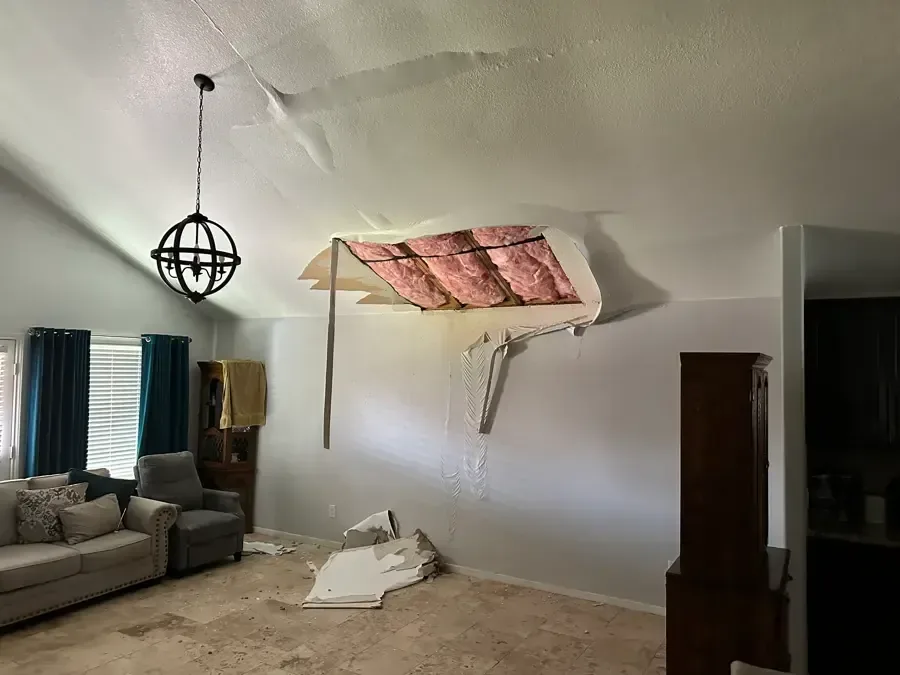
Ceiling Leak Water Damage in Oradell
A swelling ceiling changes how the room can be used. Keep the area beneath it empty while the source and the stability of the wet overhead materials are assessed before cleanup begins.
(888) 471-9821Assess the overhead changesHow ceiling leak water damage is handled in Oradell
Ceiling leak cleanup examines the overhead assembly and the surfaces below it. The work connects source investigation, damaged material removal and controlled drying while keeping occupants away from unstable or electrically hazardous areas.
First steps for ceiling leak water damage
- 1
Close access beneath the damage
Keep occupants away from the ceiling's wet or sagging section. Do not stand below it to place containers, move heavy belongings or test whether the surface feels soft.
- 2
Treat fixtures as a safety concern
Leave wet lights, switches and nearby electrical equipment untouched. Explain their location when requesting qualified assistance so the room can be assessed before cleanup access is arranged.
- 3
Describe the space above
Identify any bathroom, roof area or appliance above the mark from existing knowledge. Avoid climbing into an unsafe cavity to search for the source of the overhead water.
- 4
Track the visible progression
From a dry position, note whether dripping follows rain or fixture use. Photographs of changing stain edges can help connect the source investigation to the affected ceiling area.
What does ceiling leak water damage cost in Oradell, NJ?
Oradell ceiling leak cleanup planning ranges from $900 to $1,900 for a small stable section, $1,900 to $3,600 for an open wet cavity, and $3,600 to $5,500+ for broad overhead damage. Access affects the estimate.
Small stable section
- Limited overhead surface damage
- Accessible source assessment
- Focused cavity moisture checks
Open wet cavity
- Damaged ceiling material removal
- Wet insulation handling
- Protected room below
Broad overhead loss
- Connected ceiling sections affected
- Additional room protection needs
- Expanded drying access
Compare the scope with the water damage cost calculator. The restoration company prices the inspected damage, material access and equipment needs separately from source repairs, replacement finishes and contents work.
The ceiling leak water damage process
- 1
Assess the overhead hazard
The inspection considers finish stability, electrical contact and the room beneath the leak. Those conditions set the work boundary and determine whether source or safety specialists need to act before restoration work can enter the area.
- 2
Trace and expose affected layers
Moisture observations and the room layout help connect the stain to its source. Necessary openings expose wet backing, insulation and framing while damaged debris is contained and the surfaces underneath are protected during removal work.
- 3
Dry the accessible assembly
Retained materials receive directed airflow and humidity control suited to the cavity. Repeat measurements show whether neighboring ceiling sections or wall connections remain wet and whether the access arrangement needs adjustment as the work progresses.
- 4
Confirm readiness for ceiling repair
The project record separates source correction, material removal and final moisture conditions. Replacement finishes can then be planned around the retained assembly's readiness, with any additional repair needs clearly identified before patching and painting are scheduled.
The most obvious mark may be the lowest point of a much larger wet ceiling. Water can follow framing or a pipe before staining a finish. An Oradell ceiling assessment begins with the safety of the room below, then traces the moisture toward the area above the visible damage.
Keep people clear of changing finishes
Bowing board, widening cracks and falling material call for a protected area underneath. A light fixture with water around it also raises an electrical concern. Avoid standing below the damaged section to collect drips or inspect a bulge; qualified assessment comes before that access.
Memorial Field sits across from Oradell Public School, and Maple Avenue meets the station area. When describing a property around these landmarks, identify the affected room and whether another occupied room is above it. Interior layout helps direct source investigation and safe entry.
- Keep furniture moving out of the fall zone.
- Leave wet switches and fixtures untouched.
- Describe any change in sagging or dripping.
- Photograph damage from outside the affected space.
Identify what is feeding the ceiling
A bathroom, appliance, supply pipe or roof can feed an overhead leak. The timing of drips is useful: water appearing after fixture use suggests a different investigation than a mark that expands during rain. The actual source still needs direct assessment and appropriate repair.
The borough's 2016 housing estimate counted a predominantly detached housing stock. In each affected home, the ceiling assembly and any later alterations determine access. Wet insulation or backing may block effective drying even when the visible ceiling surface has stopped dripping onto the floor.
Open for access and plan the repair
Unstable or damaged ceiling material may need controlled removal. The opening should provide useful access to the wet cavity and source area while protecting the room below. Debris handling and floor protection belong in the scope because overhead work can affect previously dry surfaces.
Measurements inside the exposed assembly determine the next drying steps. After source correction, retained framing and adjacent finishes need checks before replacement board is installed. For rain-related entry, roof leak cleanup can address the attic and roof-side portion of the moisture route.
- Separate unstable finishes from retained framing.
- Inspect insulation beside the visible opening.
- Document wet walls connected to the ceiling.
- Keep source repair access available during drying.
Paint belongs after the cavity is ready
Covering a stain can hide the easiest place to observe a continuing leak. Before a ceiling is patched or painted, the source needs correction and the retained assembly needs moisture checks. The owner should be able to see which materials were removed, which were dried and whether any inaccessible space remains. A ceiling that has stopped dripping may still contain wet insulation or framing. Keeping the repair sequence tied to measurements helps avoid closing an unfinished drying area behind a fresh surface.
Ceiling leak water damage coverage
Ceiling damage assessments in Oradell can include properties near Memorial Field and Maple Avenue. Describe the room above the stain and a safe entrance below it.
The same service nearby: ceiling leak water damage in Paramus, River Edge, Maywood.
Ceiling Leak Water Damage questions
Should a homeowner puncture a ceiling bulge?
A bulge can release water and unstable material unexpectedly. Keep the area underneath clear and seek qualified assessment. The safe removal method depends on the ceiling condition, electrical contact and what is contained above the finish.
Can a stain come from a distant leak?
Water can travel along framing or other concealed surfaces before reaching a visible low point. Investigation should follow the moisture route above the stain, including connected walls, rather than assume the source is directly overhead.
Does every ceiling leak come from the roof?
Plumbing, appliances and rooms above the ceiling can also supply water. The timing of the leak and the layout help choose an investigation path. The source must be identified before the repair scope is finalized.
What happens to wet ceiling insulation?
Its condition, exposure and drying access determine handling. Saturated or damaged insulation may need removal to expose retained materials. The scope should identify which cavity layers remain and how their moisture condition will be checked.
Can the room be used while drying continues?
Room use depends on stability, electrical safety and the work boundary. Equipment and open overhead cavities can create access restrictions. The assessment should establish a safe occupied area separately from the active ceiling cleanup zone.
Why delay painting after the dripping stops?
Dripping can stop while moisture remains inside the assembly. New paint may conceal the stain without resolving that retained water. Source correction and material readings should support the repair decision before finishes cover the affected area.
Make the room below safe to assess
Arrange ceiling damage assessment from a dry location outside the affected area in Oradell.