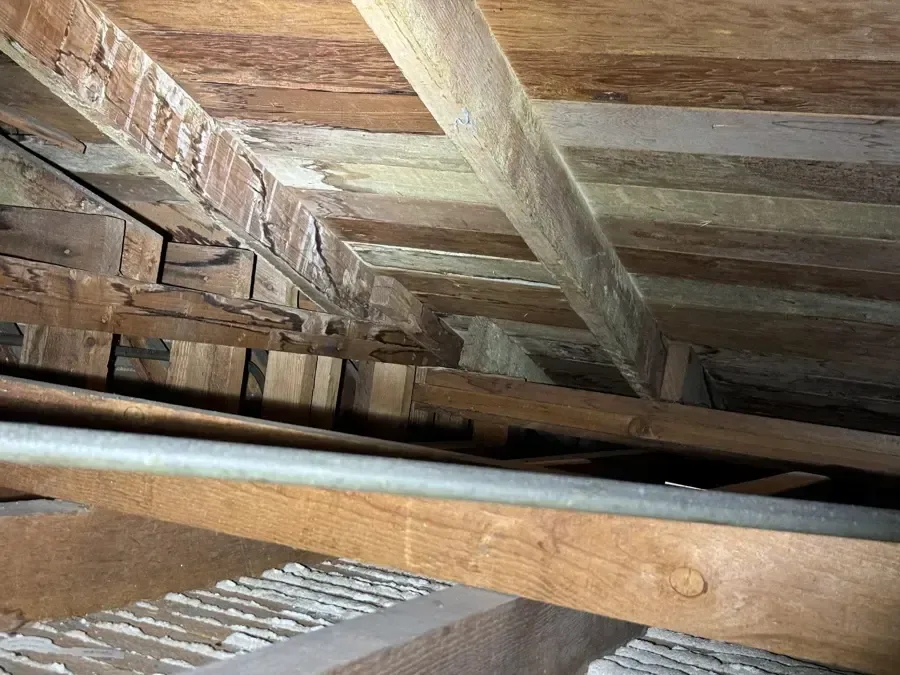
Roof Leak Water Damage in Oradell
Rain can stop while an attic remains wet. Roof leak cleanup follows the entry path into insulation, ceilings and connected walls, coordinating interior drying with the work needed to stop renewed water entry.
(888) 471-9821Trace rain inside the houseHow roof leak water damage is handled in Oradell
Roof leak restoration addresses the interior materials contacted by rain entry. Inspection connects the roof-side source with wet attic layers and ceiling damage, then establishes cleaning, removal and drying needs below the entry point.
First steps for roof leak water damage
- 1
Stay inside a safe area
Do not climb onto a wet roof or step across attic framing to investigate. Observe the ceiling from a dry room entrance and keep occupants away from unstable finishes.
- 2
Record the weather connection
Note whether the leak began during rain and whether dripping continued afterward. Existing photographs of the ceiling mark can help explain the sequence without entering hazardous spaces.
- 3
Arrange appropriate source work
A roofing professional should assess the entry point and necessary protection. Interior cleanup planning can then account for the source status and the safe access available beneath it.
- 4
Describe connected interior changes
Mention wet wall corners, damp attic belongings or a spreading ceiling stain. These observations help establish an inspection boundary that follows water beyond the first visible mark.
What does roof leak water damage cost in Oradell, NJ?
Roof leak interior cleanup in Oradell uses planning ranges of $1,000 to $2,200 for a contained ceiling leak, $2,200 to $4,300 for wet attic and ceiling materials, and $4,300 to $6,500+ when multiple rooms are affected.
Contained ceiling leak
- Limited interior wet area
- Accessible ceiling moisture checks
- Focused protection and drying
Attic and ceiling wet
- Insulation and framing involvement
- Additional access for inspection
- Connected overhead material handling
Multiple rooms affected
- Rain spread through assemblies
- Broader interior removal scope
- Several monitored drying areas
Compare the scope with the water damage cost calculator. The restoration company prices the inspected damage, material access and equipment needs separately from source repairs, replacement finishes and contents work.
The roof leak water damage process
- 1
Connect roof findings with interior marks
The assessment compares the reported rain entry with moisture in the attic and occupied rooms. Roof repair information helps identify the active source status while interior readings establish the extent of water retained below that entry point.
- 2
Plan safe access through affected assemblies
Work boundaries account for ceiling stability, attic footing and electrical hazards. Damaged insulation or finishes are evaluated for removal, with protection beneath overhead work and clear documentation of spaces that cannot yet be inspected or reached safely.
- 3
Dry retained attic and room materials
Equipment is arranged around the accessible wet layers after source control. Moisture readings track framing, ceilings and connected walls separately, allowing airflow and humidity control to change as some materials dry faster than others during the project.
- 4
Prepare a connected repair record
Final documentation shows the source work status and the condition of retained interior materials. It also identifies replacement needs and any outstanding access limitations, giving roofing and interior repair trades a clear basis for their remaining work.
A wet upper corner after rain is a reason to inspect above the room, not simply repaint the mark. Water may cross roof framing before entering insulation or reaching a ceiling. In Oradell, cleanup planning connects the roof repair with the interior assemblies that absorbed the release.
Read the rain pattern from inside safely
April 2022: Flooding damaged more than 100 homes and businesses in the borough. For a particular house, roof entry needs its own investigation. The owner can describe whether the ceiling mark appeared during rain, continued afterward or returned after a previous patch was completed.
Ridgewood Avenue is home to the Doug Parcells Athletic Complex beside Oradell Swim Club. For nearby properties and those along Kinderkamack Road, safe interior access matters more than climbing outside to inspect damage. Roof assessment and stabilization belong with an appropriate roofing professional.
- Record when dripping starts and stops.
- Identify the upper room beneath the mark.
- Avoid entering an unsafe or unlit attic.
- Keep away from wet overhead electrical fixtures.
Check what the insulation is concealing
Insulation can hold water against ceiling material and hide the wettest part of a cavity. A surface mark may understate that spread. Inspection needs to consider the roof deck, framing, insulation and ceiling together, with access selected around the actual construction and damage.
A stable access opening can help assess retained layers after damaged material is removed. Attic footing, limited clearance and electrical components can restrict the route. The scope should describe those limitations so equipment placement and drying expectations reflect the areas that can actually be reached.
Coordinate weather protection with interior drying
Drying equipment cannot compensate for continued rain entry. The source repair needs coordination with extraction and cavity work so fresh water does not soak newly exposed materials. Any temporary protective measure and the permanent roof repair should have clearly identified responsibility within the project.
When moisture has traveled into a wall, readings should extend below the original ceiling stain. The owner may also need ceiling damage cleanup for unstable finishes. A combined moisture map keeps related damage connected while separating roof work from interior restoration tasks.
- Record which roof work has been completed.
- Track readings inside accessible attic materials.
- Inspect wall corners beneath wet ceiling sections.
- Delay finish closure until drying is documented.
A dry afternoon is not the final check
Sunshine can stop visible dripping while absorbed water remains in the assembly. The useful stopping point for interior drying is the condition of retained materials, measured at appropriate locations. Keep the roof repair documentation alongside those readings so the property record explains both source correction and moisture recovery. If another rain reveals fresh entry, that change should be reported before ceiling repairs conceal the route. The scope can then be adjusted around the new wet area instead of treating an old stain as the entire problem.
Roof leak water damage coverage
Oradell homeowners near Ridgewood Avenue, Kinderkamack Road and Delford can describe the upper rooms affected by rain when arranging a safe interior damage assessment and access plan.
The same service nearby: roof leak water damage in Paramus, River Edge, Maywood.
Roof Leak Water Damage questions
Can a roof leak appear far from its entry point?
Water can follow framing and other concealed surfaces before dripping onto a ceiling. The interior stain directs inspection, while roof assessment establishes the entry point. Both findings help define the complete water route through the building.
Should attic belongings be removed before inspection?
Only safely accessible dry items should be moved without entering hazardous areas. Wet attic contents can hide unstable footing or electrical concerns. Describe their location so the assessment can include a safe handling plan and access route.
Is roof repair included in interior cleanup?
The written scope should say which trade performs source work and which tasks address interior damage. Roof repair, insulation handling and room reconstruction may be separate items. Clear responsibility helps keep the repair and drying sequence coordinated.
Why does a ceiling remain damp after roof repair?
The repair stops incoming rain, but insulation or framing may still contain absorbed water. Those materials need suitable drying access and measurements. Continued dampness should be evaluated instead of assuming the finished roof repair also dried the interior.
Can equipment dry wet insulation in place?
Material condition, saturation and cavity access affect that decision. Some insulation needs removal to expose retained surfaces for drying. The assessment should explain the handling choice and how the surrounding ceiling and framing will be checked.
What if the mark grows during another rainfall?
Report the change and keep the area beneath it protected. Fresh entry may alter the source repair or cleanup scope. Updated observations and measurements should be considered before replacement ceiling material covers the affected cavity again.
Connect roof repair with interior recovery
Plan the next interior assessment around safe access and the current roof repair status in Oradell.