Water Heater Leak Cleanup in Oradell
A wet ring around a heater can be the edge of a larger release. Cleanup starts with safe utility access, then checks beneath nearby finishes and through the walls surrounding the equipment area.
(888) 471-9821Assess the heater room damageHow water heater leak cleanup is handled in Oradell
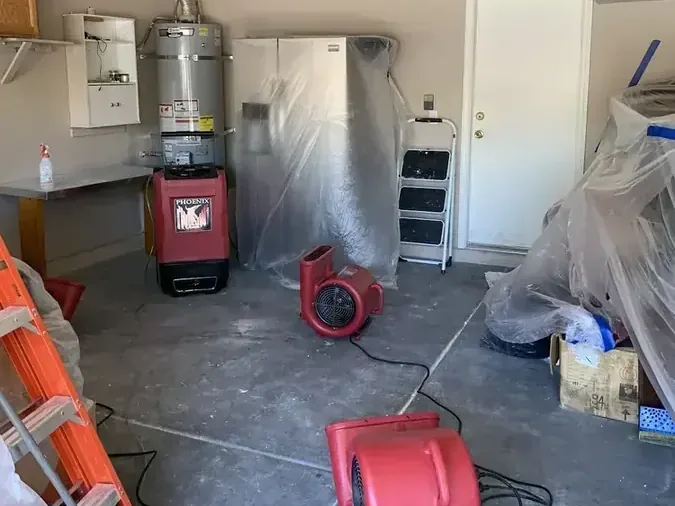
Water heater leak cleanup removes escaped water and assesses the building materials around the appliance. Tank repair or replacement is coordinated separately so wet floors, platforms and nearby wall cavities remain accessible for drying.
First steps for water heater leak cleanup
- 1
Stay clear of equipment hazards
Keep people away from water around the heater, electrical components and utility connections. Do not reach through the wet area to adjust controls or attempt to move the appliance.
- 2
Request safe source isolation
Explain the visible release and equipment location to the appropriate professional. An accessible supply shutoff may help, but unsafe utility conditions need qualified attention before water removal work begins.
- 3
Identify adjoining finishes
From a dry area, describe nearby flooring, wall bases and stored belongings. Include any dampness outside the utility room so the inspection does not stop at the heater's immediate surroundings.
- 4
Coordinate access for both tasks
Identify who can authorize appliance work and cleanup. A shared access arrangement helps keep the affected surfaces available for inspection when the damaged heater is disconnected or replaced.
What does water heater leak cleanup cost in Oradell, NJ?
Oradell heater leak cleanup planning ranges are $800 to $1,800 for an accessible utility area, $1,800 to $3,500 for adjoining room spread, and $3,500 to $5,500+ for broad concealed damage. Replacement work needs separate scope clarification.
Accessible utility area
- Open wet floor access
- Limited surrounding finish damage
- Focused cleanup equipment
Adjoining room spread
- Water across room transitions
- Wet wall base checks
- Broader material drying
Concealed broad damage
- Blocked surfaces need access
- Several wet building layers
- Coordinated removal decisions
Compare the scope with the water damage cost calculator. The restoration company prices the inspected damage, material access and equipment needs separately from source repairs, replacement finishes and contents work.
The water heater leak cleanup process
- 1
Assess the utility space and release
The inspection establishes the source status and any electrical or equipment restrictions. It then maps visible water beyond the heater, including adjoining room edges, so appliance service and building cleanup can be coordinated around the same affected area.
- 2
Expose surfaces blocked by equipment
When qualified source work makes access possible, technicians examine the floor and walls behind the tank. Damaged finishes are evaluated for removal, and retained materials are identified before replacement equipment limits the available working space again.
- 3
Remove water and dry surrounding layers
Extraction addresses accessible liquid, followed by cleaning and drying appropriate to the exposed surfaces. Equipment placement respects the utility area and travel paths, while measurements follow moisture in the floor, wall bases and any adjoining affected room.
- 4
Document the space before closing access
The record separates appliance service from cleanup and lists remaining finish repairs. Moisture findings for previously blocked surfaces help determine when the area can be closed, with any unresolved access needs clearly communicated to the property owner.
A heater replacement can leave a wet building behind if the cleanup stops at the tank footprint. Water may spread beneath a platform, reach a wall base or enter an adjoining room before discovery. In Oradell, the initial assessment connects safe equipment access with the surrounding materials that need inspection.
Keep utility work separate from water removal
Veolia is the borough's listed water utility, while PSE&G provides gas and electric service. Water around equipment calls for an assessment of the actual utility hazards before anyone reaches for controls. A qualified professional should address unsafe equipment and the leaking heater itself.
Ridgewood Avenue and Delford are useful location references for access planning. Describe whether the heater stands in a closet, garage or other utility space at the property. Narrow openings, fixed shelving and adjoining occupied rooms can affect the route for both equipment replacement and cleanup.
- Keep hands away from wet electrical controls.
- Report active flow from a safe position.
- Describe obstacles around the equipment area.
- Identify rooms sharing the utility space wall.
Inspect around and beneath the appliance area
A small visible puddle may sit beside a larger concealed wet layer. The assessment checks floor transitions and nearby wall bases, particularly where finishes run beneath the heater or a supporting platform. Any opening should expose a specific area that needs measurement, cleaning or drying access.
Water condition and material damage determine what can remain. Swollen composite trim, wet insulation or inaccessible backing may need removal, while suitable retained surfaces can be cleaned and dried. The scope should distinguish those decisions from the work of reconnecting or replacing the appliance.
Leave room for the drying equipment
Installing a replacement heater immediately against damp finishes can make later access difficult. Restoration and plumbing schedules should account for the surrounding surfaces before the equipment area is closed again. A safe work arrangement preserves necessary utility clearances and avoids directing equipment across occupied walkways.
Measurements track the affected floor and wall materials after the release has stopped. If the water crossed into another room, water extraction may be needed there as well. The final record should show the full wet boundary, not merely the cleaned space beside the new tank.
- Check the adjoining room at floor level.
- Record inaccessible surfaces beneath fixed equipment.
- Coordinate replacement timing with drying access.
- Confirm retained wall bases before finish repair.
Describe what is wet before moving the heater
The appliance's location can hide the most important part of the damage. An owner can help by describing the visible water route, the surrounding finishes and any room directly beside or below the utility space. Moving the heater itself involves plumbing and utility work and should be coordinated by the appropriate professional. Once access is available, the cleanup team can examine surfaces previously blocked by the tank. That sequence helps prevent the replacement appliance from covering wet material that still needs attention.
Water heater leak cleanup coverage
Oradell properties near Ridgewood Avenue and Delford can describe the heater location, adjoining rooms and dry access route when arranging an assessment of the resulting water damage.
The same service nearby: water heater leak cleanup in Paramus, River Edge, Maywood.
Water Heater Leak Cleanup questions
Is replacing the heater enough after a leak?
Replacement addresses the appliance, but escaped water can remain beneath flooring or inside nearby walls. The building materials need their own assessment so a new tank does not conceal damage that still requires cleaning or drying.
Can water travel out of a utility closet?
A release can cross thresholds or move beneath finishes into adjacent rooms. Visible puddles may show only part of that route. Inspection should include connected floor edges and wall bases around the equipment space.
Should the heater be moved for inspection?
Moving a heater involves utility and plumbing connections. The appropriate professional should coordinate that work. Once safe access is available, restoration technicians can inspect the surfaces that were concealed behind or beneath the appliance.
What if the floor looks dry after wiping?
Surface wiping removes visible liquid but may leave moisture under a covering or platform. Measurements at the edges and in accessible surrounding layers establish whether further drying or material removal is needed around the equipment area.
Can belongings remain beside the drying equipment?
The work area needs clear access and appropriate equipment spacing. Dry items may be relocated safely, while soaked belongings require assessment. The cleanup plan should identify where contents can be staged without blocking utilities or walkways.
Who decides when the walls can be repaired?
The drying record should show the condition of retained wall materials, and source work must be complete. Repair decisions then account for damaged finishes and access requirements before replacement trim or wall covering closes the area again.
Check the space around the leaking heater
Arrange water damage assessment for the equipment area and adjoining rooms at an Oradell property.