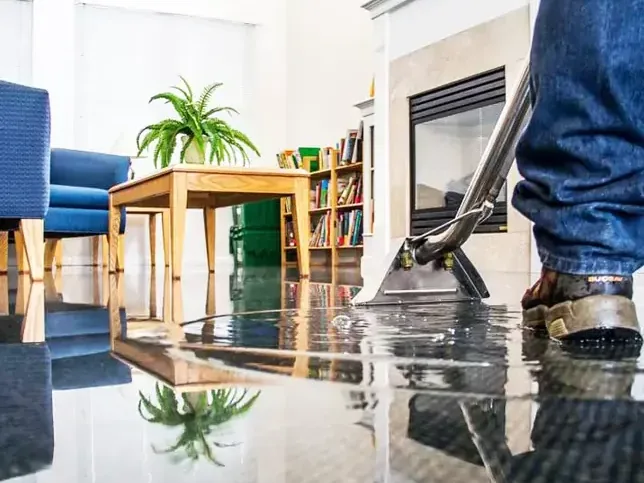
Water Extraction in Maywood
The visible puddle is only the starting point. Extraction needs to reach low spots and absorbent materials while keeping discharge, equipment and walking routes clear of unaffected rooms.
(888) 471-9821Plan this water removalHow water extraction is handled in Maywood
Water extraction removes accessible liquid before a drying system tackles moisture held inside construction. The assessment identifies water depth, contamination and floor layers so the removal method fits the affected space.
First steps for water extraction
- 1
Stay outside unsafe water
Avoid entering a room where outlets, appliances or electrical panels could be wet. Report those conditions before anyone moves pumps or hoses into the affected space.
- 2
Identify continuing inflow
Describe whether the puddle is growing, dripping from overhead or returning through a drain. Safe source isolation prevents repeated extraction from becoming the entire cleanup effort.
- 3
Open a dry access route
Clear reachable dry belongings from the entrance without walking through standing water. Leave heavy soaked objects in place until their weight and contamination can be assessed.
- 4
Record connected wet edges
Photograph nearby doorways and adjoining rooms from safe ground. Include water beneath furniture or shelving so inspection follows the full spread rather than the largest visible pool.
What does water extraction cost in Maywood, NJ?
Water extraction in Maywood generally uses planning bands of $600 to $4,500+. Depth, floor coverings and contamination affect the scope; drying equipment and damaged finish replacement should be identified separately in the written estimate.
Surface pooling
- Open accessible floor areas
- Limited absorbent material contact
- Straightforward equipment access
Saturated rooms
- Wet carpet and backing
- Several connected extraction zones
- Additional material moisture checks
Deep or dirty water
- Larger accumulated water volume
- Controlled contaminated water handling
- More involved equipment placement
Compare the scope with the water damage cost calculator. The restoration company prices the inspected damage, material access and equipment needs separately from source repairs, replacement finishes and contents work.
The water extraction process
- 1
Establish a workable removal boundary
The assessment locates accessible water, checks the apparent source and identifies hazards. Floor levels and room connections are considered together so equipment reaches the accumulation without obstructing an essential exit or spreading contamination.
- 2
Remove liquid from accessible surfaces
Extraction proceeds with tools selected for water depth and material condition. Operators work around protected finishes and record areas blocked by heavy contents, cabinetry or flooring that may need a separate access decision.
- 3
Investigate the absorbent perimeter
Once open water is gone, checks move to carpet backing, transitions and wall bases. Retained layers are assessed for moisture and condition, allowing the next stage to focus on construction that still needs drying.
- 4
Explain the remaining restoration scope
The handoff distinguishes completed extraction from ongoing drying and repairs. Owners receive an explanation of affected materials and equipment needs, including any additional opening required to reach a concealed wet area before finishes are replaced.
A doorway that appears passable may conceal slick flooring or water touching electrical equipment. Before extraction begins, the work area needs a safe approach and a place for removed water to go. A technician then identifies the deepest accumulation and the materials that have absorbed the release.
Plan the hose route around the building
West Pleasant Avenue contains a central business district with restaurants and shops. An extraction setup in an occupied commercial setting must account for entrances, deliveries and customers. Hoses should follow a controlled route that does not turn the remaining dry access into a trip hazard.
Maywood Avenue and Lincoln Avenue mark the ends of that district. Giving the entrance location, stair arrangement and wet floor level helps establish equipment access. The important building details are the actual thresholds and room connections, including storage areas reached by the same flowing water.
- Identify water beneath movable furnishings and floor coverings.
- Keep the extraction route separate from public foot traffic.
- Check absorbent edges after the open floor clears.
- Record any areas that remain inaccessible during removal.
Choose removal tools for the wet surface
A pump handles accumulated water differently from a weighted carpet extraction tool. Water depth and surface condition determine the approach. Delicate finishes need protection from hose movement, while contaminated releases require equipment handling that keeps waste out of clean rooms and away from belongings.
Carpet can look substantially better after a pass with an extraction wand while its backing remains saturated. The inspection should determine whether padding can stay and whether the floor underneath needs access. Water trapped at the wall perimeter also deserves attention before equipment placement is considered complete.
Find the moisture left after pumping
The end of standing water does not mark the end of restoration. Moisture readings at wall bases, door frames and floor transitions show where liquid has migrated. That map supports a drying plan and helps explain why equipment may serve an area beyond the original puddle.
In a shop with stacked cartons, for example, the open aisle might clear first while moisture remains beneath a display base. Handling that obstruction requires an agreed contents plan. Extraction should leave retained construction accessible for drying instead of pushing wet inventory into an unexamined corner.
Keep the removal scope separate from final repairs
A useful extraction record describes the source status, water condition, rooms treated and materials that still hold moisture. It also identifies flooring or wall sections that require a separate decision. The owner can then understand which work removes liquid and which work dries or replaces construction. If a leak continues, source control must accompany removal so fresh water does not refill the area. Drying equipment belongs after that immediate problem has a workable solution.
Water extraction coverage
Maywood homes and business spaces can request extraction assessment for pooled water, soaked carpet and connected wet rooms, including properties within the 07607 postal area.
The same service nearby: water extraction in Paramus, River Edge, Fair Lawn.
Water Extraction questions
Can a household wet vacuum handle this loss?
A small accessible spill differs from water across rooms or near electrical equipment. The source, contamination and hidden spread determine the needed response. Avoid carrying equipment into unsafe water just because its surface depth looks manageable.
Why inspect adjacent rooms after the puddle disappears?
Water can move under door thresholds and floor coverings without remaining visible above them. Checking adjacent materials identifies that spread and prevents a drying plan from ending at the doorway of the room where the leak was discovered.
Does extraction include removing all carpet?
Carpet removal depends on contamination, backing condition and access to the material below. Some carpet can be extracted and dried; damaged or contaminated layers may require removal. The assessment should explain the decision for each affected section.
Where does the extracted water go?
Discharge needs a suitable controlled route determined by the water condition and site access. It should not be directed into an unaffected room or an improvised outlet. Ask the cleanup scope to explain handling before removal starts.
Will pumping also dry the walls?
Pumping removes liquid that equipment can reach. Wallboard and framing may retain absorbed moisture after that stage ends. Those materials require inspection and an appropriate drying arrangement, with progress checked through readings rather than surface appearance alone.
What information helps an extraction estimate?
Describe the water source, affected floor level, approximate room extent and any soaked coverings. Photographs from a dry location help. Mention stairs, restricted doors and heavy contents because equipment access can change the work required.
Get accessible water out of the building
Describe the source, floor level and safe equipment entrance to start planning the extraction work.