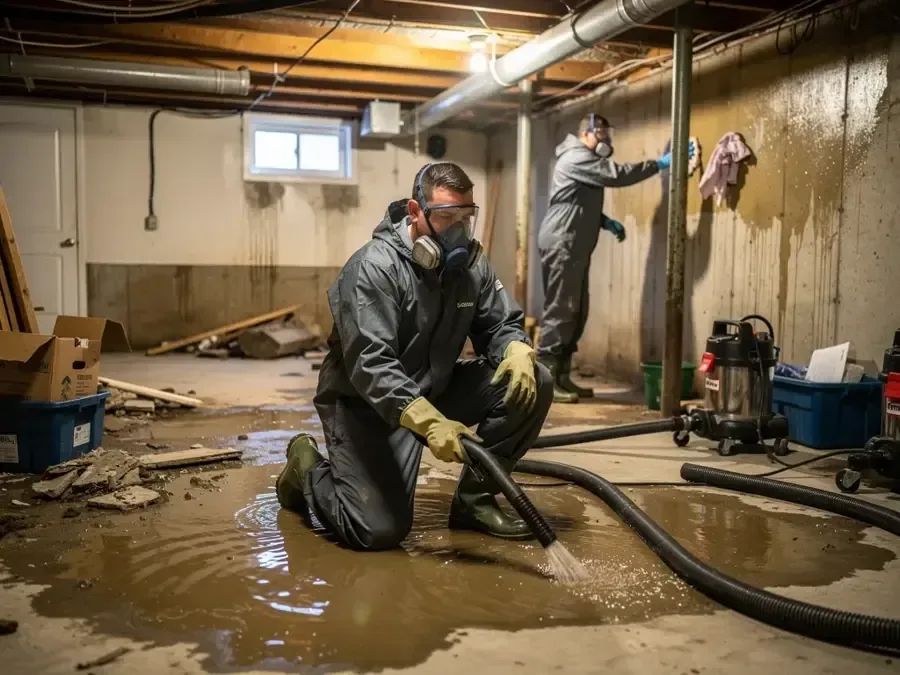
Storm Flood Cleanup in Maywood
Mud at a threshold can mark only the beginning of a storm loss. Cleanup needs to identify where outside water traveled, what it contacted and whether the building is safe to enter.
(888) 471-9821Assess this storm entryHow storm flood cleanup is handled in Maywood
Storm flood restoration combines controlled water removal with cleaning and material assessment. Outside water may carry debris into floor layers and contents, so the work extends beyond clearing the visible pool or wiping a threshold.
First steps for storm flood cleanup
- 1
Wait for safe building access
Stay outside water that could contact electricity or conceal unstable flooring. Explain access restrictions and the apparent entry point before anyone begins moving equipment or contents into the space.
- 2
Capture the original water route
Photograph thresholds, low openings and debris patterns from a dry position. Record which rooms were reached so the inspection can follow the loss after the water level has changed.
- 3
Separate exposed contents
Keep wet boxes, rugs and furnishings away from unaffected belongings. Avoid dragging dirty items through clean rooms; contents handling should follow a route chosen for the cleanup area.
- 4
Leave dirty residue undisturbed
Do not sweep dry sediment or run portable fans over contaminated surfaces. Controlled removal and cleaning should precede the drying stage for construction that is suitable to remain.
What does storm flood cleanup cost in Maywood, NJ?
Storm flood cleanup in Maywood uses planning bands from $2,500 to $12,000+. Water depth, sediment, contamination and damaged layers affect the estimate. Entry prevention work and replacement construction need clear separation from immediate cleanup and drying costs.
Limited entry area
- Small exterior water path
- Accessible sediment removal work
- Limited affected material handling
Several affected rooms
- Connected contaminated floor areas
- More extensive contents separation
- Expanded cleaning and drying
Deep or extensive flooding
- Greater accumulated water depth
- Broad porous material damage
- Complex controlled debris removal
Compare the scope with the water damage cost calculator. The restoration company prices the inspected damage, material access and equipment needs separately from source repairs, replacement finishes and contents work.
The storm flood cleanup process
- 1
Document entry and establish work boundaries
The assessment records where water entered, which rooms were contacted and what hazards restrict access. Clean routes and contaminated work zones are defined before hoses, debris containers or contents movement change the initial conditions.
- 2
Remove water and sort exposed materials
Extraction addresses accessible accumulation while the material assessment distinguishes cleanable construction from damaged porous layers. Contents are considered separately, with handling arranged to avoid carrying sediment and wastewater residue into unaffected parts of the property.
- 3
Clean retained surfaces before equipment drying
Once debris and unsuitable materials are removed, accessible retained construction receives cleaning appropriate to its exposure. The drying setup then targets that assembly, including floor edges and cavities that would otherwise remain hidden behind finished surfaces.
- 4
Track recovery and explain remaining repairs
Moisture measurements show the response of retained materials as drying proceeds. The final record identifies removal decisions, cleaning boundaries and unfinished reconstruction needs, along with the entry observations useful for a separate prevention assessment.
Outside water can leave a thin dirty film after the deepest pool recedes. That film matters because it shows surfaces the water contacted, including shelves, wall bases and floor joints. Document the entry route and debris pattern from a safe position before cleanup changes the appearance of the affected area.
Use the property entry path to define work
Briarcliff Avenue had a drainage project addressing roadway stormwater ponding, with improvements installed in spring 2023. The borough also recorded completion of Sanzari Place drainage construction on November 1, 2024. At an affected building, the inspection begins with the opening through which water actually arrived.
The January 28, 2025 engineering report described proposed work on Loughlin Place from Briarcliff Avenue to Spring Valley Road. Property cleanup should identify wet thresholds, wall joints and low openings directly. Photographs of those points help the owner discuss future entry prevention with the appropriate repair contractor.
- Record debris caught against doors and exterior openings.
- Keep wet belongings apart from dry storage.
- Avoid running household fans over dirty flood residue.
- Report water near electrical equipment before entry.
Remove contaminated debris before drying retained surfaces
Storm water can contact soil and waste before entering a room. Porous materials and stored contents therefore need handling decisions based on exposure and cleanability. A blanket instruction to dry everything in place can leave contaminated layers trapped under finishes that appear acceptable from above.
Removal should use a controlled route for debris and water. Clean areas need protection from footwear, hoses and wet objects moving through the building. Once accessible liquid and affected debris are removed, retained surfaces can receive cleaning before the drying arrangement begins its next phase.
Check the lower edges after the room clears
Water at a doorway may have reached the underside of a floor covering or traveled behind trim. Inspect wall bases, built in storage and adjoining spaces instead of stopping at the visible sediment boundary. Material readings and access findings establish the construction that still requires attention.
For a room used for storage, photograph the arrangement before boxes are moved. This helps explain which contents were contacted and which remained above the water. It also supports a practical sorting plan that prevents wet cartons from being stacked on clean flooring elsewhere in the property.
Separate immediate recovery from future entry prevention
Extraction, cleaning and drying address this loss. Threshold repair, drainage alterations or other entry prevention work need their own assessment of the property. Keep photographs of the original water path with the cleanup record so those later decisions have useful context. The restoration handoff should identify remaining damaged finishes and moisture checks, while clearly describing any unresolved source of renewed entry.
Storm flood cleanup coverage
Storm cleanup assessment covers Maywood properties with outside water entering occupied or storage spaces, including evaluation of wet finishes, sediment and the route used for equipment access.
The same service nearby: storm flood cleanup in Paramus, River Edge, Fair Lawn.
Storm Flood Cleanup questions
Can clear looking outside water still need controlled cleanup?
Appearance alone does not describe what the water contacted before entering. The assessment considers its route, debris and affected materials. Handling decisions should account for that history even when the visible pool looks clearer than the residue nearby.
Should wet cartons be stacked in an unaffected room?
Keep exposed contents separate until their condition and handling are assessed. Moving wet cartons can spread residue and moisture onto dry flooring. A designated sorting route and protected staging area help preserve the unaffected part of the property.
Does a drainage project determine the cleanup scope?
The cleanup scope follows the affected building: entry points, wet materials, contamination and access. Municipal work provides area context, while the inspection identifies what happened at the property and what remains wet after the water recedes.
Why remove sediment before starting air movement?
Loose dirty material can spread when disturbed by airflow. Controlled debris removal and cleaning establish suitable conditions for drying retained construction. The sequence also exposes surfaces that need inspection instead of leaving residue beneath equipment or behind contents.
Can a flooded rug simply dry outdoors?
A rug needs assessment of contamination, backing and cleanability. Drying alone does not address residue embedded in its layers. Keep it apart from clean belongings and ask whether specialized cleaning or disposal is appropriate for its condition.
What should be recorded before reconstruction?
Keep entry photographs, affected material lists, cleanup descriptions and drying findings. Those records explain the extent of this loss and support finish replacement. Any remaining source of outside water entry should receive a separate repair plan before concealment.
Recover the spaces reached by outside water
Controlled removal, cleaning and drying establish the foundation for repairs after a storm loss.