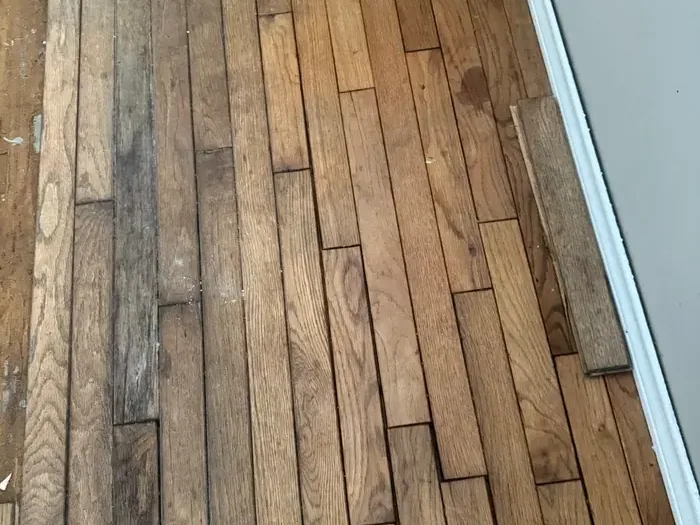
River Edge Hardwood Floor Water Damage
Raised edges and widening joints can appear after the puddle is gone. River Edge hardwood assessment considers the boards and supporting layers together before choosing drying access or planning repairs.
(888) 471-9821Describe the changing floorboardsHow hardwood floor water damage is handled in River Edge
Wood floor restoration evaluates water exposure, board condition and moisture beneath the finished face. The drying approach depends on the installed assembly, with repair decisions made after the retained materials have been assessed together.
First steps for hardwood floor water damage
- 1
Remove ongoing water exposure safely
Control a reachable source or arrange repair. Continued wetting changes the floor condition, so explain the source status before material assessment begins.
- 2
Avoid pressing lifted boards flat
Avoid forcing raised flooring down with heavy objects or sanding distorted edges. Assess moisture and material condition before deciding on mechanical or cosmetic repairs.
- 3
Document the pattern of movement
Photograph joints, raised edges and transitions from a dry position. Note whether the changes are expanding and describe any rugs or furniture covering the portion of the floor that became wet.
- 4
Keep the inspection footprint accessible
Move suitable dry belongings only when the route is safe. Access around room edges helps measurements distinguish the visible damage from moisture that may remain beneath apparently normal adjacent boards.
What does hardwood floor water damage cost in River Edge, NJ?
River Edge hardwood restoration planning ranges from $1,000 to $2,300 for limited clean-water exposure, $2,300 to $4,300 for multiple wet sections, and $4,300 to $6,500+ for damage involving a layered assembly.
Limited clean-water area
- Localized board measurements
- Accessible affected edges
- Focused drying approach
Multiple wet sections
- Broader floor mapping
- Connected section treatment
- Repeated material comparisons
Damaged layered assembly
- Concealed moisture access
- Selective covering removal
- Supporting layer assessment
Compare the scope with the water damage cost calculator. The restoration company prices the inspected damage, material access and equipment needs separately from source repairs, replacement finishes and contents work.
The hardwood floor water damage process
- 1
Identify the floor and exposure history
Inspection records the installed wood product, accessible supporting layers and source of water. Visible movement is mapped alongside moisture readings, creating a starting point that reflects the actual assembly and the extent of its exposure.
- 2
Evaluate retention and useful drying access
The condition of boards and underlying materials determines whether they can remain. The scope weighs contamination, physical damage and access, explaining how the proposed method will reach retained moisture or why selective removal is needed.
- 3
Track material response across the affected footprint
Measurements are repeated at relevant locations while the drying arrangement is adjusted to the assembly. The record follows changes beneath furnishings and at transitions as well as the visibly distorted boards, helping identify slower concealed sections.
- 4
Define remaining floor repairs after assessment
The final handoff describes moisture conditions and persistent physical damage. Refinishing or replacement decisions then address the stabilized floor rather than an early snapshot, with any adjacent trim or supporting material repairs included clearly in the scope.
A wood floor can change shape after its surface has been wiped dry. River Edge hardwood damage assessment looks at that movement alongside moisture in the boards and supporting layers. The useful question is how the complete assembly is responding, including the portions hidden beneath cabinets, rugs or the finished face.
Read the floor as a layered assembly
The board surface, underside and subfloor may dry at different rates. Measuring only the exposed face can miss moisture trapped below. Accessible edges and comparison areas help establish the wet boundary, while construction details determine whether targeted drying can reach the layers that need treatment.
In Cherry Hill, a property with wet hardwood needs an assessment of its own installation. Solid boards, layered products and different attachment methods can respond differently to water. The plan should identify what is present before proposing removal, drying mats or other access to the affected assembly.
- Record raised edges and changes at board joints.
- Inspect floor transitions beyond the visible spill.
- Check beneath movable rugs when handling is safe.
- Compare moisture across affected and unaffected sections.
Give movement time to be evaluated
Sanding a distorted surface while moisture remains can create a new problem when the boards later change shape. The repair decision should follow source control and the drying assessment. Some damage may remain permanent, while other changes need evaluation after the floor reaches a stable condition.
At a home near Veterans Memorial Park, furnishings can hide the border between visibly changed boards and apparently unaffected flooring. Moving suitable items under a handling plan allows measurements to cover the actual footprint. Heavy pieces should not be dragged across softened or lifted wood.
Choose access that reaches the wet layers
Targeted surface systems may help some suitable assemblies, but retained moisture beneath an inaccessible layer can require a different approach. Contamination and material deterioration also affect retention. The scope should explain why the selected method can reach the wet portion and what readings will show useful progress.
A Grand Avenue property with connected wall damage may need trim or cavity attention alongside floor treatment. Water can move from the floor edge into nearby materials. Combining the floor assessment with structural moisture work keeps the drying plan focused on the whole affected room.
Keep restoration and refinishing decisions in sequence
Photographs of board movement and repeated readings help explain the change over time. Once the assembly is assessed and stabilized, the repair scope can address remaining distortion, damaged finishes or replacement needs. Early cosmetic work should not hide the wet layers that still determine how the floor will perform afterward.
Hardwood floor water damage coverage
Wood floor assessments extend to Cherry Hill and properties near Veterans Memorial Park or Grand Avenue, using the installed floor construction and observed damage to shape access.
The same service nearby: hardwood floor water damage in Paramus, Oradell, Maywood.
Hardwood Floor Water Damage questions
Can wet hardwood always be saved?
Retention depends on the product, exposure, contamination and physical condition. Some assemblies can be treated in place, while others require removal. The assessment should explain those factors and avoid promising a result before the supporting layers are checked.
Why are readings needed if boards look dry?
The face can dry before the underside or subfloor. Moisture differences can continue affecting board shape after visible water disappears. Readings at suitable locations help show whether the complete assembly is ready for the next repair decision.
Should cupped boards be sanded immediately?
Sanding should wait for the moisture condition and stability assessment. Removing material from a still-changing floor can leave an uneven result later. The restoration record helps determine when remaining distortion can be evaluated as a repair issue.
Do rugs make a difference after a spill?
A wet rug can hold moisture against wood and conceal the affected boundary. Safe removal or separate handling may expose damage underneath. The floor beneath its footprint should be included in measurements rather than judged from surrounding boards alone.
Can drying mats be used on every wood floor?
Suitability depends on construction, finish condition and the water exposure. The selected equipment must reach the wet layers without ignoring contamination or damaged material. The proposed drying method should be justified by the actual floor assembly.
What if only a few boards appear changed?
The inspection should still check adjacent sections and supporting layers. Visible movement may mark the most affected portion while moisture extends farther beneath the finish. A measured boundary helps keep repair decisions focused without overlooking concealed spread.
Set the repair plan after the floor assessment
Moisture comparisons and condition records help determine useful drying access before refinishing or replacement decisions are made.