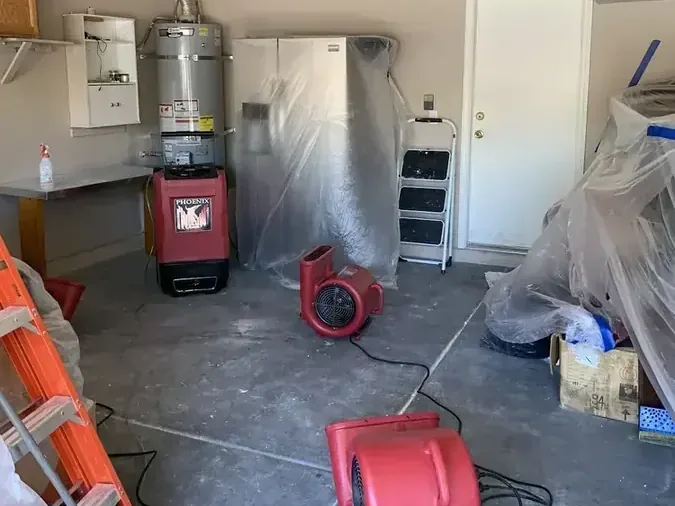
River Edge Water Heater Leak Cleanup
A puddle beside a water heater may extend under shelving or through a wall base. River Edge cleanup checks those quiet edges while the appliance release is controlled and repair needs are clarified.
(888) 471-9821Describe the utility area spillHow water heater leak cleanup is handled in River Edge
Water heater cleanup treats released water and the materials it contacted. The tank, connections and appliance repair need separate attention while nearby flooring, partitions and stored items are assessed for moisture and damage.
First steps for water heater leak cleanup
- 1
Keep away from unsafe equipment
Do not touch wet controls or move a leaking tank. The heater may involve hot water and energy hazards, so source isolation needs a safe route and appropriate trade attention.
- 2
Describe the continuing release
Explain whether water is dripping, pooling or spreading and whether appliance repair has been arranged. That information helps distinguish immediate source needs from the water damage work around the heater.
- 3
Check adjoining rooms visually
From a dry area, look for damp trim or changing flooring across the utility wall. Mention those signs even when the largest puddle remains beside the tank.
- 4
Preserve access to wet edges
Avoid stacking dry belongings over damp floor areas. A clear route around storage helps inspection reach the wall base and gives the cleanup plan room for controlled material handling.
What does water heater leak cleanup cost in River Edge, NJ?
River Edge heater leak cleanup planning is $800 to $1,800 for an accessible utility area, $1,800 to $3,500 for adjoining room spread, and $3,500 to $5,500+ for broad concealed damage around connected finishes.
Accessible utility area
- Open floor extraction
- Reachable wall edges
- Localized drying needs
Adjoining room spread
- Wet partition checks
- Connected floor treatment
- Additional equipment placement
Concealed broad damage
- Layered material access
- Extensive finish assessment
- Broader monitoring area
Compare the scope with the water damage cost calculator. The restoration company prices the inspected damage, material access and equipment needs separately from source repairs, replacement finishes and contents work.
The water heater leak cleanup process
- 1
Coordinate appliance control with room assessment
The first inspection establishes the release status and accessible wet area around the heater. Information from the appliance trade helps determine when the source is controlled and how equipment work may affect access to surrounding building materials.
- 2
Extract water and reveal obstructed edges
Collected water is removed while storage and adjacent finishes are evaluated. Items that conceal the wet boundary receive a handling plan, allowing inspection of the wall base, floor junctions and any connected rooms reached by the release.
- 3
Dry the surrounding building materials
Retained flooring and partition materials receive a drying approach matched to their construction and access. Measurements track the utility area and adjoining surfaces separately, making it easier to identify a slow concealed section behind the repaired or replaced appliance.
- 4
Close with a clear appliance and finish handoff
The record distinguishes completed source work from moisture treatment and remaining finish repairs. Removed trim, opened wall sections and affected stored items should stay visible in the scope so the room's recovery continues after the heater itself is operating again.
Water beneath a heater can disappear under a partition while leaving only a modest puddle in the utility area. River Edge cleanup begins with the appliance condition and follows the released water into adjacent finishes. The repair of the heater and the restoration of the room need separate descriptions so neither part of the damage is overlooked.
Look around the appliance before moving anything
The source may involve the tank or its connections, and the equipment can present hot water or energy hazards. A safe assessment precedes disturbance of the appliance. The cleanup plan needs information about whether the release continues and whether a qualified trade has isolated or repaired it.
At a Continental Avenue property, stored boxes or shelving may hide the floor boundary. Moving those items can expose wet wall bottoms and damp surfaces beneath their footprint. Handling should account for weight, damage and a route that avoids dripping through dry rooms.
- Describe water near appliance controls or connections.
- Leave tank movement to the appropriate trade.
- Check the room across an adjoining partition.
- Record which stored items contacted the released water.
Give adjoining finishes their own assessment
A utility floor may be more resistant to water than the finished room beside it. The same release can leave wallboard, trim or floor backing saturated beyond the heater space. Material readings at the partition and threshold help determine whether cleanup needs to extend into those adjoining areas.
For a Grand Avenue home, the room layout controls access to the wet edges. An enclosed heater space can restrict air movement, and shelving may block the wall base. The scope should explain what must be moved or opened to inspect and dry the affected materials.
Keep equipment replacement distinct from room recovery
Installing a replacement heater does not remove moisture from the surrounding structure. Drying may need to continue after the appliance work is complete. Coordination helps preserve access to the wet floor and walls so new equipment placement does not conceal damp materials before they are assessed.
In North Hackensack, cleanup decisions likewise follow the actual finishes and exposure. A bare utility surface, a layered floor and an insulated partition need different treatment. Where water spread through a finished lower room, basement water cleanup can address the wider access and material concerns.
Describe the space beyond the visible puddle
Mention the room on the other side of the heater wall, any cabinets touching the floor and whether water reached a doorway. Those details help focus inspection before belongings are moved. A useful estimate accounts for extraction, damaged finish access and drying separately from the appliance work that stops the release.
Water heater leak cleanup coverage
Utility-area cleanup serves properties near Continental Avenue, Grand Avenue and North Hackensack, with access based on the heater location, nearby storage and affected adjoining rooms.
The same service nearby: water heater leak cleanup in Paramus, Oradell, Maywood.
Water Heater Leak Cleanup questions
Can a new water heater hide remaining damage?
It can obstruct access to an already wet area if placement is not coordinated. The floor and nearby wall materials should be assessed during the work sequence so equipment replacement does not conceal moisture needing further treatment.
Is the water always limited to the utility room?
No. A release may pass under a partition or through a threshold. Adjoining wall bottoms and flooring deserve inspection, especially where visible changes appear outside the room containing the heater or beneath nearby stored belongings.
Should a homeowner move the tank to mop underneath?
Tank movement involves plumbing connections and potential energy hazards. Leave that work to the appropriate trade. Cleanup can be planned around safe isolation and access so the underlying floor is addressed without unsafe appliance handling.
What happens to wet cardboard boxes?
Their contents and exposure need assessment. Saturated cardboard can hold water against flooring and may deteriorate during movement. A controlled sorting area helps protect recoverable contents while keeping drips and debris away from dry household spaces.
Does a small puddle require wall opening?
Not automatically. Readings, material condition and access determine whether selective opening is useful. The scope should explain the reason for removal, such as trapped moisture or damaged wallboard, instead of using puddle size as the sole decision.
What should the estimate separate?
Appliance repair or replacement, water extraction, finish removal, drying and rebuilding should have clear descriptions. That separation helps the property owner understand what stops the leak and what restores the surrounding building after the release.
Finish the room recovery after source repair
Measured drying and clear access help prevent wet floor edges or partitions from being concealed by appliance replacement.