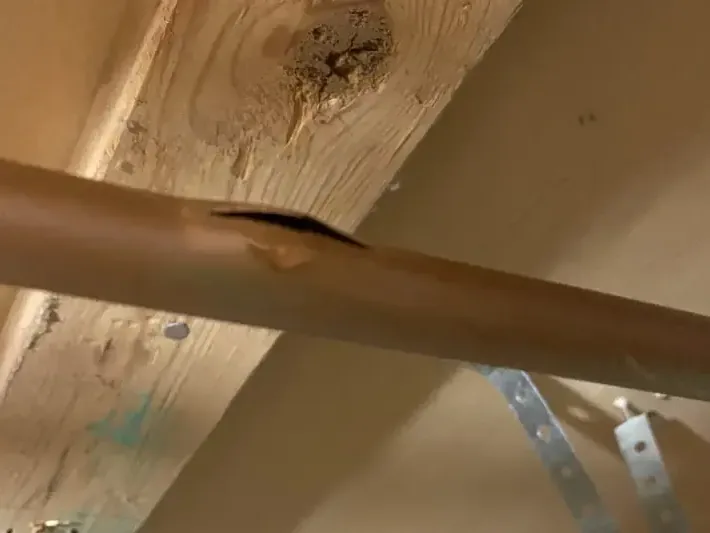
Burst Pipe Water Damage in Oradell
A sudden pipe break can wet a room far from the damaged connection. The cleanup plan follows that spread through floors and walls after the supply has been safely isolated.
(888) 471-9821Map the pipe leak damageHow burst pipe water damage is handled in Oradell
Burst pipe cleanup addresses the water released into the building. It coordinates with plumbing repair, removes recoverable water and checks connected assemblies so retained moisture does not disappear behind replacement finishes.
First steps for burst pipe water damage
- 1
Control the continuing release
Use a known accessible shutoff only when the route is dry and safe. If reaching it requires crossing standing water, seek qualified assistance with isolation.
- 2
Leave the cavity undisturbed
Keep away from sagging finishes and avoid opening a pressurized pipe enclosure. The repair professional needs safe access to the failed component before cleanup decisions proceed.
- 3
List the affected spaces
Note rooms beside and below the suspected break, including closets. Describe where dripping or spreading first appeared so the assessment can follow the water route.
- 4
Preserve useful damage records
Keep photographs of the pipe repair, damaged finishes and belongings together. Record when the leak was discovered and when the supply was stopped for the project file.
What does burst pipe water damage cost in Oradell, NJ?
Burst pipe cleanup in Oradell has planning bands of $1,200 to $2,800 for localized damage, $2,800 to $5,200 for concealed spread, and $5,200 to $7,500+ across several levels. Access and wet layers affect the estimate.
Localized pipe loss
- Accessible wet surface area
- Limited adjacent material damage
- Focused moisture measurement scope
Concealed spread
- Water behind finished surfaces
- Targeted openings for drying
- Connected room inspection needs
Several levels
- Vertical spread through cavities
- Multiple affected floor assemblies
- Expanded extraction and monitoring
Compare the scope with the water damage cost calculator. The restoration company prices the inspected damage, material access and equipment needs separately from source repairs, replacement finishes and contents work.
The burst pipe water damage process
- 1
Connect the break to the damage
The initial inspection compares the reported pipe failure with visible moisture and meter readings. This creates a room map showing affected surfaces, suspected concealed routes and any safety restrictions that limit immediate access.
- 2
Coordinate opening and source repair
Plumbing work and cleanup access are planned together so the failed component remains reachable. Damaged finishes are opened where required, and wet layers are evaluated for retention, cleaning or removal before drying equipment is positioned.
- 3
Dry along the measured route
Extraction and drying address connected materials rather than only the repair opening. Air movement and humidity control are adjusted around accessible assemblies, while repeat readings reveal whether remaining cavities need a different access arrangement.
- 4
Prepare the reconstruction handoff
The final record identifies the source repair status, drying measurements and materials requiring replacement. That distinction helps the owner understand why plumbing completion and finish reconstruction may occur at different points in the project schedule.
A burst connection above a room can send water down a wall and beneath a doorway before anyone sees the pipe itself. Oradell's 2016 housing estimate placed 34.5% of housing units in the 1950 to 1959 construction period. Assessing an older property means examining its actual plumbing access and affected finishes before choosing the cleanup scope.
Follow the release beyond the broken fitting
Kinderkamack Road, Maple Avenue and Delford provide useful location references when describing the property. Inside, the more useful map is the route water took: from the break to the nearest cavity, then across any connected ceiling, floor or wall surface.
A plumber addresses the failed supply component. Restoration work addresses what that failure wet. Coordinating those tasks preserves access for repair while allowing inspection of adjacent insulation, backing and framing. The opening needed to reach a fitting may not expose the full water damage area.
- Mark the room where water first appeared.
- Identify any wet level below the break.
- Keep source repair photographs with cleanup records.
- Check shared walls and adjoining closets.
Make selective access serve a purpose
A swollen baseboard or discolored seam can indicate retained water behind a finished surface. Moisture measurements help choose where access is needed. Removing finishes without a clear purpose can create unnecessary repair work, while leaving a wet cavity closed can prevent effective drying.
For example, a supply release behind a bathroom wall may affect the next room's floor edge. The cleanup scope should follow measured spread into that room rather than end at the bathroom door. Retained materials need a practical path for moisture to leave.
Separate repair completion from drying completion
Once the repaired pipe holds water, the building still needs moisture checks. Surface evaporation can make paint feel dry before the material behind it has recovered. Equipment placement and any additional openings should respond to the readings in those slower drying layers.
Flooring changes also deserve attention. Buckling boards, lifted seams or soft underlayment may require their own evaluation after water extraction. A useful completion record distinguishes materials left in place, materials removed and areas still awaiting repair or further measurement.
- Record the repaired supply component separately.
- Check cavities around the original access opening.
- Measure affected flooring before reconstruction begins.
- Explain unresolved access limits in writing.
A valve location is useful only when accessible
An owner who already knows the shutoff can stop an active release if the valve is reachable from a dry, safe position. Reaching across wet electrical equipment or entering a flooded lower room is a different situation and needs qualified assistance. Share the suspected pipe location and the safest entrance from outside the damaged area. Once the flow is controlled, photographs of the break and the wet rooms can connect the plumbing repair to the cleanup scope without requiring anyone to retrace the release through an unsafe space.
Burst pipe water damage coverage
Oradell properties around Kinderkamack Road, Delford and Maple Avenue can describe the pipe location and affected levels when arranging access for a damage assessment and cleanup.
The same service nearby: burst pipe water damage in Paramus, River Edge, Maywood.
Burst Pipe Water Damage questions
Does fixing the pipe dry the wall?
Repair stops new water from entering, but insulation, framing or wall finishes may still hold moisture. Measurements establish which layers need drying access and whether damaged materials must be removed before the wall can be rebuilt.
Can age identify the failed pipe material?
The pipe must be inspected at the property. The dated housing inventory provides residential context, while the actual supply system may include repairs or alterations. Material decisions should follow what is exposed during the plumbing assessment.
Why is the room below being checked?
Water can descend through a cavity before showing on a ceiling or floor. Checking the level below the break helps find hidden spread and avoids limiting the cleanup to the room where the first puddle appeared.
Should wet furniture be moved immediately?
Accessible dry items can be moved away from the work route. Soaked furniture may be heavy or unstable, and moving it through clean rooms can spread moisture. Ask for a handling plan before relocating affected pieces.
Can a wall stay closed during drying?
That depends on moisture levels, material condition and the available drying path. A finish that blocks access may need a targeted opening. The assessment should explain why an opening is needed and what it is intended to reach.
What should the estimate separate?
The scope should distinguish plumbing repair, water removal, material handling, drying and finish reconstruction. Separating those tasks makes it easier to understand what is included and how newly exposed damage could change the authorized work.
Follow the release through the building
Arrange an assessment of connected wet rooms after the active supply has been safely controlled.