Hardwood Floor Water Damage in Oradell
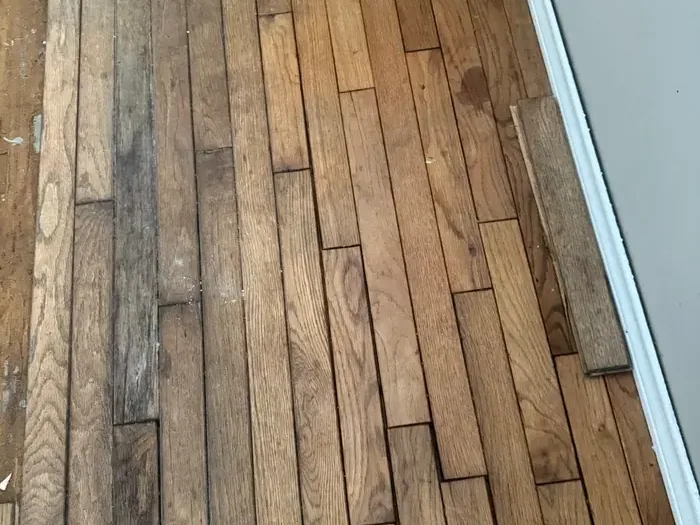
A raised board edge is a reason to measure the floor, not rush into sanding. Water damage assessment compares the wood surface with the supporting layers before choosing a recovery plan.
(888) 471-9821Assess the boards and subfloorHow hardwood floor water damage is handled in Oradell
Hardwood floor restoration evaluates the boards and the assembly beneath them after water exposure. Measurements, visible movement and access determine whether controlled drying, selective removal or replacement assessment is appropriate for the affected floor.
First steps for hardwood floor water damage
- 1
Protect the changed floor area
Keep people off loose or raised boards. Avoid pressing damaged sections flat, and leave unstable flooring for professional assessment before moving furniture across the area.
- 2
Remove accessible dry coverings
Lift a dry loose rug only when safe. Leave attached flooring and heavy furniture in place until movement across the damaged boards can be assessed.
- 3
Record the water source
Describe the spill or leak that preceded the floor changes, including any source repair. Explain whether water entered nearby cabinets or connected rooms so moisture checks follow the full route.
- 4
Pause sanding and refinishing plans
Keep finish work on hold until the boards and supporting layers have been assessed. Existing flooring product details can help the repair professional evaluate suitable drying and replacement options.
What does hardwood floor water damage cost in Oradell, NJ?
Oradell hardwood damage ranges are $1,000 to $2,300 for a limited clean-water area, $2,300 to $4,300 for multiple wet sections, and $4,300 to $6,500+ for a damaged layered assembly. Access influences the scope.
Limited clean-water area
- Accessible wood section
- Focused board moisture mapping
- Targeted floor drying arrangement
Multiple wet sections
- Water across connected flooring
- Additional supporting layer checks
- Wider equipment coverage
Damaged layered assembly
- Distorted or concealed materials
- Selective removal for access
- More complex repair planning
Compare the scope with the water damage cost calculator. The restoration company prices the inspected damage, material access and equipment needs separately from source repairs, replacement finishes and contents work.
The hardwood floor water damage process
- 1
Identify the wood assembly
The assessment records the floor type, visible movement and water exposure. Measurements extend beyond the obvious damage into connected sections, while accessible supporting layers are checked separately to establish where moisture remains within the assembly.
- 2
Select retention and access methods
Water condition and physical damage shape material decisions. The plan explains where targeted drying may be suitable and where removal is needed, including access limitations beneath fixed cabinetry or floor layers that prevent meaningful inspection.
- 3
Monitor the boards and their support
Drying equipment is adjusted using repeat readings rather than surface appearance. The wood and subfloor are tracked at consistent locations so changes in one layer do not obscure slower progress or continuing moisture in another part.
- 4
Hand off to the flooring repair plan
Documented material conditions support a later evaluation of sanding, refinishing or replacement. The handoff identifies retained and removed sections, remaining access needs and any damaged support that must be addressed before the final finish work begins.
A wood floor can change shape after the visible spill is gone. Edges may rise while moisture remains beneath the boards, and a nearby dry-looking section may conceal a damp supporting layer. Hardwood assessment in Oradell follows those changes through the floor assembly before selecting drying or finish repair work.
Map the floor by condition rather than appearance
Delford, Ridgewood Avenue and Kinderkamack Road are useful references when arranging a property visit. Inside the home, readings need their own map across affected boards, adjoining thresholds and accessible supporting layers. That map shows where moisture is concentrated and where the floor can provide a comparison.
The 2016 borough housing inventory includes several construction periods. At the property, inspection identifies the actual wood product, attachment method and layers underneath. A floor installed during a later alteration may need a different access plan from the surrounding older assembly in the same home.
- Mark raised edges and separated board joints.
- Check the floor beyond the visible spill.
- Record accessible subfloor readings independently.
- Identify transitions beneath cabinets and doorways.
Choose drying access without hiding damage
Suitable extraction or floor drying equipment may help some retained wood assemblies, but the decision depends on water condition and material damage. A contaminated layer or severely distorted section can require removal. The assessment should explain the purpose and limits of the proposed approach.
Drying the face of the boards does not necessarily dry the subfloor. Access from below or selective removal may be needed to reach trapped moisture. Where cabinets or multiple coverings obstruct inspection, those limits should remain visible in the scope rather than disappear behind an optimistic finish plan.
Delay finish work until the assembly settles
Sanding a moving floor too early can create a new uneven surface as the wood changes during drying. A flooring professional should evaluate the boards after moisture conditions are appropriate for the intended repair. The drying record helps inform that decision without promising every damaged section can be retained.
When an appliance release started the damage, appliance leak cleanup can address the hidden equipment area while floor assessment tracks the adjoining boards. Keeping the source and material records connected helps explain whether a changed floor reflects retained moisture, physical damage or both.
- Track readings at consistent marked floor locations.
- Keep source correction documented with the floor record.
- Assess damaged underlayment before replacing boards.
- Coordinate refinishing with material readiness.
A smooth surface is a later repair decision
The first goal is understanding the wet assembly, not making the boards look level immediately. Furniture and rugs can hide the boundaries of damage, while a finish coating may slow access to moisture below. The inspection should identify where measurements were taken and which areas remain blocked. Once the floor's condition is documented through drying, the owner and flooring professional can consider retention, partial replacement or a broader repair. That sequence keeps appearance decisions grounded in the actual state of the wood and its support.
Hardwood floor water damage coverage
Oradell floor assessments can include homes near Delford and Ridgewood Avenue. Describe changes in the boards and any wet rooms connected through doorways or shared floor coverings.
The same service nearby: hardwood floor water damage in Paramus, River Edge, Maywood.
Hardwood Floor Water Damage questions
Can every wet hardwood floor be saved?
The outcome depends on water exposure, board condition and the supporting assembly. Some sections can be considered for drying, while others require removal or replacement. The assessment should explain the actual material findings before selecting a recovery approach.
Should raised edges be sanded right away?
Early sanding can leave an uneven result if the boards continue changing as moisture leaves. The floor needs measurements and a suitable drying assessment first. A flooring professional can then evaluate repair options once material conditions support finish work.
Why measure a floor that feels dry?
Touch only describes the accessible surface. Moisture can remain beneath a finish or within the supporting layer. Readings across the boards and subfloor help establish whether the assembly still needs drying even after the visible spill disappears.
Do rugs affect the inspection?
A rug can conceal changes and restrict access to the floor beneath it. Safely accessible dry rugs can be moved, while wet or heavy contents need a handling plan. Inspection should include the previously covered area when access becomes available.
Can the room next door need floor checks?
Water can move through a continuous floor assembly or across a threshold. Measuring adjoining sections helps find the wet boundary. The inspection should follow that connection rather than stop automatically at the doorway of the first affected room.
When can replacement boards be installed?
The retained support and surrounding materials need appropriate moisture conditions, and the source must be corrected. Installation requirements for the selected flooring then determine preparation and timing. A documented handoff helps coordinate those decisions with the repair professional.
Assess the full floor assembly
Arrange an Oradell assessment before sanding or covering the affected wood floor again.